

A doctor exam is a routine way to check your general health, review symptoms, and talk through preventive care or next steps. For many patients, knowing what to expect can make the visit feel more manageable. In most cases, a doctor exam may include your health history, vital signs, a focused or full physical assessment, and a conversation about concerns, findings, and follow-up recommendations. The exact details can vary based on your age, symptoms, medical history, and the clinician’s judgment.
This guide is informational and meant to help you feel more prepared, not to diagnose a condition or predict an outcome. It is also helpful to know that urgent care may perform certain physical exams and evaluations depending on the reason for your visit. If you have chest pain, signs of stroke, severe trauma, or trouble breathing, call 911 or go to the nearest emergency room right away.
What this guide covers
Below, you’ll find a simple overview of what may happen during a doctor examination, how to prepare, how annual exams differ from problem-focused visits, and when urgent care or Telehealth may be appropriate.
What Is a Doctor Exam?
A doctor exam is a clinical evaluation used to assess a person’s health, symptoms, or overall wellness. Depending on the reason for the visit, a doctor exam may include a review of medical history, vital signs, a physical assessment, and recommendations for follow-up care, testing, or treatment. In everyday conversation, people may also call this a health exam or physical exam, but those terms do not always mean exactly the same thing in every setting.
Some exams are preventive, such as a routine annual exam doctor visit focused on general wellness and screening. Others are more specific, such as school or sports physicals that meet a form or participation requirement. A symptom-based exam is different because it is centered on a current concern like a cough, sore throat, fever, or minor injury that needs timely evaluation. If you want what to expect from urgent care providers, that type of visit is usually more focused than a preventive checkup.
Routine exams vs focused evaluations
A routine exam looks at overall health rather than one immediate problem. It may cover wellness habits, preventive screenings, and a broad review of how you are doing. A focused evaluation, by contrast, is designed to assess a specific symptom, injury, or concern and decide what next steps make sense.
Annual exam vs physical exam
People often use annual exam and physical exam interchangeably, but the exact scope can vary by provider, visit purpose, and documentation needs. Administrative terms, including references such as icd 10 annual exam, are generally used for records and insurance processing rather than to describe one identical experience for every patient.
What Happens During a Doctor Examination
A doctor examination usually follows a clear sequence, but the details depend on why you are being seen, your symptoms, and your health history. Whether you come in for a new concern or routine care, the visit is designed to help the clinician gather information, perform an appropriate assessment, and explain possible next steps. If you want to learn more about physical exams available at Prime Urgent Care, it can help to understand the process first.
1. Check-in, forms, and health history
The visit often begins at check-in, where staff confirm your basic information and reason for the appointment. You may be asked to complete forms about current symptoms, past medical history, recent illnesses, surgeries, medications, and allergies. This step helps the care team understand what brought you in and whether there are any important factors that could affect your evaluation. In many cases, you will also be asked when symptoms started, whether they are getting better or worse, and if anything seems to trigger or relieve them.
2. Vital signs and physical assessment
Before the clinician begins the doctor examination, a team member may record vital signs such as blood pressure, temperature, pulse, oxygen level, height, and weight. These measurements provide useful context for your visit. The clinician may then perform a focused physical exam or a more general head-to-toe assessment, depending on your concerns. For example, a sore throat visit may involve examining the ears, nose, throat, and neck, while another concern may call for listening to the heart and lungs, checking the abdomen, or evaluating the skin, joints, or movement. The exam is tailored to what is appropriate for your symptoms and history.
3. Discussion of findings and next steps
After the assessment, the clinician will usually discuss findings, answer questions, and explain what may happen next. Depending on the condition, they may recommend home care instructions, symptom monitoring, prescriptions, lab work, imaging, referrals, or follow-up care. Some patients may be advised to schedule a Telehealth follow-up or return for an in-person recheck, depending on how symptoms progress and what the physician determines is appropriate. Not every visit requires testing, but the goal is to leave with a clear understanding of your care plan and when to seek additional evaluation.

How to Prepare for a Doctor Exam
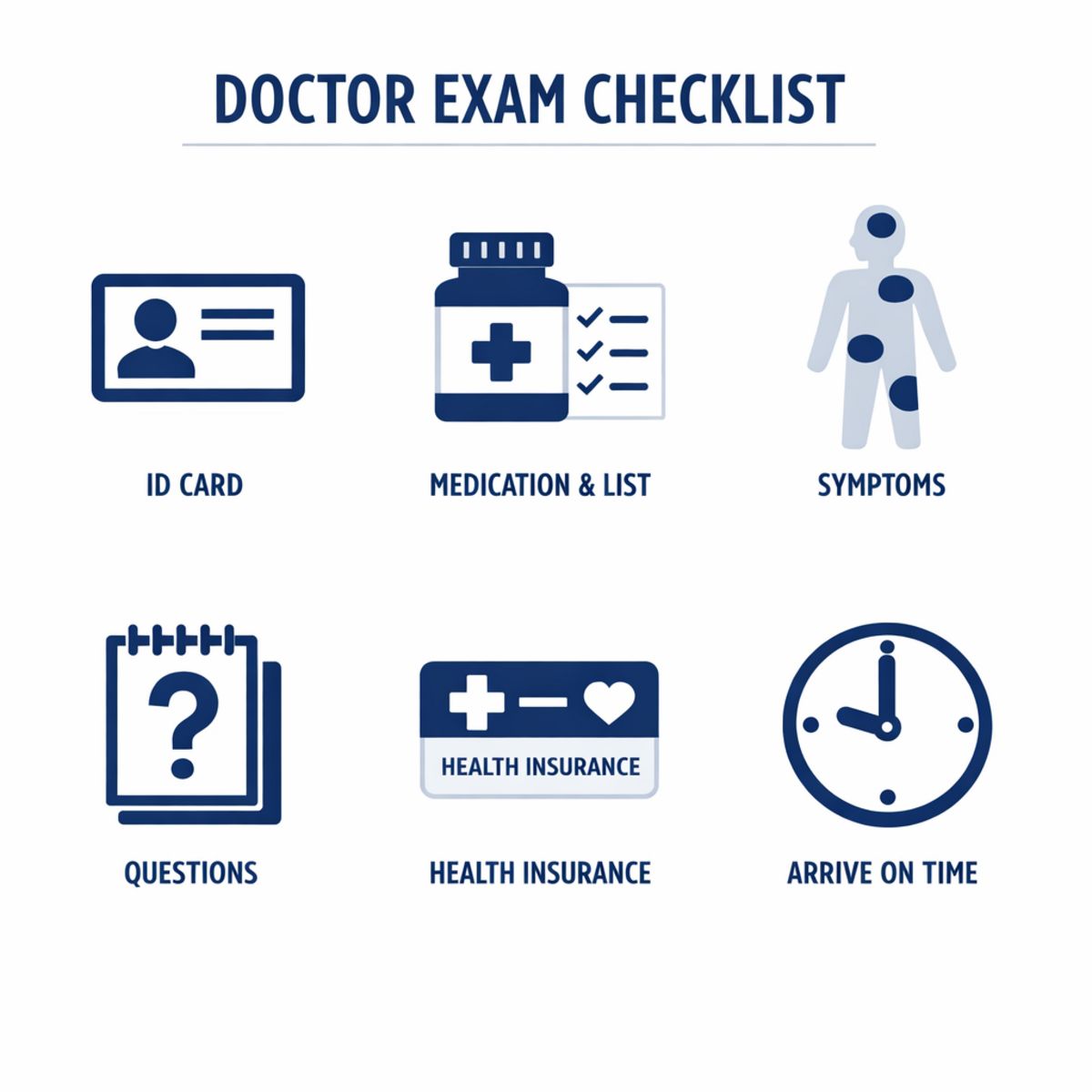
Use this simple checklist to make the most of your visit. Good physical exam preparation can help routine checkups and symptom-based appointments go more smoothly, while giving the clinician clearer information to guide next steps.
1. Bring the right documents and information
- Bring a photo ID.
- Bring your insurance card or plan details if applicable.
- Carry an up-to-date list of medications, vitamins, and supplements.
- Note any allergies or past reactions to medicines.
- Bring prior records, test results, or referral paperwork if they relate to the visit.
2. Track symptoms before the visit
- Write down when symptoms started.
- Note what makes them better, worse, or triggers them.
- Record how often symptoms happen and how long they last.
- Include home readings if relevant, such as temperature, blood pressure, or blood sugar.
- List any related concerns you do not want to forget during the appointment.
3. Prepare questions for the provider
- Ask what the exam is checking for.
- Ask whether follow-up testing or another visit may be needed.
- Ask what warning signs should prompt urgent reassessment.
- If you want more routine care guidance, review these male annual physical exam preparation tips.
4. Plan for the day of the appointment
- Wear comfortable clothing that is easy to adjust if the exam requires it.
- Arrive with enough time to complete paperwork without feeling rushed.
- Verify your insurance plan before visiting or scheduling a Telehealth appointment, since insurance acceptance can vary.
A little preparation can make your appointment more efficient and help you leave with clearer answers and next steps.
Annual Exam vs Problem-Focused Exam: What’s the Difference?
The simplest way to think about an annual exam vs physical exam is this: annual visits are generally preventive, while problem-focused exams are meant to evaluate a current concern. Both can be important, but they serve different purposes and are not always interchangeable.
When an annual exam makes sense
An annual exam usually centers on prevention. That may include reviewing your health history, discussing lifestyle habits, checking general wellness, and talking through age-appropriate screenings or routine health recommendations. In many cases, the goal is to look at the bigger picture rather than solve one immediate symptom.
If you are comparing options, this is often the better fit when you want a routine health review or are interested in getting a physical at urgent care and understanding how that differs from a preventive visit.
When a focused urgent care exam may help
A problem-focused urgent care exam is usually for a current issue that needs timely, in-clinic attention, such as a minor injury or new non-emergency symptom. The visit is often narrower in scope, with the clinician focusing on the concern that brought you in and deciding what evaluation or next steps are appropriate.
That said, not every urgent care visit replaces a full primary care preventive exam. Urgent care may help with immediate non-emergency needs, but the exact evaluation depends on your symptoms, exam findings, and clinician judgment.
Quick comparison:
- Annual exam: preventive care, health review, and screening discussions.
- Problem-focused exam: evaluation of a current non-emergency concern or minor injury.
- Not the same visit type: one does not automatically replace the other.
- Safety note: for life-threatening symptoms, call 911 or go to the nearest emergency room.
Why Regular Health Exams Matter

A timely health exam can be a practical step for staying informed about your health, whether you feel well or have a new concern. Regular exams may help identify changes in health status, support preventive care, and create a clear record of symptoms, findings, and recommendations. That kind of documentation can be useful when deciding what to monitor and when additional care may be appropriate.
When symptoms are present, an exam can help a provider determine whether watchful waiting, testing, treatment, or referral makes sense based on the situation. Rather than guessing, patients leave with more clarity about possible next steps and what warning signs should prompt follow-up. If you want to learn more about physical exams here, it can help to understand what to expect before your visit.
Prevention, monitoring, and peace of mind
Routine and symptom-based visits also give patients a chance to ask questions, confirm instructions, and better understand their care plan. That conversation can improve follow-through and make it easier to know when to return, seek testing, or contact another specialist. While no health exam can guarantee a specific outcome, timely evaluation often supports better awareness, more informed decisions, and appropriate follow-up care.
Insurance, Coding, and Visit Costs: What to Know
Insurance coverage and out-of-pocket costs can vary based on your insurer, plan details, visit type, and any services performed during the appointment. In general, preventive care, urgent care evaluations, lab work, imaging, and follow-up services may be processed differently, so it is best to expect some variation rather than assume a single billing outcome.
Coding terms such as icd 10 annual exam are part of the documentation and billing process. They help describe the reason for the visit and the services provided, but they do not by themselves guarantee insurance coverage or predict your final responsibility.
Why coverage can differ
Even when two visits seem similar, coverage can differ depending on whether the visit is considered preventive, diagnostic, urgent, or follow-up care. Additional testing or treatment may also affect how a claim is processed. Because policies differ, it is wise to verify insurance acceptance, covered benefits, and any expected patient responsibility before visiting or scheduling Telehealth.
For the most accurate information, confirm details with both the clinic and your insurance carrier in advance.
When to Seek Urgent Care, Telehealth, or Emergency Care
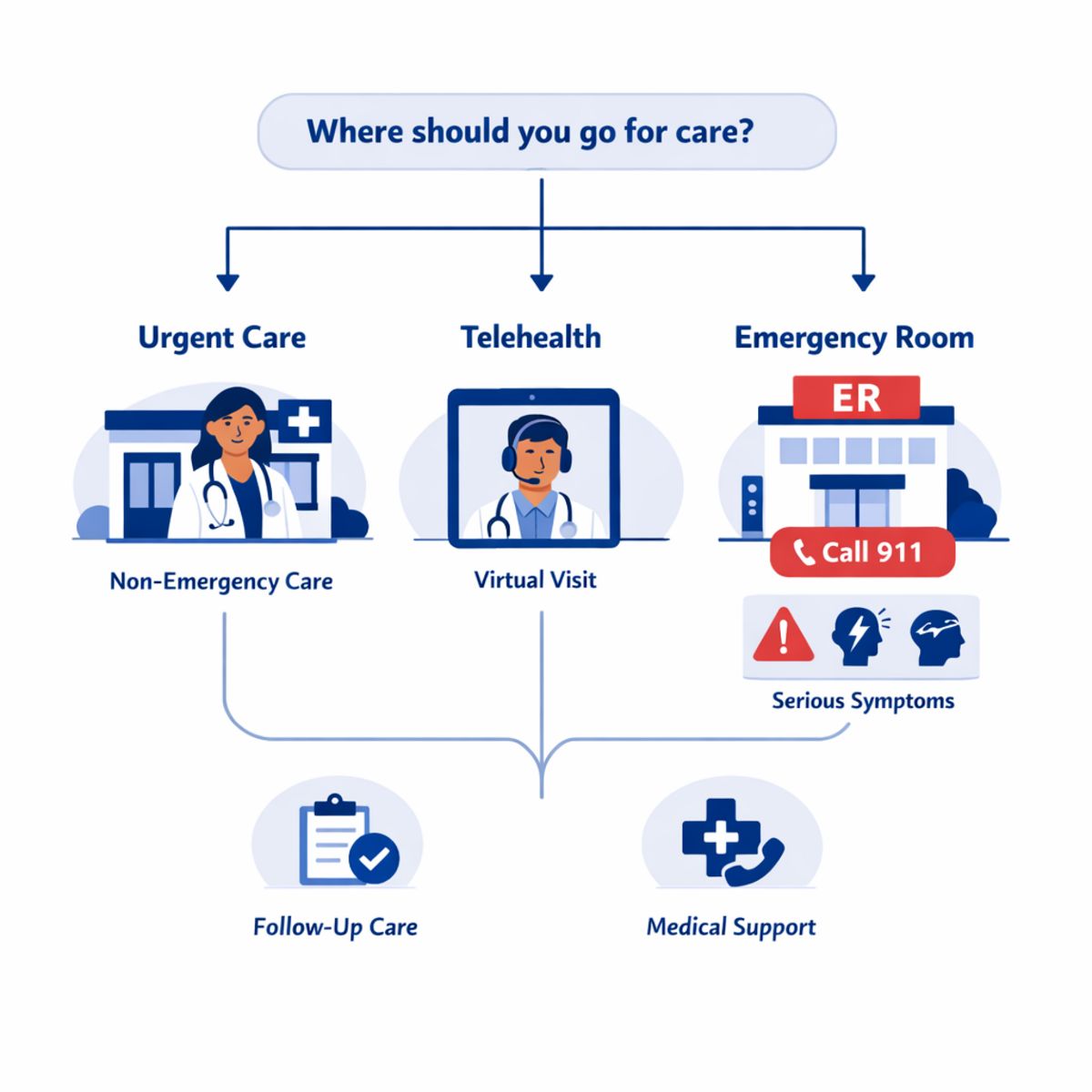
A simple rule of thumb is to match the setting to the level of concern. Urgent care may be appropriate for many non-emergency illnesses, minor injuries, and same-day problems that need an in-person exam. That can include concerns such as fever, sore throat, ear pain, mild dehydration, sprains, minor cuts, or symptoms that are uncomfortable but not clearly life-threatening. For example, some people with a headache with cough causes and care may want prompt evaluation, depending on severity and other symptoms.
When urgent care may be appropriate
Choose urgent care when you need timely, in-clinic assessment for a non-emergency issue. Telehealth may be useful for certain concerns, follow-up questions, medication guidance, or next-step advice depending on the condition and appointment availability. Virtual care can be convenient, but some symptoms still require an in-person exam, testing, or imaging.
When to go to the emergency room
Go to the emergency room or call 911 right away for chest pain, stroke symptoms, severe trauma, or difficulty breathing. Emergency care is also the right choice for any severe or rapidly worsening condition that may be life-threatening. This guide is meant to help with broad categories, not to diagnose or replace medical judgment.
Frequently Asked Questions About a Doctor Exam
Quick answers patients often need
What should I bring to a doctor exam?
Bring a photo ID, insurance card if you have one, a list of current medications, and any relevant medical records or test results. It also helps to bring a list of symptoms, questions, allergies, and the names of any specialists you see.
How long does a doctor examination usually take?
A doctor examination often takes anywhere from a short visit to a longer appointment depending on the reason for the exam, paperwork, and whether testing is needed. Routine visits may be quicker, while more detailed evaluations can take longer.
Do I need to fast before a health exam?
Not always. Fasting may be requested for certain blood tests, but requirements vary by visit type, your medical history, and what the clinician plans to check, so it is best to confirm before the appointment.
What should I wear to a physical exam?
Wear comfortable clothing that is easy to change out of if needed. Simple layers and shoes that are easy to remove can make the visit more convenient, especially if your height, weight, blood pressure, or mobility will be checked.
How often should adults schedule an annual exam doctor visit?
Many adults benefit from regular preventive visits, but the right schedule depends on age, health history, medications, and risk factors. A clinician can recommend how often to come in based on your needs and any ongoing conditions.
Can urgent care do a physical exam?
Urgent care may provide some types of physical exams, but availability and scope can vary by location and purpose of the visit. If you have severe symptoms such as chest pain, trouble breathing, signs of stroke, or heavy bleeding, seek emergency care right away instead of waiting for a routine exam.
Need a Physical Exam or Same-Day Evaluation?
If you need a physical exam or a non-emergency evaluation, Prime Urgent Care is here to help. You can walk in for in-clinic care when appropriate, and no appointment is needed for many urgent care visits. Learn more about the urgent care services available at Prime Urgent Care. Telehealth consultations are available by appointment, and insurance acceptance may vary.
Simple next steps
Walk in for in-clinic urgent care needs, or contact the team with questions about physical exams, Telehealth appointment availability, insurance, or next steps.
Final Thoughts on Preparing for a Doctor Exam
A doctor exam often includes a review of your health history, vital signs, a physical assessment, and guidance on what to do next. Knowing what to expect can help you feel more comfortable and make the visit more productive. Bringing your questions, medications, and relevant health details can also make it easier to understand recommendations and take the next step with confidence.
It also helps to choose the right care setting. Urgent care can be a practical option for many non-emergency concerns, while severe or life-threatening symptoms should be evaluated in the ER. Preparing ahead of time supports clearer communication, better follow-up, and a calmer experience overall.
The key takeaway
A little preparation can go a long way. When you arrive informed and ready to ask questions, you are better positioned to understand your care and make appropriate decisions about what comes next.