

Diagnostic radiology helps clinicians look more closely at symptoms and injuries using medical imaging. In urgent care, this may include evaluating concerns such as possible fractures, chest symptoms, or joint injuries when a hands-on exam alone may not provide enough information. This article is designed to explain how imaging fits into the care process in plain language, so you can better understand what it is, when it may be used, and what to expect during a visit.
Imaging can be an important tool, but it does not replace a full clinical evaluation or provide answers on its own. Results must be interpreted by a qualified clinician, and next steps depend on your symptoms, exam findings, and overall medical needs. If you are unsure whether imaging is needed, an urgent care evaluation can help determine the most appropriate course of action.
This guide will focus on common imaging uses in urgent care, what different tests may help assess, and when urgent care may be appropriate. If you have severe chest pain, trouble breathing, signs of stroke, major trauma, heavy bleeding, or other life-threatening symptoms, call 911 or go to the nearest emergency room right away.
What this guide covers
Below, you will find a simple overview of imaging types that may be used in urgent care, situations where they are commonly considered, what a visit may involve, and how to tell when urgent care may be suitable versus when emergency care is the safer choice.
What Is Diagnostic Radiology?
Diagnostic radiology is the use of imaging tools to help evaluate injuries, pain, and certain illnesses. In simple terms, it is a form of diagnostic imaging that gives clinicians more information about what may be happening inside the body. This kind of diagnostic medical imaging supports assessment and decision-making, but it does not replace a clinician’s exam, medical history, or judgment.
Depending on the setting, diagnostic services may include X-rays and other imaging methods used to look for possible fractures, joint problems, or other non-life-threatening concerns. In an urgent care environment, imaging is often used when a clinician determines it may help clarify the cause of symptoms or guide next steps. For example, patients seeking x-ray diagnostic services at Prime Urgent Care may be evaluated for injuries or pain that need a closer look.
How imaging supports clinical decisions
Imaging findings are only one part of the overall evaluation. Clinicians also consider symptoms, physical exam findings, and medical history before making recommendations. That means a scan or X-ray should be viewed as a helpful tool within a broader clinical assessment, not as a stand-alone answer or a way to self-diagnose.
Where urgent care fits in
Urgent care commonly uses diagnostic imaging to assess injuries and everyday symptoms when appropriate, especially for concerns that are not severe enough for emergency hospital care. This is different from emergency imaging workflows in hospital settings, which are designed for potentially life-threatening conditions and more complex immediate needs.
Common Types of Diagnostic Imaging and What They Help Evaluate
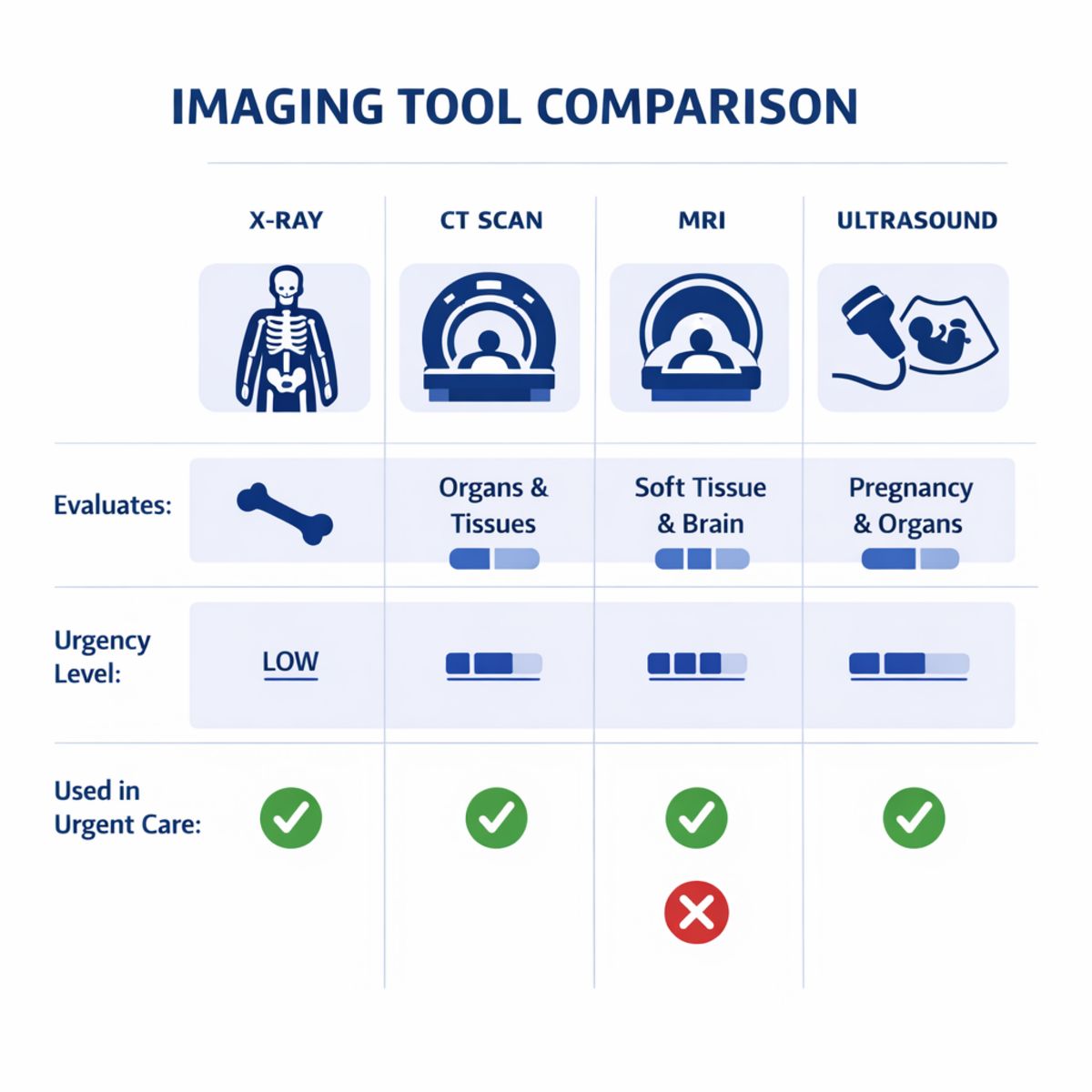
Diagnostic imaging services can include several different tools, and each one serves a different purpose. In simple terms, X-rays are often used to look at bones, some joint injuries, and certain chest-related concerns. Ultrasound may help evaluate soft tissues or fluid-related questions. CT scans provide more detailed cross-sectional images, while MRI is often used when a clinician needs a closer look at soft tissues, nerves, ligaments, or other internal structures. Lab testing is different from imaging, but it is also an important diagnostic tool because symptoms do not always require pictures to guide next steps.
A helpful way to think about a diagnostic imaging center or urgent care visit is that the right test depends on the symptoms, exam findings, and clinical judgment. Not every injury or illness needs imaging, and not every concern is best evaluated with an X-ray. In many urgent care settings, however, X-rays are central because they can quickly support evaluation for issues such as suspected fractures, some joint problems, or selected respiratory complaints.
X-rays for bones, joints, and some chest concerns
X-rays are commonly ordered when a clinician wants more information about a possible broken bone, certain sprains or joint injuries, or some chest symptoms depending on the situation. They are often valued for speed and practicality in urgent care. An x ray technician performs the imaging according to established protocols, while the clinician reviews the images and interprets the findings as part of the broader visit, including your symptoms and physical exam.
When other tests may be considered
Some concerns may call for other diagnostic steps instead of, or in addition to, an X-ray. Depending on the presentation, that could include follow-up imaging, specialist referral, emergency evaluation, or clinical laboratory services and diagnostic testing. This is why a clinician may recommend different next steps even when symptoms seem similar from one patient to another.
At a high level, X-rays, ultrasound, CT, MRI, and lab work are all part of the diagnostic process, but they are not interchangeable. The goal is not to use every tool, but to use the most appropriate one for the situation.
Why Diagnostic Imaging Matters in Urgent Care
Diagnostic imaging can play an important role in urgent care when a clinician needs more information during a same-visit evaluation. In many cases, it may help clarify whether a concern appears minor, whether activity should be limited, or whether additional care may be appropriate. For patients, that added context can make the visit feel more understandable and more useful.
In a non-emergency setting, imaging is often valuable because it supports practical decision-making. A clinician may combine your symptoms, exam findings, and imaging results to guide treatment planning, home-care instructions, bracing, follow-up timing, or referral. If you want to understand what to expect during a doctor exam, it helps to know that imaging is usually just one part of the overall assessment.
Faster clarity for common concerns
When symptoms suggest an injury or another issue that is not fully clear from the physical exam alone, imaging may provide faster clarity. That can help a clinician decide whether supportive care, a brace, activity limits, close follow-up, or referral makes sense. While it does not guarantee immediate final answers in every case, it may narrow the possibilities and support more confident next steps.
Better-informed next steps
Imaging findings may also help shape discharge instructions, indicate whether additional testing should be considered, or show when a higher level of care is needed. That is one reason many patients see value in visiting a diagnostic center within urgent care when appropriate: it can improve understanding of the situation and help guide care planning. Results vary by patient, and imaging is only one part of a complete clinical picture.

How to Know When Diagnostic Radiology May Be Needed
If you are wondering whether diagnostic radiology may be appropriate, the safest approach is to start with your symptoms and get evaluated by a clinician rather than trying to decide on a test yourself. In many cases, injury-related pain, swelling, limited movement, or symptoms that are not improving may need an in-person assessment. If imaging is appropriate, a provider can determine whether walk-in x-ray and diagnostic services may help as part of your care.
Step 1: Start with symptom severity
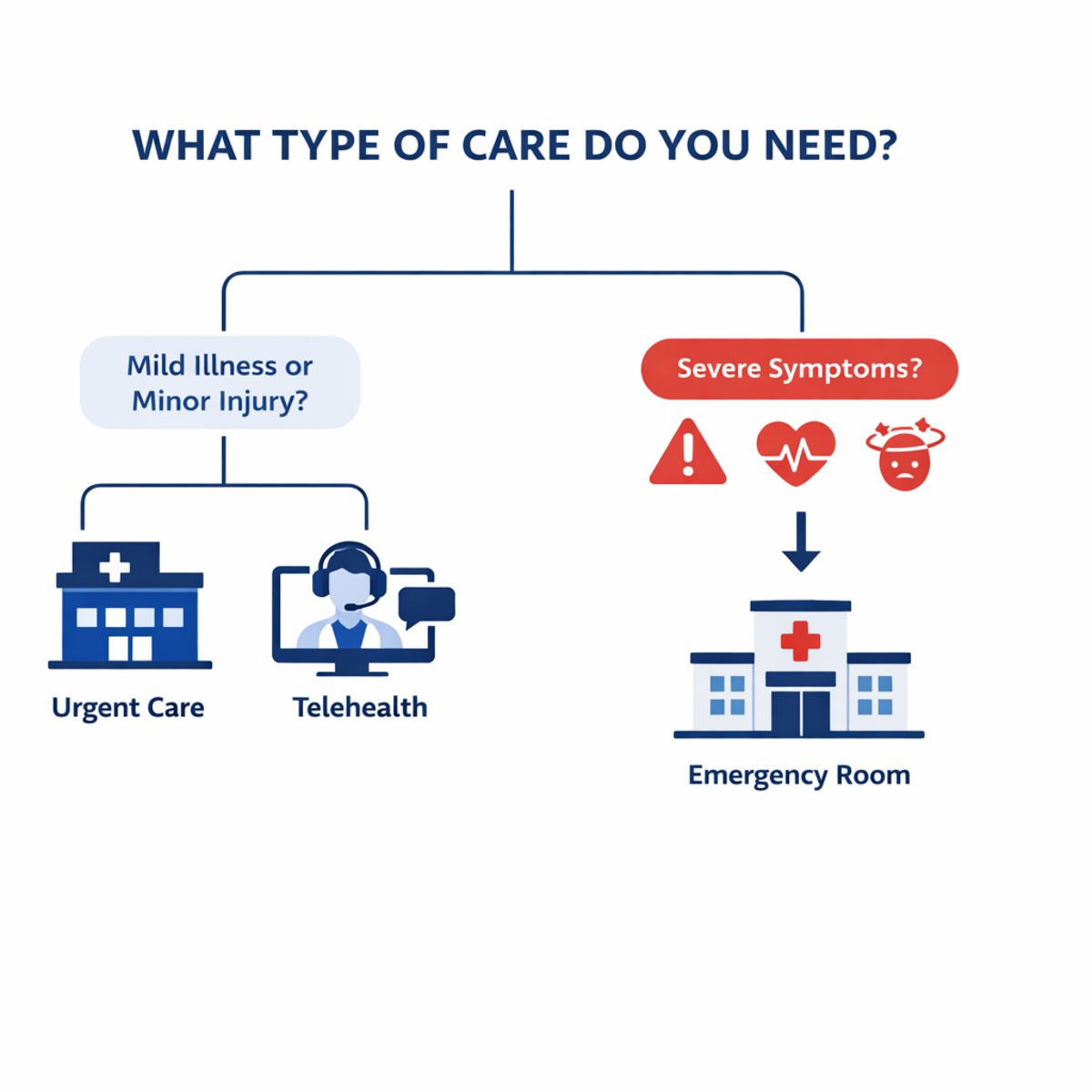
Mild to moderate, non-life-threatening symptoms may be appropriate for urgent care evaluation. Examples can include a possible minor fracture, a sprain, swelling after a fall, ongoing joint pain, or a cough or discomfort that has not improved and may need further review. However, severe trauma, chest pain, stroke symptoms, difficulty breathing, heavy bleeding, or sudden severe weakness require 911 or the nearest emergency room right away.
Step 2: Choose the right care setting
If your symptoms seem non-emergent but you are unsure where to start, urgent care may be a practical option for in-person evaluation. Telehealth can sometimes help with initial guidance, but imaging is not performed at home and generally requires a clinic visit if a provider decides it is needed. This helps clarify the difference between telehealth, urgent care, and the ER without encouraging self-diagnosis.
Step 3: Follow the clinician’s recommendation
After examining you, the clinician may recommend imaging, treatment without imaging, observation, referral, or emergency escalation depending on what they find. The goal is not to self-order diagnostic radiology, but to get the right level of care at the right time. When symptoms are persistent, worsening, or related to an injury, an in-person evaluation can help determine the next best step safely.
What to Expect During an Urgent Care Visit for Diagnostic Imaging

If you come in for diagnostic services, your visit usually begins with check-in, where staff may ask for your ID, insurance information, and basic paperwork. Bringing a current medication list can also help the care team understand your health history. Because insurance acceptance varies, it is helpful to confirm coverage details with the clinic when needed.
From check-in to imaging
After arrival, a clinician or medical team member will review your symptoms, ask questions about how the issue started, and perform a focused physical exam when appropriate. This step helps determine whether imaging is the right next step. If an X-ray or similar study is clinically appropriate, staff will explain the process and guide you through the imaging portion of the visit. Patients seeking urgent care services for walk-in evaluation can expect the decision to order imaging to be based on the full clinical picture, not on symptoms alone.
After the images are taken
Once the images are completed, the provider reviews the findings in context with your symptoms, exam, and medical history. Imaging can be an important tool, but it is only one part of the evaluation. Your clinician will discuss what the images may show, any limitations, and what next steps make sense for your situation.
Depending on the results, next steps may include treatment at the visit, home care guidance, referral for follow-up, or additional evaluation. In some cases, patients may also benefit from related care such as physical exams and preventive care services. The goal is to help you understand the process clearly, feel prepared, and know what to expect without overpromising timing or outcomes.
Common Reasons Patients May Need Diagnostic Imaging
People often look for answers after a fall, sports injury, twisting accident, or ongoing discomfort that does not seem to improve. In some cases, a clinician may recommend in-clinic imaging for injury evaluation as part of the assessment. Imaging is not always needed, though, and the decision depends on symptoms, the exam, and how the problem happened.
Injuries and musculoskeletal pain
Common reasons for evaluation include joint pain after a twist, swelling, trouble bearing weight, reduced range of motion, or concern about a minor fracture after a fall or direct impact. These situations may be similar to knee injury symptoms and treatment options, where an exam helps determine the next step.
Illness-related concerns
Some illness symptoms may also lead a clinician to consider imaging, such as a persistent cough with chest discomfort, depending on the full presentation. For example, concerns related to chest pain when coughing causes and care may or may not require imaging after evaluation. Severe chest pain, major trauma, or breathing difficulty should be treated as emergencies and need immediate emergency care.
Frequently Asked Questions About Diagnostic Radiology
Quick answers to common imaging questions
What does diagnostic radiology include?
Diagnostic radiology refers to imaging used to help evaluate symptoms or injuries, such as X-rays and other scans ordered when clinically appropriate. The exact type of imaging depends on the concern, the setting, and what services are available on-site.
Can urgent care do diagnostic imaging?
Some urgent care centers can perform limited diagnostic imaging, most commonly X-rays for certain injuries or symptoms. Availability varies by location, staffing, and equipment, so it is best to confirm services before you visit.
Is an X-ray the same as diagnostic radiology?
An X-ray is one type of diagnostic radiology. Diagnostic radiology is the broader category that includes different imaging tools used to help assess a medical issue.
Can telehealth tell me if I need imaging?
Telehealth may help a clinician review your symptoms and advise whether in-person evaluation could be appropriate. However, telehealth does not replace imaging itself, and some concerns require a physical exam or immediate in-person care.
When should I go to the ER instead of urgent care?
Go to the ER for severe chest pain, trouble breathing, signs of stroke, major head injury, heavy bleeding, seizures, or other potentially life-threatening symptoms. Urgent care is generally more appropriate for non-life-threatening issues that still need prompt attention.
Will insurance cover diagnostic imaging at urgent care?
Coverage depends on your insurance plan, network status, and the imaging service provided. Because benefits vary, it is wise to verify coverage and any out-of-pocket costs with your insurer before or after your visit as needed.
Does imaging always lead to treatment the same day?
Not always. In some cases, imaging helps determine next steps, which may include home care instructions, follow-up, referral, or a higher level of care depending on the findings and your symptoms.
When You Need Answers, Prime Urgent Care Is Here to Help
If you’re dealing with a non-life-threatening injury or symptoms and want clear next steps, Prime Urgent Care is here to support you. Our team can evaluate your condition and determine whether X-Ray & Diagnostic Services at Prime Urgent Care may be appropriate based on a clinician’s assessment.
Walk in for an in-clinic evaluation, or reach out with questions about scheduling, telehealth guidance, or insurance acceptance. Telehealth may help with initial direction, but imaging requires an in-person visit. We also recommend verifying your insurance before you come in.
Walk in or contact the team
Final Thoughts on Diagnostic Radiology
Diagnostic radiology can play an important role in helping clinicians evaluate a wide range of non-emergency concerns, especially when an X-ray may help clarify what is causing pain, swelling, or symptoms after a minor injury. In many cases, imaging is most useful after a clinical evaluation, since the right next step depends on your symptoms, medical history, and exam findings. Results can vary from person to person, so care decisions should always be based on individual needs.
A practical next step for non-emergency concerns is to seek medical evaluation when symptoms persist, worsen, or follow an injury that does not seem severe but still needs attention. This can help determine whether imaging is appropriate and what treatment or follow-up may be needed.
Just as important, it helps to know the boundary between urgent and emergency care. Urgent care may be appropriate for many non-life-threatening concerns, while severe symptoms such as trouble breathing, chest pain, major trauma, heavy bleeding, or signs of stroke require immediate emergency care by calling 911 or going to the nearest ER. Keeping that distinction in mind can help you take a clear, calm, and safe next step.