

Chest hurts when you cough can happen for a few different reasons, including strained chest muscles, irritated airways, or infections such as a cold or flu. Sometimes the cause is mild and improves with rest, but chest pain with coughing can also signal a problem that needs prompt medical attention.
A quick answer: coughing puts pressure on the chest, so soreness may come from overworked muscles or inflamed tissues in the airways and lungs. Even so, proper assessment may require an in-person or Telehealth visit, especially if symptoms are new, worsening, or hard to explain.
This article is educational and not a diagnosis. Seek emergency help right away by calling 911 or going to the nearest ER for severe chest pain, severe trouble breathing, stroke symptoms, fainting, blue lips, or chest injury after major trauma. For non-life-threatening symptoms, urgent care may be a reasonable option to evaluate cough-related chest discomfort, look for common causes, and help you decide what to do next.
Why Coughing Can Make Your Chest Hurt
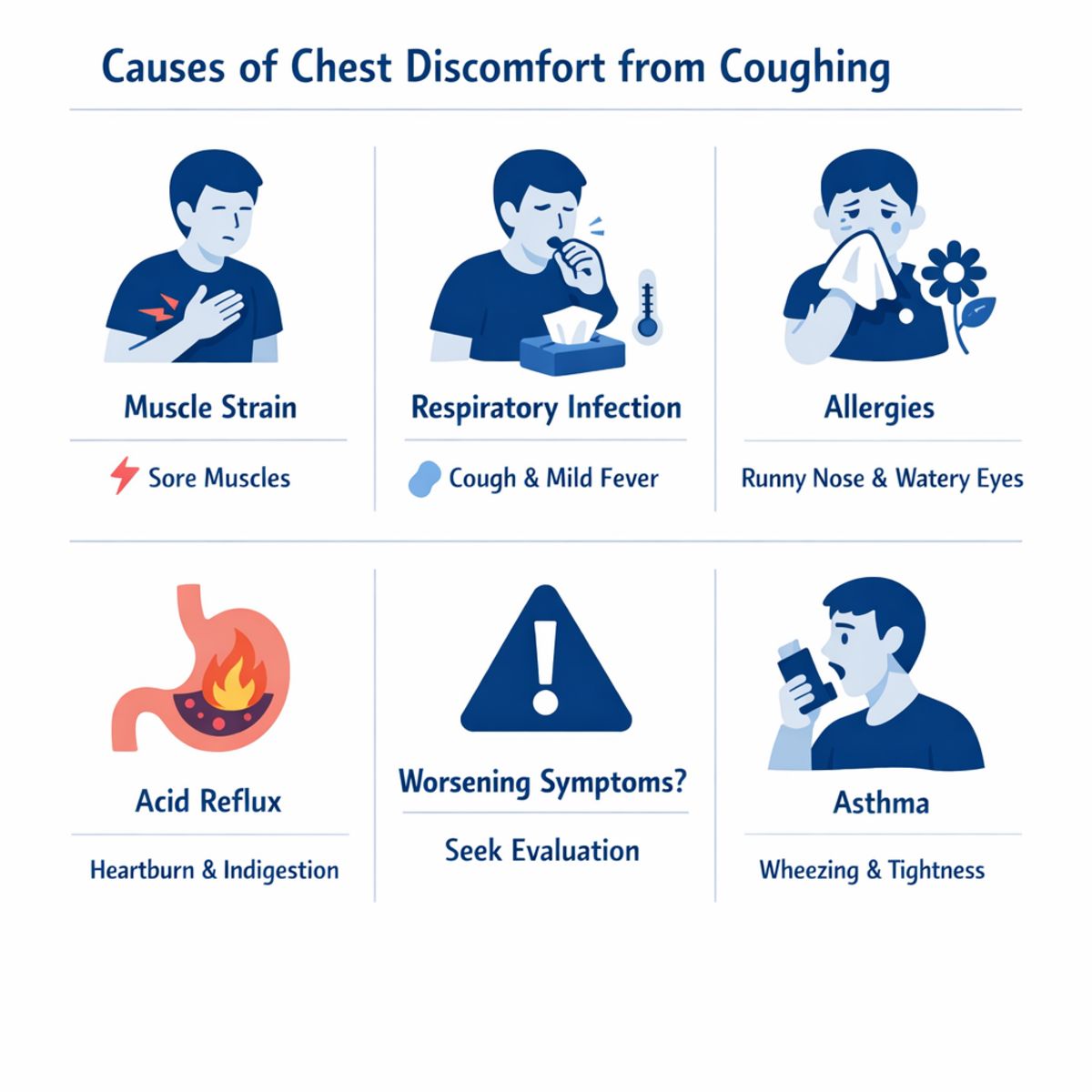
Coughing can make your chest hurt because a cough is a strong, repeated body movement. Each cough quickly tightens the muscles in your chest wall, between your ribs, and around your upper abdomen. If you have been coughing often, those muscles and nearby tissues can become sore, much like they would after repeated exercise or strain.
Chest wall strain from repeated coughing
When coughing happens over and over, the chest wall does extra work. That can lead to tenderness, aching, or a sharper discomfort when you cough, twist, or take a deep breath. In many cases, the pain is related to the effort of coughing itself rather than something more complex. This is one reason chest soreness may show up during common respiratory illnesses.
Airway and throat irritation
Irritation can also play a role. A cold, flu, bronchitis, or other upper respiratory symptoms may inflame the throat and airways, making each cough feel harsher. Congestion and postnasal drip can keep triggering the urge to cough, which may add to the soreness. If you are noticing other signs of a cold and wondering what is a head cold, these types of symptoms often overlap and can make the chest feel more uncomfortable during an illness.
While chest pain with coughing can have different causes, it is often linked to muscle strain and irritation from everyday illnesses. If symptoms continue or feel concerning, learning more about flu and cold treatment at Prime Urgent Care may be helpful.

Common Causes of Chest Pain When Coughing
Chest discomfort with coughing can happen for several non-emergency reasons, especially during or after a respiratory illness. The pattern of symptoms often offers useful clues, but it is still important not to self-diagnose. If pain becomes more intense, breathing feels harder, or symptoms are not improving, medical evaluation is important.
Colds, flu, and upper respiratory irritation
Common viral illnesses such as colds and flu may lead to repeated coughing, throat irritation, congestion, fatigue, and a sore chest. In many cases, the discomfort is tied to inflammation and strain from frequent coughing rather than a more serious cause. Signs of a cold, post-nasal drip, and sinus drainage can all keep the cough going, especially at night.
Bronchitis or lingering airway inflammation
Bronchitis may cause a persistent cough, chest tightness, mucus, and a burning or sore feeling in the chest. Sometimes the cough lasts longer than the initial illness, so a person may feel generally better but still have ongoing coughing spells. This lingering airway irritation can make chest pain more noticeable with deep breaths or repeated coughing.
Muscle soreness after repeated coughing
Frequent coughing can strain the muscles between the ribs and across the chest wall. This type of soreness is often easier to notice when twisting, laughing, pressing on the area, or taking a deep breath. The discomfort may feel sharp or tender, which can be alarming, but the pattern often points to muscle irritation rather than pain coming directly from inside the chest.
Sinus symptoms can also play a role. Comparing a sinus infection vs cold is not always simple, but both can trigger drainage that irritates the throat and leads to persistent coughing. In some cases, upper respiratory illness may also come with ear pressure or symptoms that resemble an ear infection for adults, though those issues do not directly explain chest pain itself.
Some coughs need age-appropriate medical evaluation instead of guesswork. For example, a croup cough in children should be assessed in the proper clinical context. If a cough is lingering, worsening, or paired with ongoing chest discomfort, a clinician can help determine the next steps.
Warning Signs You Should Not Ignore
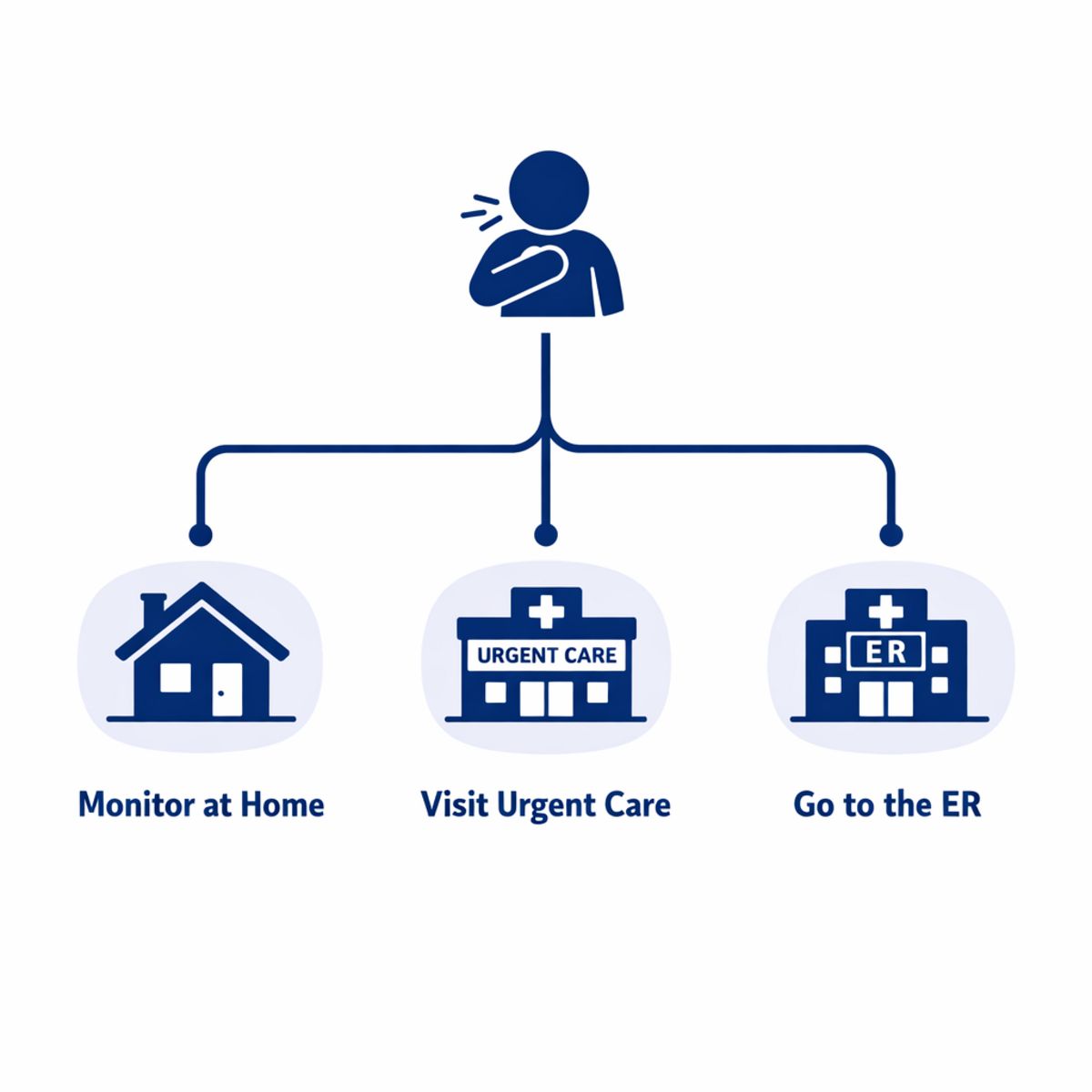
If cough, chest discomfort, or breathing symptoms are getting worse, it is important to know when prompt care is enough and when emergency help is needed. Some symptoms may be appropriate for urgent care, while others should never wait. If you are also dealing with pain triggered by coughing, this guide on why your head hurts when coughing may offer helpful context, but worsening or severe symptoms still need medical judgment.
When urgent care may be appropriate
- Persistent cough with mild to moderate chest discomfort that is not severe
- Fever, congestion, sore throat, or symptoms that need same-day evaluation
- Symptoms that are not improving as expected, especially if dehydration or weakness is developing
- Non-life-threatening concerns that may need testing or X-ray diagnostic services when imaging is needed
When to seek emergency care right away
- Severe chest pain or pressure
- Severe trouble breathing, worsening shortness of breath, or bluish lips
- Coughing up blood
- Fainting, confusion, or inability to stay awake
- Stroke-like symptoms such as facial drooping, arm weakness, or trouble speaking
- Severe trauma or any rapidly worsening condition
If you have severe chest pain, severe breathing difficulty, stroke symptoms, or major injury, call 911 or go to the nearest emergency room right away. Urgent care is not a substitute for emergency treatment in life-threatening situations.
What to Do If Your Chest Hurts When You Cough

If your symptoms seem mild and stable, it can help to take a step-by-step approach. The goal is to notice patterns, support your recovery, and know when it makes sense to get medical advice. Chest discomfort with coughing can come from several causes, so it is best to focus on what you can observe rather than trying to diagnose it yourself.
1. Monitor the pattern of your symptoms
Keep track of when the pain happens, whether it only appears during coughing, and whether it is staying the same or getting worse. It is also useful to note fever, congestion, fatigue, shortness of breath, or any change in how often you are coughing.
A simple symptom log can make it easier to explain what has been happening if you decide to seek care. Pay attention to how long symptoms have lasted and whether your breathing feels different from usual.
2. Use supportive care for mild illness symptoms
When symptoms are mild, general self-care may help you feel more comfortable. Rest, stay hydrated, and avoid irritants such as smoke or strong fumes that may make coughing worse. Try to give your body time to recover, especially if coughing is frequent or tiring.
If symptoms remain mild and do not appear to be progressing, continued monitoring may be reasonable. If they begin to interfere more with daily activity, that is a good reason to consider an evaluation.
3. Get evaluated if symptoms persist or worsen
If your cough, chest discomfort, fever, or breathing changes are persistent, worsening, or otherwise concerning, seek medical evaluation. A clinician may review your symptoms, listen to your lungs, and decide whether testing is appropriate. In some cases, services such as clinical laboratory services for illness testing may be part of that process.
For non-emergency symptoms, Telehealth visits for non-emergency symptoms may also be an option, depending on your situation. Insurance acceptance can vary, so it is smart to verify coverage before visiting a clinic or scheduling a virtual appointment.
If you are unsure whether your symptoms should be checked, it is generally safer to ask a medical professional than to wait and guess.
Urgent Care vs. the ER for Cough-Related Chest Pain
If chest discomfort happens with a cough, the right place to go depends on how severe the symptoms are. Urgent care may be appropriate for some mild to moderate respiratory concerns, while the ER is the safer choice for severe or potentially life-threatening symptoms. If you are looking for care for cough and cold symptoms, it is still important to know when symptoms go beyond what should be evaluated outside the emergency room.
When urgent care may help
Urgent care may help evaluate non-emergency symptoms such as cough, congestion, fever, sore throat, and chest discomfort that is not severe. Depending on the condition, a clinician may assess symptoms, check vital signs, and help determine whether the cause seems related to a respiratory illness, irritation from coughing, or another issue that needs further care.
In general, same-day urgent care may be reasonable when symptoms are uncomfortable but stable, and when breathing problems or chest pain are not severe.
When the ER is the better choice
The ER is the better choice for severe chest pain, severe trouble breathing, or other emergency warning signs. Emergency care is also more appropriate if symptoms are rapidly worsening, feel intense or crushing, or are accompanied by signs that suggest a serious medical problem.
Urgent care does not replace emergency care. If chest pain is severe or breathing is severely affected, seek emergency help right away.
What to Expect From an Evaluation
A basic urgent care evaluation often begins with a review of your symptoms, vital signs, medical history, and a physical exam. Based on what you share and what the clinician observes, additional testing may be recommended to help guide next steps.
Possible steps during your visit
Depending on your condition, the visit may include lab testing, swabs, or imaging. If needed, X-ray diagnostic services at Prime Urgent Care may be part of the evaluation process. Recommendations vary by symptoms and physician assessment, so not every visit includes the same services.
Insurance acceptance can vary by plan, so it is a good idea to confirm coverage in advance and bring your insurance card and identification to the visit.

Frequently Asked Questions
Can a cold make my chest hurt when I cough?
Yes, a cold can lead to frequent coughing that strains the muscles and tissues in the chest, causing soreness or discomfort. Even so, chest pain that is severe, lasts beyond the illness, or gets worse should be evaluated by a medical professional.
How do I know if chest pain from coughing is serious?
Chest pain may be more concerning if it is intense, comes with trouble breathing, fainting, bluish lips, confusion, coughing up blood, or symptoms that are rapidly worsening. These signs can point to a more urgent problem and should not be ignored.
Is chest soreness after coughing always a lung problem?
No. Chest soreness after coughing can sometimes come from irritated muscles, the chest wall, or strain from repeated coughing. That said, chest discomfort can have different causes, so ongoing, unexplained, or worsening pain deserves medical attention rather than self-diagnosis.
Should I go to urgent care for chest pain when I cough?
Urgent care may be appropriate for mild to moderate symptoms that are not improving, especially if you want an exam and guidance. However, severe chest pain, significant shortness of breath, fainting, or coughing up blood should be treated as emergencies and evaluated in the ER.
Can sinus drainage cause coughing that makes my chest sore?
Yes, postnasal drip from sinus drainage can trigger repeated coughing, and that coughing may leave the chest feeling tender or sore. If the cough lingers, disrupts sleep, or is paired with fever, wheezing, or breathing trouble, it is wise to get checked.
When should I call 911 instead of going to urgent care?
Call 911 for chest pain with severe breathing difficulty, pressure-like pain, fainting, confusion, blue lips, or coughing up significant blood. Emergency help is also important if symptoms come on suddenly or feel life-threatening. When in doubt, choose emergency care over waiting.
When to Reach Out for Care
If you have a persistent cough, cold, or flu symptoms that are not improving, it may be time to seek evaluation. Prime Urgent Care offers walk-in in-clinic urgent care for non-emergency needs, and Telehealth visits are available by appointment for appropriate concerns. If you have questions about next steps, scheduling, or whether an in-person or virtual visit may fit your situation, our team is here to help.
The Bottom Line
Chest pain when coughing can have more than one cause, including relatively common issues like muscle strain or irritation in the airways, but the exact reason is not something you can confirm on your own. Only a clinician can properly assess what is behind your symptoms. If the pain is severe, comes with trouble breathing, fainting, or other alarming symptoms, seek emergency care right away. If symptoms are milder but persistent, worsening, or concerning, it is still important to get evaluated promptly so you can get the right guidance and treatment.
Know when to monitor and when to get help
A mild cough-related ache may improve as irritation settles, but worsening pain or ongoing symptoms should not be ignored. When in doubt, safety comes first: get urgent help for severe symptoms, and seek timely medical evaluation for anything that does not feel right.