

If you’re wondering, why does my head hurt when I cough, the short answer is that coughing can temporarily raise pressure in your head, chest, and sinuses. That pressure shift can trigger pain, especially if you already have a cold, nasal congestion, or irritated sinus passages. In many cases, the discomfort is related to a short-term illness and improves as the cough and congestion settle.
Head pain with coughing can feel sharp, sudden, dull, or pressure-like, and the meaning often depends on what other symptoms are happening at the same time. For example, sinus pressure, a lingering upper respiratory infection, or frequent coughing fits are common reasons people notice this symptom.
Still, persistent, severe, or unusual head pain should not be ignored. If the pain is intense, keeps returning, or comes with warning signs like fever, vision changes, weakness, confusion, or trouble breathing, it’s important to get medical evaluation. Below, we’ll cover common causes, simple relief ideas, and signs that may need more urgent attention.
What it can mean when your head hurts during a cough
If your head hurts during a cough, it often means the force of coughing is briefly increasing pressure in your chest, sinuses, and head. That pressure shift can make already sensitive areas feel worse, especially when you also have congestion or are wondering what is a head cold and whether your symptoms match common signs of a cold. The symptom itself does not point to just one cause, and only a clinician can determine what is behind it after an evaluation.
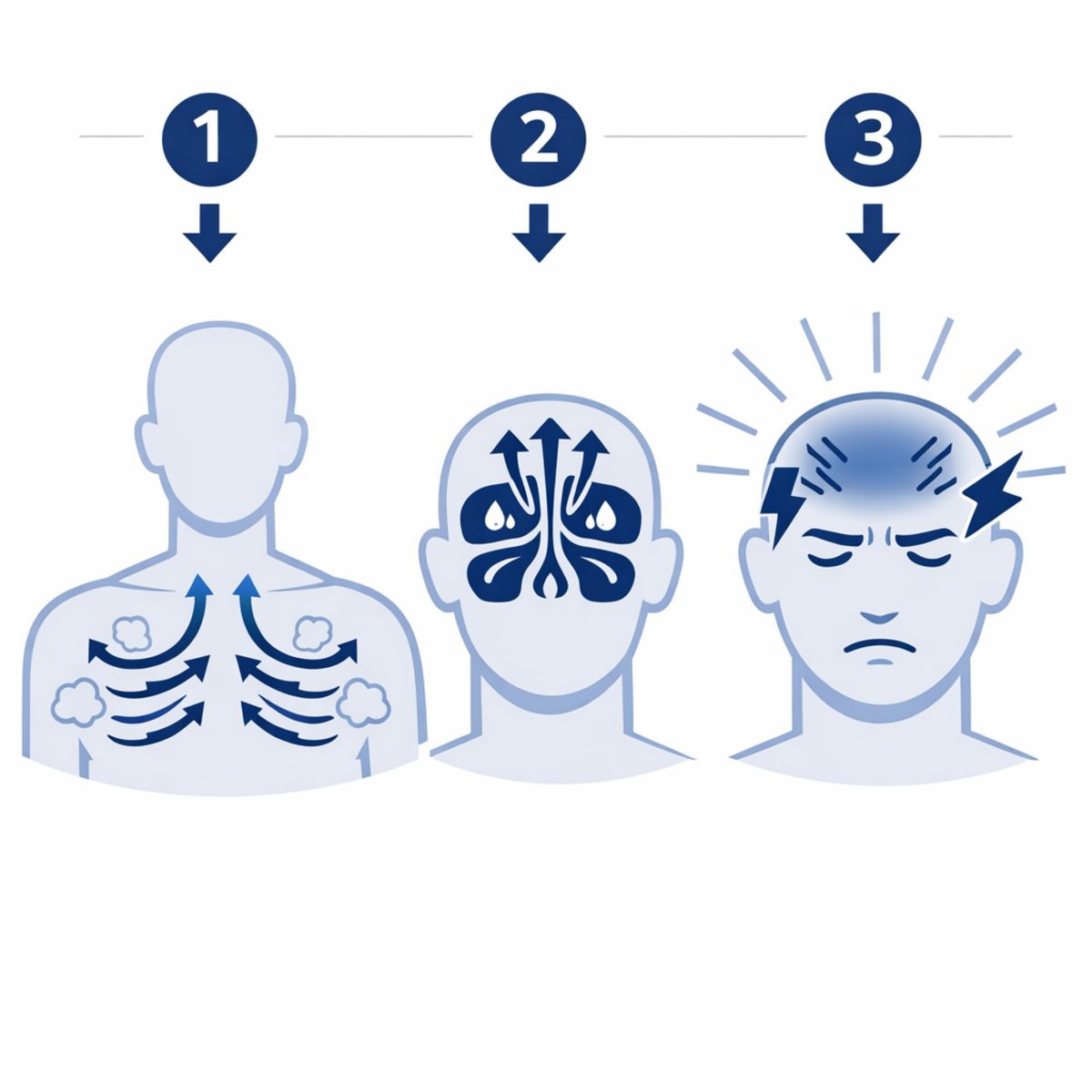
Why pressure changes matter
A forceful cough acts like a quick burst of internal pressure. For some people, that short pressure spike can trigger pain on its own. In simple terms, this is why coughing may lead to a sudden headache even if the pain lasts only briefly. In other cases, coughing does not create the whole problem by itself but instead aggravates something already going on, such as irritated sinuses, tension, or another headache pattern.
You may also hear the ideas of primary and secondary cough headaches. Primary cough headaches are triggered by the act of coughing itself. Secondary cough headaches happen when coughing brings out pain related to another condition. That distinction is important, but it is not something you can confirm on your own.
How colds and congestion fit in
When you have a head cold, nasal passages and sinuses can become swollen and congested. That swelling may make pressure sensations more noticeable, so a cough can feel like it sends pain into the forehead, around the eyes, or across the face. Readers comparing sinus infection vs cold symptoms often notice overlap, including congestion, drainage, facial pressure, sore throat, and coughing.
If you are dealing with ongoing cold symptoms, it may help to learn more about flu and cold treatment at Prime. That kind of evaluation can help clarify whether coughing, congestion, and head pain fit a routine illness pattern or need closer attention.
Common causes behind cough-related head pain
A headache that shows up or gets worse when you cough is often linked to common, non-emergency issues, especially during a respiratory illness. In many cases, pressure in the head, face, or neck increases briefly with coughing, which can make existing irritation feel more noticeable. While that can be uncomfortable, it does not always mean something serious is happening.
Some of the most frequent explanations include colds, sinus irritation, dehydration, muscle tension, and repeated forceful coughing. At the same time, if symptoms keep going, become more intense, or are paired with other concerning changes, a clinician may still want to evaluate the cause.
Colds, congestion, and head pressure
A simple cold is one of the most common reasons people notice head discomfort with coughing. If you have ever wondered what is a head cold, it usually refers to a viral upper respiratory infection that affects the nose, sinuses, and throat. Swollen nasal passages and mucus buildup can create pressure that feels heavier when you cough, lean forward, or bend over. This may lead to a dull headache, facial pressure, or a sense of fullness around the forehead.
Sinus irritation or infection
Sinus problems can also make cough-related head pain more noticeable. Pressure around the forehead, cheeks, eyes, or bridge of the nose may increase when coughing because the irritated sinus spaces are already inflamed. When people compare a sinus infection vs cold, the difference is not always obvious at home. A cold often improves gradually over several days, while sinus symptoms that linger, worsen, or involve more focused facial pressure may deserve medical review. It is best to think of sinus infection as one possible explanation rather than something to self-diagnose with certainty.
Strain, dehydration, and forceful coughing
Repeated coughing can strain the muscles of the neck, scalp, jaw, and upper shoulders. That tension can trigger or worsen a headache, especially after a long day of coughing. Dehydration may add to the problem by making headaches more likely and leaving mucus thicker and harder to clear. Forceful coughing can also irritate the chest and throat. In some cases, people notice that chest hurts when I cough along with head pain, which can happen with respiratory irritation but should be assessed if the pain is significant, persistent, or worsening.
If your symptoms are not improving, keep returning, or you are unsure whether it is a cold, sinus issue, or something else, Telehealth visits for cold symptom review may help you decide on next steps.

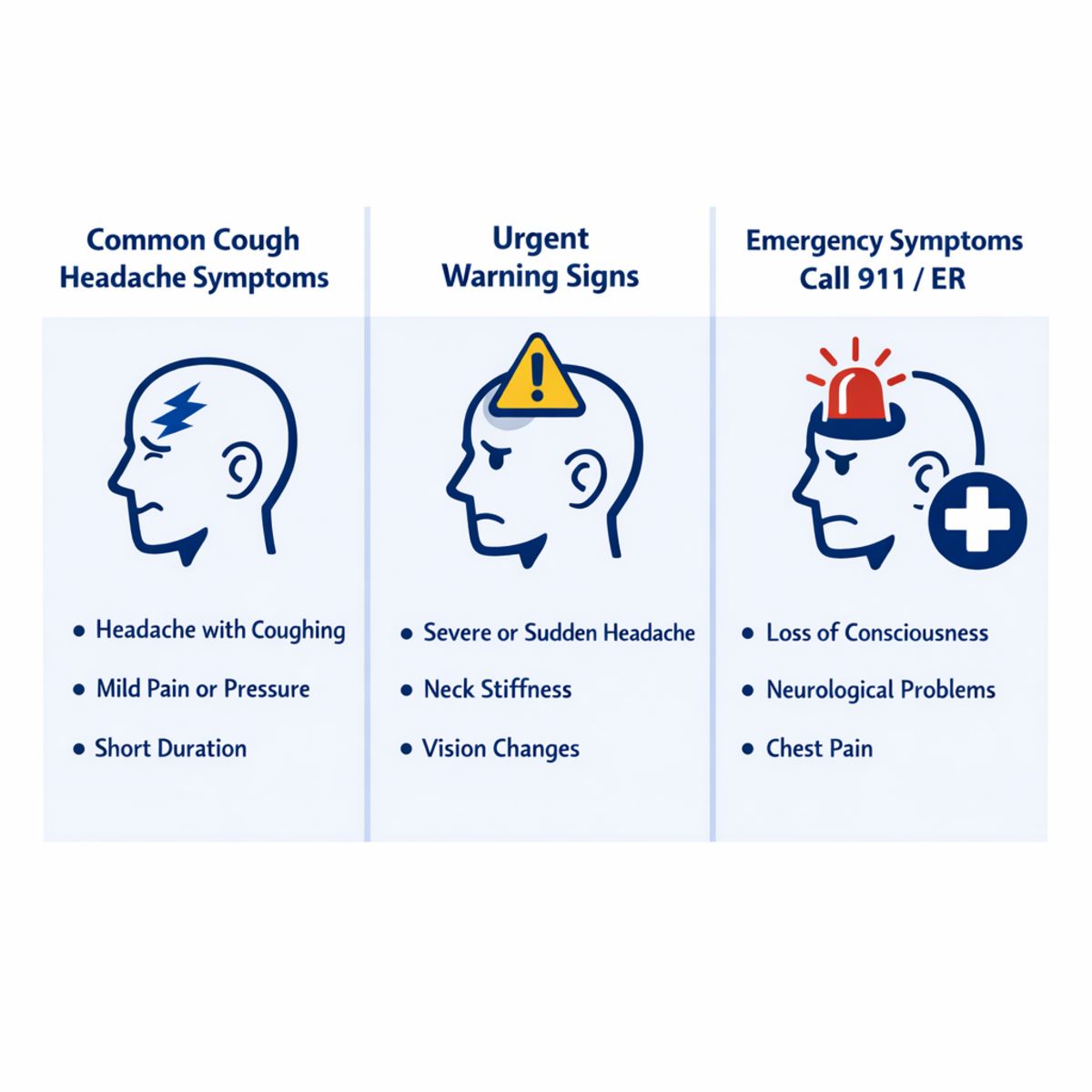
When a cough headache may need urgent medical attention
Most cough headaches are brief and improve as the cough settles, but some symptoms should not be ignored. If you are unsure whether your symptoms are routine or concerning, prompt care for cough and cold symptoms may help you decide the next step.
Symptoms that should be checked soon
- Headache that is lasting longer than expected or getting worse
- Symptoms that are not improving after several days
- Persistent fever, worsening congestion, or increasing ear pressure
- Repeated vomiting without signs of dehydration emergency
- A new cough headache that feels different from your usual symptoms
- Non-emergency but concerning symptoms that may need an urgent care evaluation for concerning symptoms
Symptoms that need emergency care
- Sudden, severe, or “worst headache” pain
- Fainting, confusion, seizure, or trouble staying awake
- Weakness, numbness, facial droop, trouble speaking, or other stroke-like symptoms
- High fever with a stiff neck
- Persistent vomiting with worsening headache
- Severe chest pain
- Difficulty breathing
If you have difficulty breathing, severe chest pain, stroke symptoms, or a sudden severe headache, call 911 or go to the nearest emergency room right away.
How to manage mild cough-related head pain at home

If coughing seems to be contributing to mild head pain, general self-care may help support recovery while you monitor how symptoms change. The goal at home is not to diagnose the cause, but to reduce common triggers such as dehydration, irritation, congestion, and overexertion. If symptoms continue, worsen, or do not seem typical for a minor illness, clinician evaluation is important.
1. Rest, fluids, and recovery support
Give your body time to recover. Rest may be helpful when a cold or similar minor illness is part of the picture. Staying hydrated can also support overall comfort, especially if frequent coughing, dry air, or reduced appetite has left you feeling run down. Warm or cool fluids may feel soothing for some people. If you are considering over-the-counter products, follow label directions carefully and make sure they are appropriate for you.
2. Ease congestion and pressure
Humidified air or brief steam exposure may help some people feel more comfortable when dryness or congestion is making coughing worse. Reducing exposure to smoke, strong fragrances, dust, or other irritants may also help limit coughing spells that can increase head pressure. If saline-based options are appropriate for you, they may support comfort as well. Keep any approach gentle, and stop if it seems to make symptoms worse.
3. Know when home care is not enough
Home care has limits. Seek medical evaluation if head pain is severe, keeps coming back, lasts longer than expected, or happens with fever, ear pain, shortness of breath, wheezing, chest discomfort, or worsening illness. It is also a good idea to get checked if the cough is persistent or the symptoms do not improve. If you want professional guidance without waiting, a Telehealth appointment for symptom guidance may be a convenient next step.
Related symptoms that can help a clinician narrow it down
A cough headache can happen with several common illnesses, so clinicians often look at the full symptom pattern rather than the headache alone. Comparing related symptoms can help you notice what is happening and decide when to seek care, without trying to self-diagnose.
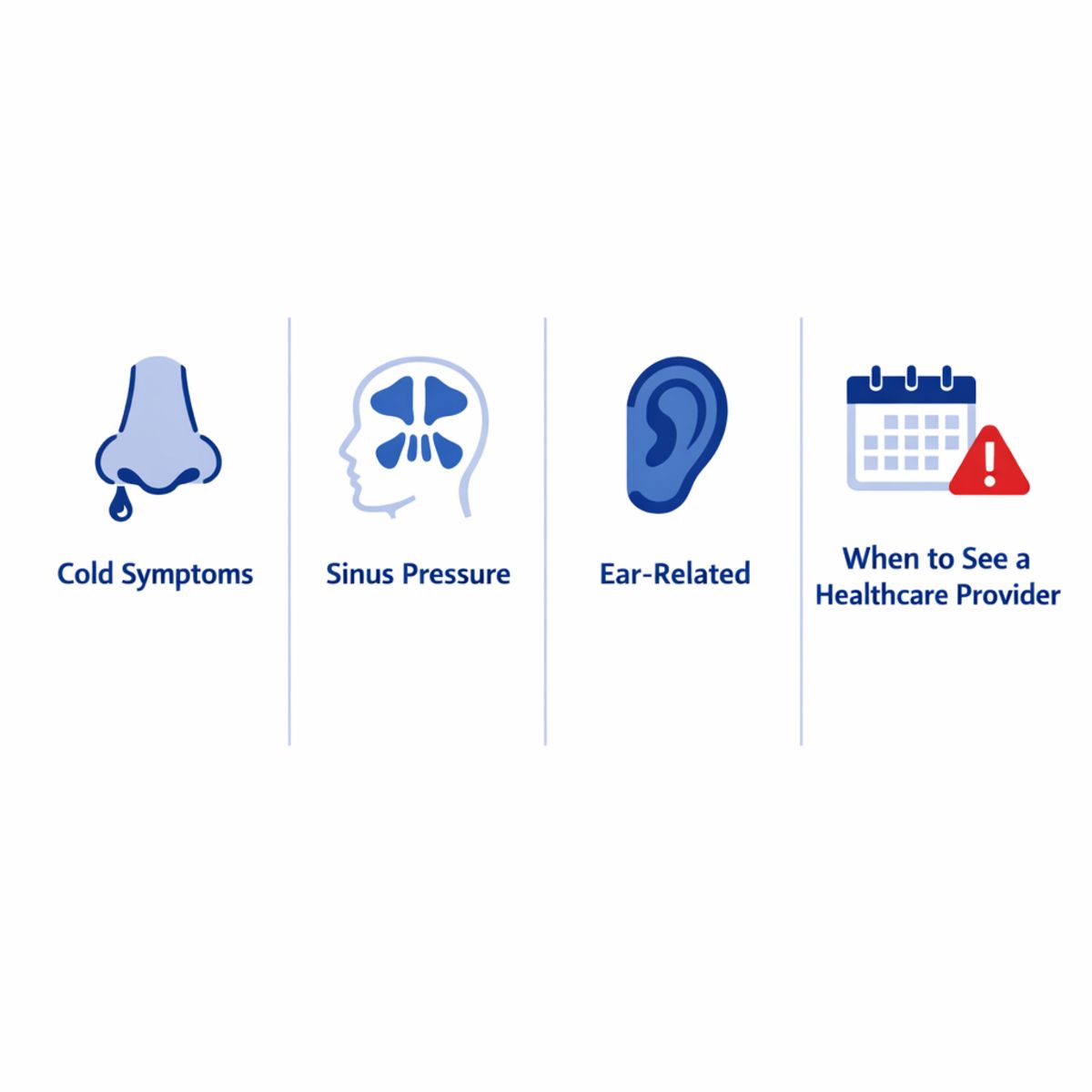
Cold symptoms vs sinus pressure symptoms
With a cold, people often notice congestion, a runny nose, sore throat, fatigue, and coughing that may irritate the head and throat. If you are looking for treatment for cold and flu symptoms, it helps to mention whether your headache comes on mainly during coughing spells or is present throughout the day.
Sinus pressure symptoms are often more localized. Pain or fullness in the cheeks, around the eyes, or in the forehead may feel worse when bending forward, straining, or coughing. That pattern can be different from the more general achy feeling many people get with a routine cold.
Ear symptoms and chest discomfort
Ear pressure can sometimes happen alongside congestion, and some adults may also wonder about signs of an ear infection for adults, such as ear pain, muffled hearing, drainage, or fever. Ear symptoms deserve evaluation when they are severe, persistent, or paired with dizziness or significant hearing changes. Earwax buildup treatment may help when pressure is caused by blockage, but earwax is not a typical cause of a headache triggered by coughing.
Chest hurts when I cough is another symptom that may appear with respiratory irritation, bronchitis, or muscle strain from repeated coughing. Mild soreness can occur with frequent coughing, but severe chest pain, shortness of breath, or trouble breathing should be evaluated urgently.
Frequently asked questions
Why does my head hurt when I cough but not all the time?
Coughing can briefly raise pressure in the head, so pain may only happen during certain coughs or when symptoms are more intense. Even so, new, severe, or worsening pain should be checked by a medical professional.
Can a cold or sinus problem cause a headache when I cough?
Yes, congestion or sinus pressure can make a cough headache more noticeable, especially during a cold. If symptoms last longer than expected, keep getting worse, or come with fever, facial swelling, or trouble breathing, seek medical care.
Is it normal if my chest hurts when I cough too?
Chest soreness can happen from repeated coughing because the muscles and airways become irritated. But urgent evaluation is important if chest pain is severe, happens with shortness of breath, dizziness, blue lips, or feels different from simple soreness.
When should I get checked for a cough headache?
Get checked if the headache is sudden, severe, keeps returning, or comes with vomiting, weakness, fainting, vision changes, confusion, or neck stiffness. It is also wise to seek care if you are worried, the cough is not improving, or the symptoms do not feel typical for you.
When to visit Prime Urgent Care for cough, cold, and headache symptoms
If you are dealing with non-emergency cough, congestion, sinus pressure, headache, or related symptoms that are not improving, Prime Urgent Care may be able to evaluate your condition and help you decide on next steps. You can walk in for urgent care services for non-emergencies, or consider Telehealth visits by appointment at Prime when appropriate.
Get evaluated when symptoms are not improving
If you want an evaluation, contact the clinic, walk in for in-clinic care, or ask about a Telehealth appointment. Be sure to verify insurance acceptance before your visit, as coverage can vary.
The bottom line on headaches triggered by coughing
Head pain that happens when you cough can sometimes go along with common short-term issues like a cold, nasal congestion, or sinus pressure. In many cases, the discomfort improves as the underlying irritation settles down. Even so, it is important to pay attention to how the pain feels, how long it lasts, and whether anything about it seems unusual for you.
A practical takeaway is this: mild symptoms that fit with an everyday illness may ease with time, but severe, sudden, or persistent symptoms should not be ignored. If the pain is intense, keeps returning, or comes with other concerning changes, professional evaluation is the safest next step.
A clear next step if you are unsure
If you are not sure whether your symptoms need attention, it is reasonable to err on the side of caution. Seek urgent care or emergency care when symptoms feel alarming, come on abruptly, or seem out of proportion to a typical cough or cold. A timely medical assessment can help you understand what to do next and give you peace of mind.