

If you need an urgent care sports physical in Los Angeles, urgent care may be a convenient option for students and athletes who need a timely exam, depending on the patient, the clinician’s evaluation, and the forms required by the school or sports program. Many Los Angeles families look for walk-in care when back-to-school schedules, practice start dates, or team deadlines are approaching. Sports physical requirements can vary by school, league, age, and medical history, so it helps to bring any required paperwork and be prepared for the visit.
Schools and athletic programs often require a pre-participation physical to help confirm that a student is ready for sports activity. Urgent care can be a practical non-emergency care setting for this type of exam, especially when convenience matters. However, wait times can vary, and not every situation is appropriate for urgent care. If an athlete has severe symptoms such as chest pain, trouble breathing, fainting, or another potentially serious concern, emergency room care is the right next step.
For families, students, and athletes trying to stay on schedule, a walk-in sports physical may help simplify the process while still allowing for clinician review of current health history and any required forms.
What Is a Sports Physical?
A sports physical is a focused exam used to review whether an athlete can safely participate in a sport based on their health history, current symptoms, medications, past injuries, and basic physical findings. It often supports school, club, or league paperwork and helps identify issues that may need more evaluation before participation. Because requirements can vary by organization, final clearance depends on the clinician’s judgment and the specific form being completed.
During the visit, a clinician may ask about asthma, heart symptoms, concussions, fractures, surgeries, allergies, or any condition that could affect activity. The exam may include vital signs and a general check of the heart, lungs, vision, joints, strength, and mobility. In some cases, findings may mean the athlete needs follow-up with a primary care provider or specialist before a decision is made.
Sports physical vs. annual physical
A sports physical is not always the same as a routine physical exam. Sports forms are usually designed around participation safety, while a routine physical exam may be broader and include preventive care, screenings, vaccines, and discussion of long-term health needs. Some families choose an urgent care physical exam for convenience, but it is still important to understand what the sports form requires and whether additional wellness care is due. You can also learn more about physical exams available at Prime Urgent Care.
Who may need a sports physical
Sports physicals are commonly requested for student athletes, school teams, club sports participants, and adults joining organized athletic programs when a league or organization requires documentation. Even when a form seems straightforward, the visit can be a useful chance to review prior injuries and any symptoms that could affect safe participation.

Why Choose Urgent Care for a Sports Physical?
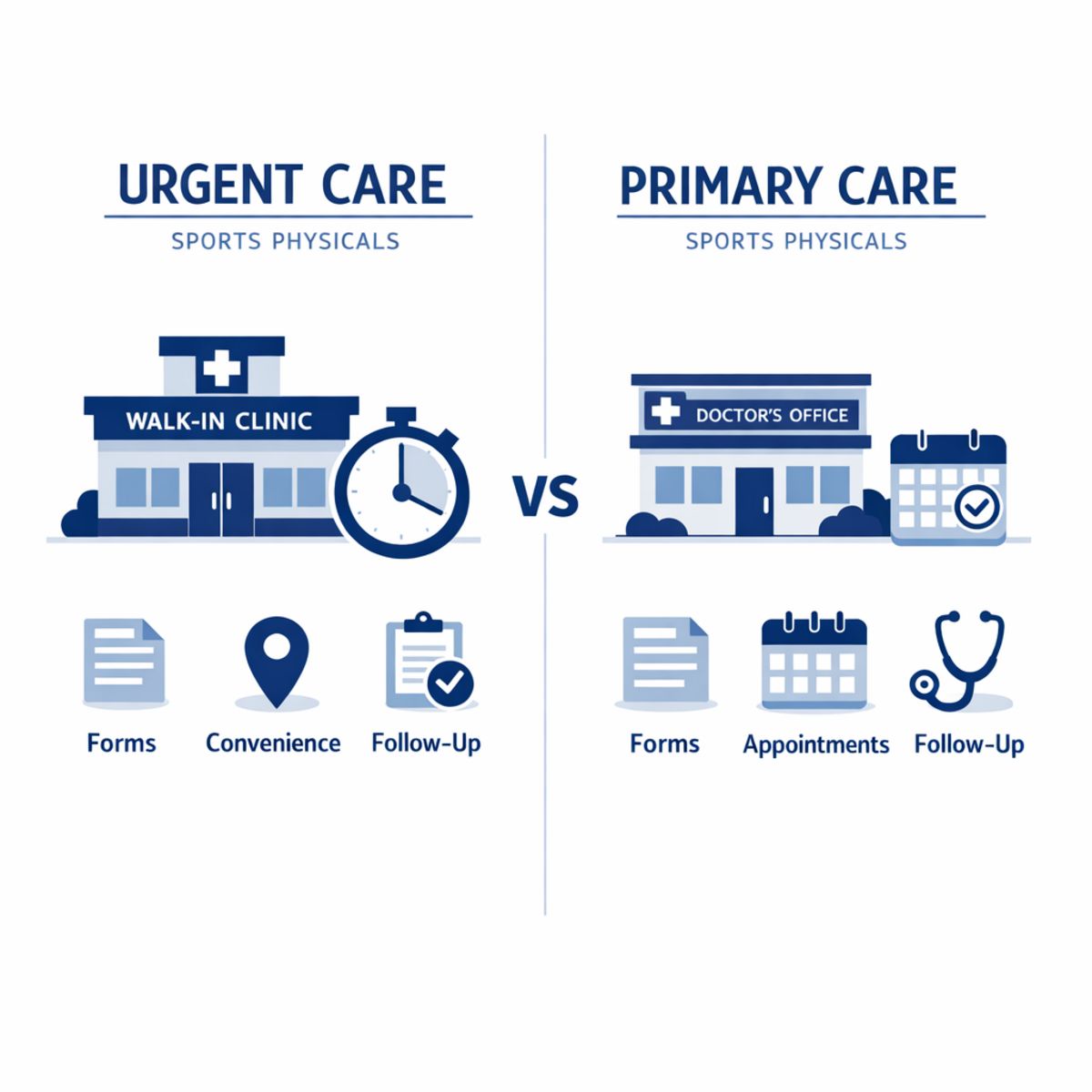
For many families and athletes in Los Angeles, timing matters. Between school deadlines, practice schedules, work, and transportation logistics, finding a practical place to complete a required sports physical can make the process easier. An urgent care physical may be worth considering when you want an in-clinic option that fits into a busy week without relying on a traditional office schedule alone.
Convenience for busy Los Angeles schedules
One of the main advantages of urgent care is accessibility. Many patients look for walk-in physical exams because it can be difficult to coordinate a standard appointment around classes, commuting, team activities, and family responsibilities. For local residents comparing options, sports and school physical exams in Los Angeles may be a useful starting point when reviewing what is available nearby.
When primary care timing is a challenge
Urgent care may also help when a primary care appointment is not available soon enough for a school or sports participation deadline. That does not replace the value of an ongoing relationship with a primary care provider, especially if follow-up is needed, but it may be a practical option for straightforward exam requirements. Services are provided in the clinic rather than in the home, and availability can vary by location and demand.
It is also smart to verify paperwork requirements in advance and confirm whether your insurance is accepted, since coverage and payment policies may differ. Taking a few minutes to check forms, hours, and visit details beforehand can help you choose the setting that best matches your schedule and your athlete’s needs.
What to Expect During an Urgent Care Sports Physical

A sports physical at urgent care is usually a straightforward visit designed to review general health and identify anything that may need more attention before participation. While each clinic may have its own workflow, most appointments follow a similar pattern. The goal is to help patients and families feel prepared for the physical appointment and understand that results vary by patient.
Check-in, forms, and health history
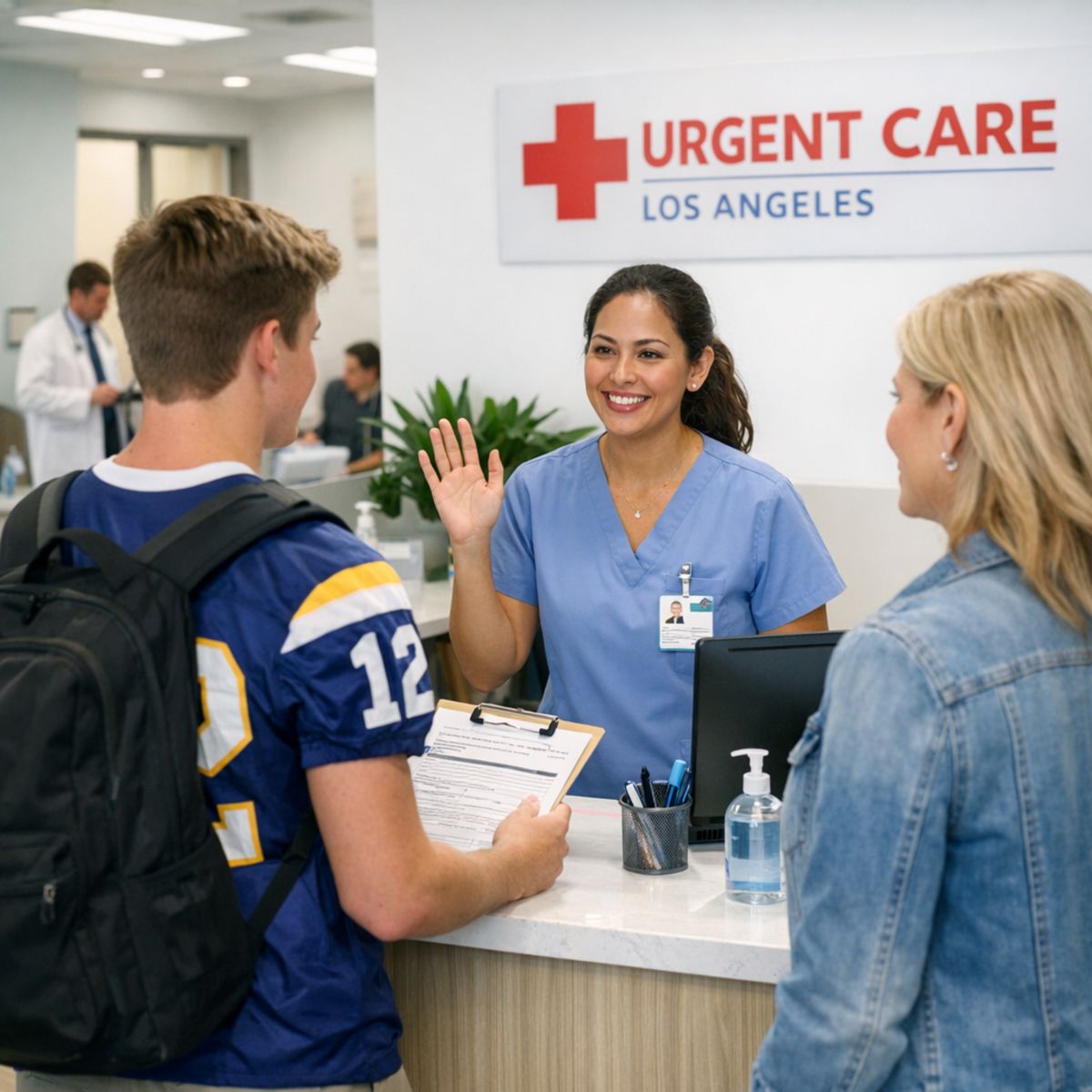
The visit often starts with check-in and paperwork. Patients may be asked to provide school or sports forms, insurance information, and details about their medical background. This history review commonly includes medications, allergies, past surgeries, prior injuries, and any current symptoms. It can also include questions about issues such as asthma, past concussions, heart-related concerns, or orthopedic injuries when relevant. Giving complete and accurate information helps the clinician make the most informed decision possible.
Common parts of the exam
After paperwork, the clinician or care team may take basic measurements such as height, weight, blood pressure, pulse, and other routine vitals. Depending on the form, vision screening may also be included. The physical assessment is generally broad rather than highly specialized and may involve reviewing overall wellness, movement, and any concerns the patient mentions. Exact exam components are not universal and may vary based on the patient, age, history, and the requirements on the form. For a broader overview, you can read what to expect during a doctor exam.
When follow-up may be recommended
In some cases, the clinician may identify something that needs additional evaluation before a sports clearance form can be completed. This does not always mean there is a serious problem, but it may mean more information is needed first. If concerns come up, the next step could include follow-up with a primary care provider, specialist, or another appropriate evaluation. The clinician determines whether the form can be completed based on the findings from that visit.
How to Prepare for a Sports Physical
A little preparation can make your appointment smoother and help prevent delays. If you are planning a sports physical, use this simple checklist before your visit. You can also review Los Angeles physical exam visit details so you know what to expect.
Step 1: Gather forms and identification
- Bring the school, camp, or league sports physical form.
- Have an ID and insurance card ready if applicable.
- Check whether any sections must be completed by a parent or guardian in advance.
Step 2: Prepare your health information
- Make a list of current medications and known allergies.
- Note past surgeries, broken bones, concussions, or sports injuries.
- Bring glasses or contacts if the athlete uses them.
Step 3: Plan for the clinic visit
- Wear comfortable clothing that makes the exam easier.
- Arrive with enough time to complete any remaining paperwork.
- For minors, bring a parent or guardian when consent or signatures may be required.
This checklist helps families come prepared for a sports physical visit and keeps the process efficient for school and athletic participation.

When Urgent Care May Not Be the Right Fit
Urgent care can be a practical option for many routine sports physicals, but it may not be the best fit in every situation. Some athletes have medical histories or current concerns that call for added review, follow-up, or clearance from a primary care clinician or specialist. Being clear about those limits helps support safe next steps and realistic expectations.
Complex medical history or specialty clearance
If there is a history of heart conditions, fainting with exercise, seizures, asthma that is not well controlled, recent concussion, or significant orthopedic injury, additional evaluation may be needed depending on the situation. In some cases, urgent care may recommend follow-up before a form can be completed. For non-urgent questions after a visit, telehealth visits for follow-up care questions may be helpful, although sports physicals are generally completed in person.
Symptoms that need emergency care instead
Urgent care is not a substitute for emergency care. Chest pain, severe trouble breathing, stroke symptoms, major head injury, severe bleeding, or serious trauma should be treated as emergencies. Call 911 or go to the nearest emergency room right away for life-threatening symptoms. If you are unsure about care setting differences, it may help to read more about when to go to an ambulatory care center.
A careful, transparent approach can help make sure athletes get the right level of care at the right time without delaying treatment when something more serious may be going on.
Cost and Insurance Considerations
Costs for a sports physical can vary based on visit details, any additional evaluation needed, and your specific insurance plan. Coverage is not the same for every patient, so it is best to confirm benefits before coming in rather than assuming a visit will be covered in full.
If you plan to use insurance, verify that your plan is accepted and ask whether there are any copays, deductibles, or form-related requirements that could affect the visit. Reviewing physical exam services and visit information ahead of time may also help you prepare for what to bring.
Verify coverage before your visit
For self-pay questions, pricing details are best confirmed directly with the clinic team before arrival. Checking in advance can help set clear expectations and make the visit process smoother.
Finding a Sports Physical in Los Angeles Without the Guesswork
If you need a sports physical in Los Angeles, it helps to plan before school deadlines or seasonal league sign-ups get close. Busy periods can mean more scheduling pressure, so bringing completed forms and any required health history can make the visit smoother. It’s also important to remember that sports physicals require an in-clinic evaluation rather than a remote visit, especially when clearance paperwork must be completed accurately.
Plan ahead for school and league deadlines
Families across Los Angeles often wait until the last minute, but earlier visits can reduce stress and help avoid delays if additional follow-up is needed. If your student athlete has recent pain or mobility concerns, reviewing knee injury symptoms and urgent care treatment may also be helpful before the appointment.
Frequently Asked Questions
Can you get a sports physical at urgent care?
Yes, urgent care may provide sports physicals. Availability can depend on the clinic, the clinician’s evaluation, and the requirements of the school or sports organization. A visit does not guarantee sports clearance.
What should I bring to a sports physical?
Bring any required school or team forms, a photo ID, insurance information if applicable, a list of medications, glasses or contacts if used, and any relevant medical history. If the athlete is a minor, a parent or guardian may also need to provide health details or consent based on clinic policy.
Is a sports physical the same as a routine physical exam?
No. A sports physical is usually focused on whether it appears safe for an athlete to participate in sports. A routine physical exam is often broader and may include preventive care, screenings, and ongoing health management.
Can urgent care complete school or team forms?
Often yes, but form completion depends on the findings of the exam and the specific requirements on the form. In some cases, additional information or follow-up may be needed before a form can be completed.
What if the clinician finds a concern during the exam?
If a concern is identified, the clinician may recommend more evaluation before sports participation. This is meant to protect the athlete’s health and safety. If someone has severe symptoms such as chest pain, trouble breathing, or fainting, seek emergency care right away.
Does insurance cover an urgent care sports physical?
Coverage varies by insurance plan and visit details. Some sports physicals may be treated differently from illness or injury visits, so it is best to verify benefits with the insurance provider before coming in.
Need a Sports Physical in Los Angeles?
If you need a sports physical, Prime Urgent Care can help with an in-clinic evaluation for school, camp, and athletic participation forms. You can also review our urgent care physical exam services to learn more about visit expectations.
Before you come in, bring any required paperwork, a list of medications, and be ready to verify insurance and identification. If you have questions about forms, coverage, or how to prepare, the team can provide guidance. Telehealth may be helpful for related questions, but it is not a substitute for the physical exam itself.
Contact Prime Urgent Care
Contact the clinic for current visit information, insurance questions, and preparation details, or visit for an in-clinic sports physical evaluation.
Final Thoughts on Urgent Care Sports Physicals
Urgent care may be a convenient option for sports physicals in Los Angeles when you need a practical, timely visit. Bringing completed forms and accurate health information can help make the appointment smoother and more efficient for everyone involved.
It is also important to remember that sports physical clearance depends on the evaluation at the visit. If there is a medical emergency, the ER is the right place to go rather than urgent care.
With the right preparation and a clear understanding of what urgent care can help with, families can feel more confident about taking the next safe step.