
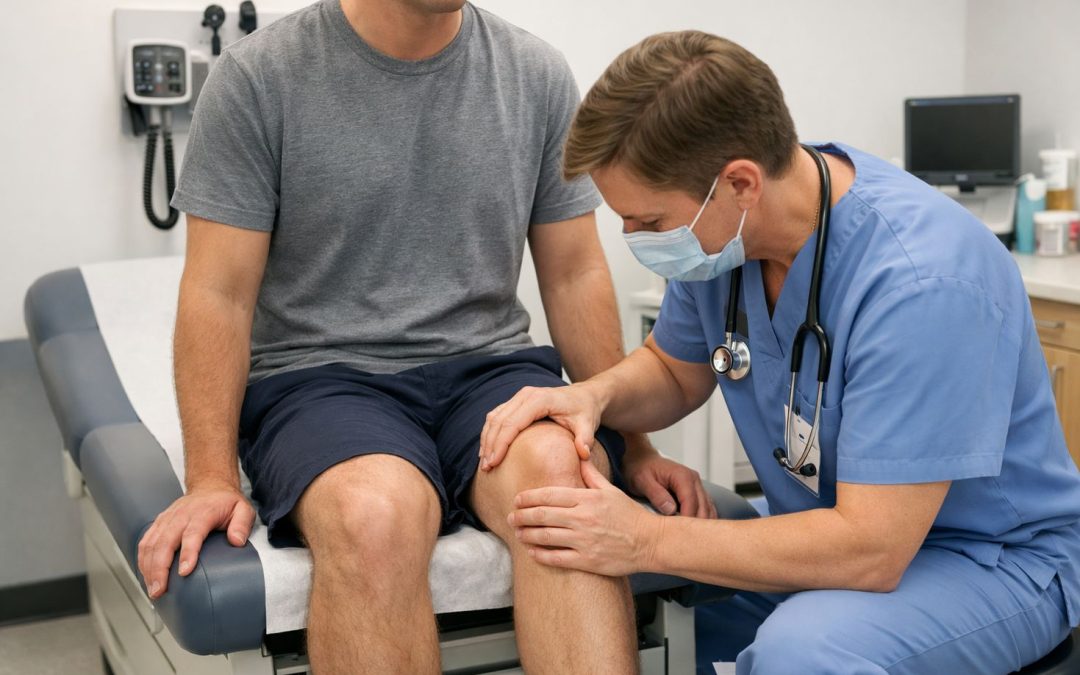
Knee injury and treatment can involve anything from a mild strain after overuse to more serious ligament, tendon, or cartilage damage after a twist, fall, or sports movement. If your knee hurts, swells, feels unstable, or becomes hard to move, the right next step is a proper medical evaluation rather than trying to guess the cause on symptoms alone. Many knee problems can look similar at first, even when the underlying issue is different.
Common situations that lead to knee pain include sudden stops, awkward pivoting, slips and falls, direct impact, and repetitive stress over time. Symptoms such as pain, swelling, stiffness, locking, clicking, or trouble bearing weight may overlap across sprains, strains, meniscus injuries, and other conditions. That is why self-diagnosis can be misleading, and an in-person or Telehealth assessment may be needed to understand what is going on and what treatment makes sense.
Seek urgent medical attention right away if there is severe trauma, a major deformity, inability to bear weight, rapidly worsening swelling or pain, or other emergency warning signs. In an emergency, call 911 or go to the nearest ER. For non-emergency concerns, prompt professional assessment can help guide safe next steps and support recovery.
Common Types of Knee Injuries
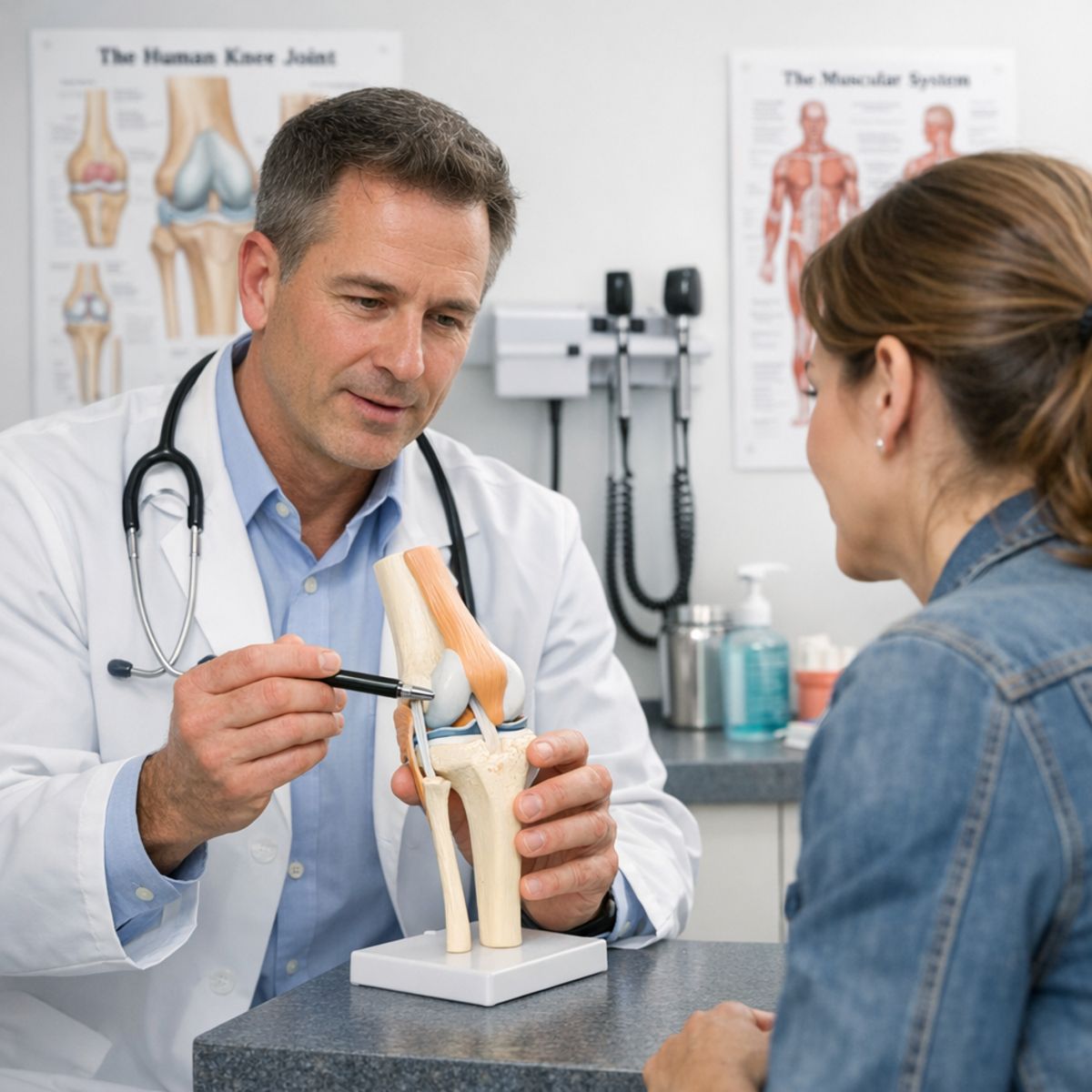
Knee injuries can involve ligaments, cartilage, tendons, or muscles, and each category affects the joint in a different way. In general, a sprain involves a stretched or torn ligament, while a strain affects a muscle or tendon. These terms are often confused, but they describe different tissues and can lead to different treatment plans.
Ligament injuries: ACL, MCL, and LCL
Ligaments help hold the knee stable. An injury acl usually refers to damage to the anterior cruciate ligament, which helps control forward movement and rotation of the knee. It is often associated with sudden pivoting, landing, or sports-related movements. An mcl injury affects the ligament on the inner side of the knee and may happen after a blow or force that pushes the knee inward. An lcl injury involves the outer side of the knee and is less common, but it can occur with impact or instability. These injuries range from mild stretching to partial or complete tears.
Meniscus injuries and cartilage-related pain
The meniscus is a piece of cartilage that cushions the knee and helps distribute weight. Meniscus injuries can happen during twisting, squatting, or sudden changes in direction. Some people notice swelling, stiffness, or pain with turning movements, but symptoms alone do not confirm a tear. Treatment meniscus injury concerns depend on severity, exam findings, and sometimes imaging, so proper evaluation matters before assuming the cause.
Strains, tendon irritation, and hamstring injury
Not all knee pain starts inside the joint. Muscle strains and tendon irritation can develop from overuse, running, jumping, or a sudden increase in activity. Tendons connect muscle to bone and may become painful with repeated stress. A hamstring injury can also cause discomfort at the back of the knee because these muscles cross the joint. If pain follows a minor sports or activity-related injury, urgent care services for minor injuries may be an appropriate place to start.
While these categories help explain common patterns, they are not a way to diagnose yourself. Similar symptoms can come from different structures, which is why a clinical exam is important when pain, swelling, or instability does not improve.
Why Early Evaluation Matters
When knee pain follows a twist, fall, overuse, or direct impact, getting evaluated sooner rather than later may help clarify what is going on and what kind of care makes sense. Early assessment can be especially helpful when symptoms are persistent, severe, or getting worse instead of improving with rest. It can also help identify red flags that may need closer attention, such as significant swelling, a feeling that the knee is giving out, reduced range of motion, or difficulty bearing weight.
Symptoms that should not be ignored
Practical reasons to seek evaluation include worsening pain, visible swelling, instability, locking, trouble straightening or bending the knee, or difficulty walking normally. These symptoms do not always mean a serious injury, but they may suggest that simple home care alone is not enough. An exam may help determine whether the problem appears more consistent with a strain, sprain, meniscus issue, or another condition that needs follow-up.
How evaluation helps guide next steps
Evaluation may help guide a care plan based on your symptoms and exam findings. Some injuries improve with conservative care such as rest, ice, activity changes, and bracing. Others may need imaging, closer monitoring, or referral to a specialist. In some cases, Telehealth visits for initial guidance may be a useful first step. Results vary by patient, and the right next step depends on the condition, severity, and how the knee is functioning.
What to Do Right After a Knee Injury
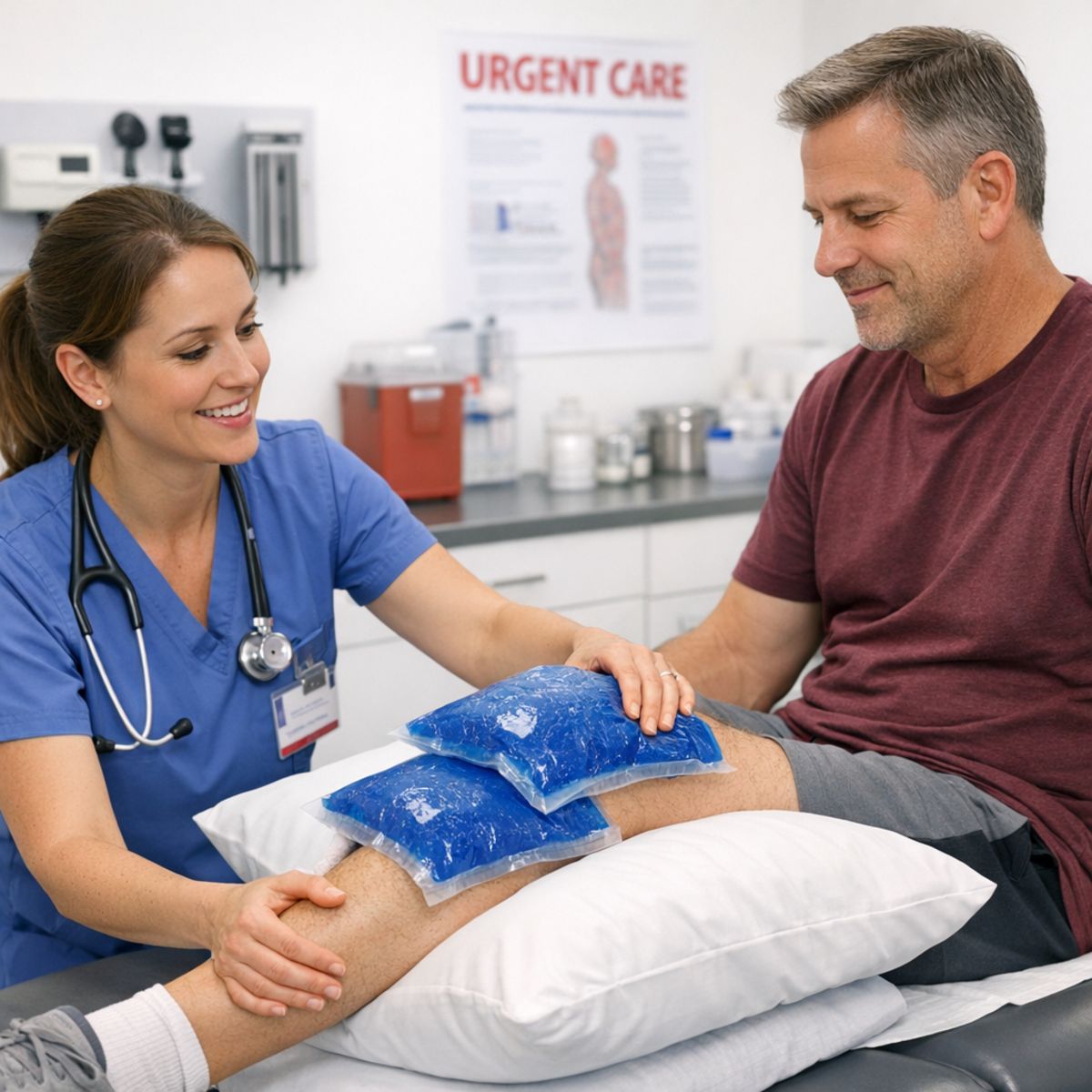
If you hurt your knee, the safest first step is to stop what you are doing and avoid trying to push through severe pain. General first aid may help in the short term, but it is not a substitute for medical evaluation when symptoms are significant.
1. Stop the activity and protect the knee
Running, jumping, twisting, or pivoting on an injured knee can make the problem worse. Rest the joint, limit weight-bearing if walking feels unstable, and avoid movements that increase pain. If needed, use support from another person or a mobility aid to get to a safe place.
2. Use ice, compression, and elevation when appropriate
Ice may help reduce swelling and discomfort when used for short intervals with a cloth between the ice and skin. A compression wrap may also help if it feels supportive and is not so tight that it causes numbness, tingling, or color changes. Elevating the leg above heart level when possible can also help with swelling.
3. Consider pain relief carefully
Over-the-counter pain relief may be considered if it is appropriate for you. Follow the label directions closely, and seek medical advice if you are unsure which option is safe based on your age, health conditions, allergies, or other medications.
4. Watch for signs that need medical evaluation
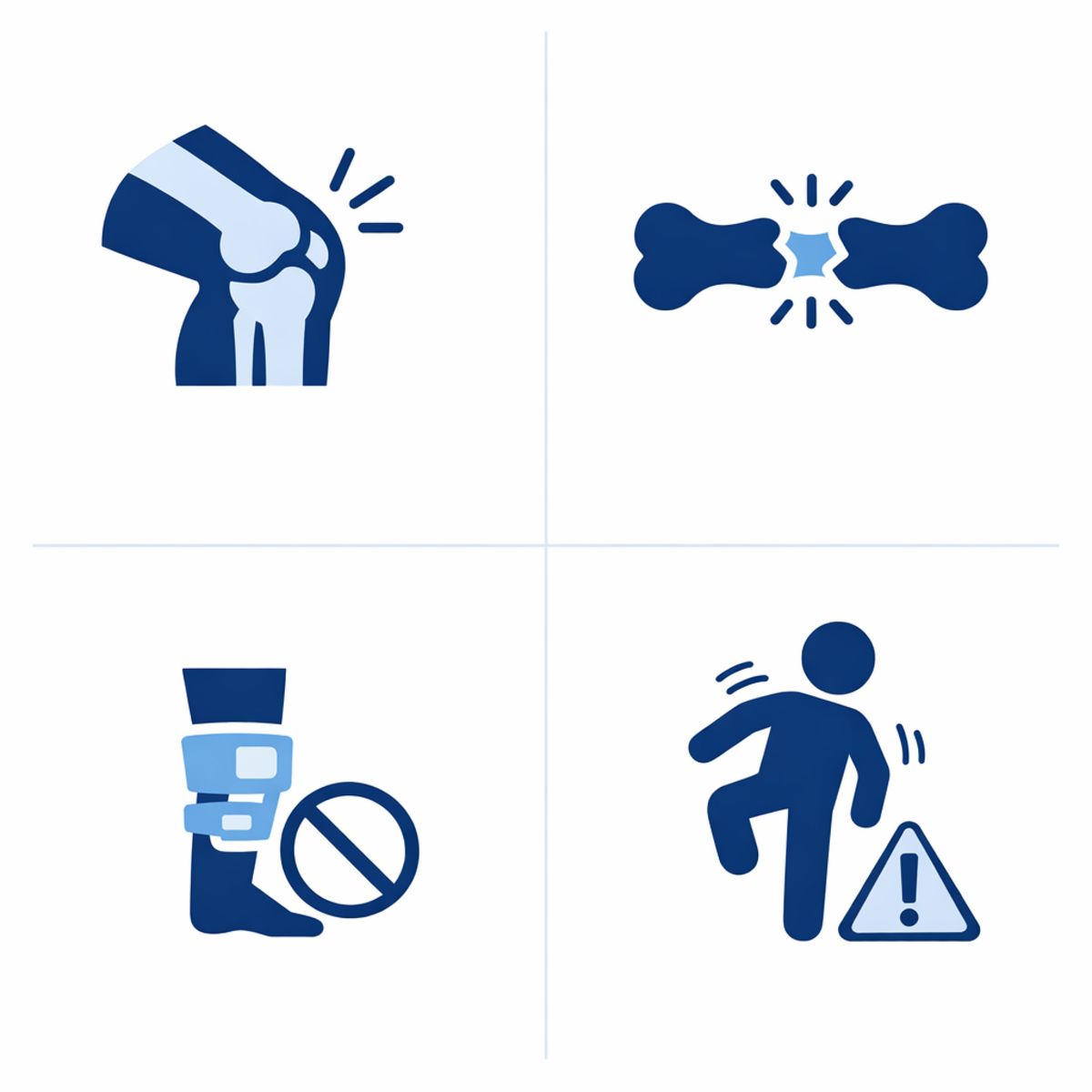
Seek prompt medical care if you cannot bear weight, have severe swelling, feel the knee locking or giving out, notice numbness, or have pain that is worsening instead of improving. If imaging may be needed, X-ray diagnostic services when needed can help evaluate certain injuries.
5. Know when it is an emergency
Call 911 or go to the nearest emergency room after severe trauma or a serious accident if there is major deformity, uncontrolled bleeding, or an inability to move the leg. These symptoms need urgent medical attention right away.
What Happens During a Knee Injury Evaluation
If you are dealing with knee pain after a twist, fall, awkward step, or sports activity, it can help to know what an evaluation may involve. During a visit for urgent care services for knee evaluation, a clinician will usually start by asking how the injury happened, where the pain is located, whether swelling started right away, and how well you can stand or walk. They may also ask about popping, locking, giving way, or any past knee injuries.
History and physical assessment
Based on your symptoms, the clinician may assess range of motion, tenderness, swelling, bruising, and how stable the knee feels. The exam often depends on your comfort level and the type of injury suspected. In-clinic urgent care emphasizes walk-in convenience for minor injuries and symptom checks, while Telehealth appointments for follow-up questions are virtual and scheduled in advance.
Imaging and follow-up recommendations
If needed, X-rays may be recommended to look for certain bone injuries or other concerns. Not every knee problem requires imaging, and some soft tissue injuries may need follow-up beyond urgent care for a more complete assessment. Depending on what is found, next steps may include home care guidance, activity modification, monitoring symptoms, or referral for additional evaluation. This process can help reduce uncertainty while setting realistic expectations about what can be assessed in one visit.
Urgent Care vs. Emergency Room for Knee Injuries
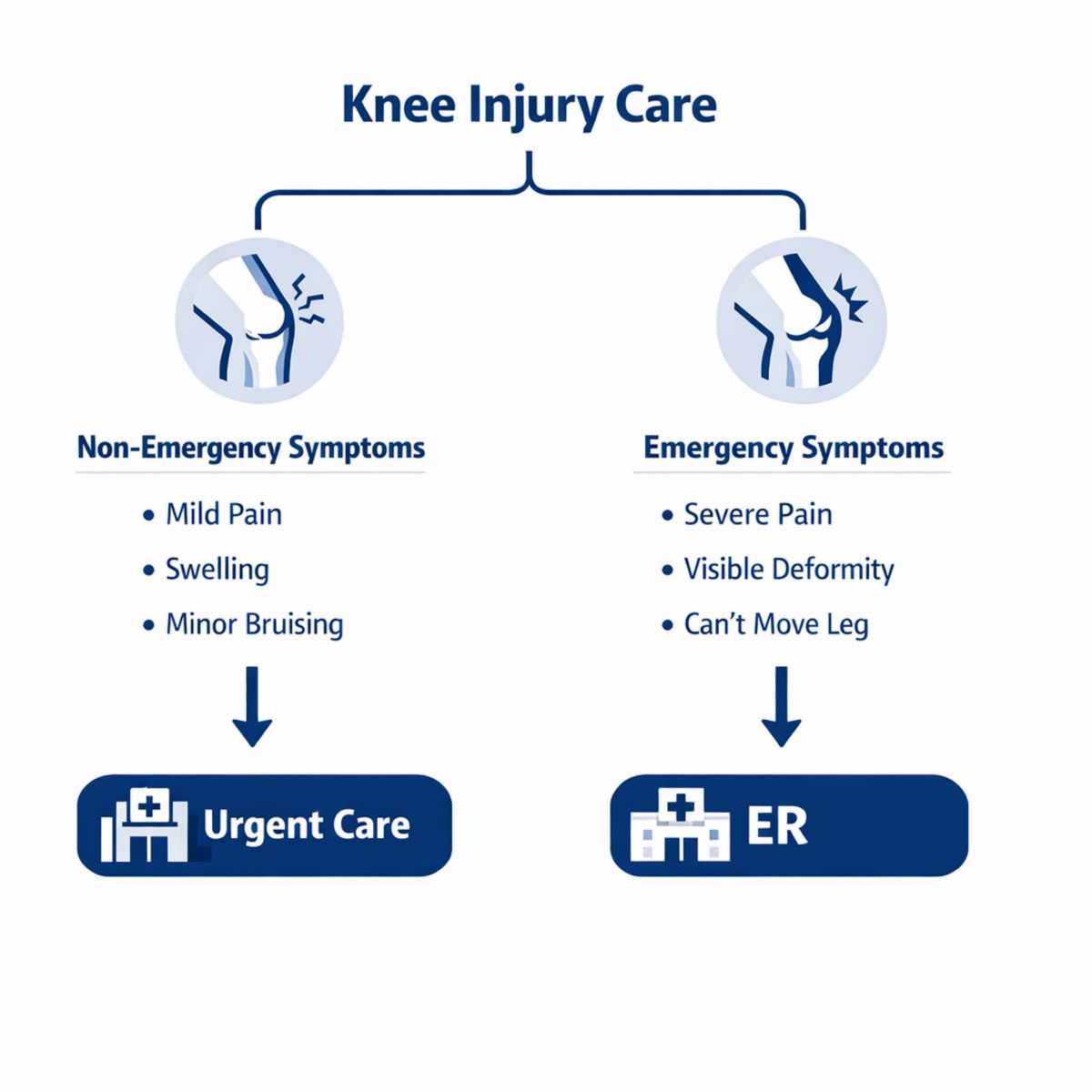
Choosing the right level of care for a knee injury depends on how serious the symptoms are. Urgent care may be appropriate for many non-life-threatening knee problems, including mild to moderate pain, swelling, sprains, strains, stiffness, or minor falls. If you are unsure when urgent care is the right fit, getting professional guidance is safer than trying to self-diagnose at home.
When urgent care may help
Urgent care can often evaluate knee injuries that are painful but not severe, especially when you can still bear some weight, the joint is stable enough to move carefully, and there are no major warning signs. This may include mild to moderate swelling, sports-related strains or sprains, twisting injuries, bruising, or discomfort that needs prompt assessment but does not appear life-threatening.
When the ER is the safer choice
The emergency room is more appropriate for severe trauma, a visibly deformed knee or leg, suspected fracture after a significant injury, heavy bleeding, inability to move the leg, loss of circulation, numbness, a cold or pale foot, or any other emergency concern. If the injury happened in a major accident or symptoms are severe or rapidly worsening, seek emergency care right away. Call 911 for life-threatening symptoms or if safe transport is not possible. Urgent care does not replace emergency care.
Treatment Options and Cost Considerations
Treatment for knee concerns can vary based on the suspected condition, symptom severity, exam findings, and whether imaging is needed. Care may include rest, bracing, activity modification, and guidance for pain management, with next steps tailored to the clinician’s evaluation. In some cases, patients may also be referred for imaging, specialist review, or physical exams and follow-up care to help guide recovery.
Why treatment plans can vary
Conservative treatment is often considered first, but recommendations depend on the injury pattern, how long symptoms have been present, and whether the knee feels unstable, swollen, or locked. Rehabilitation may also be part of the plan. For example, physical therapy meniscus injury recommendations depend on the clinician’s assessment and the patient’s functional goals rather than a one-size-fits-all approach.
Insurance and visit planning
Cost considerations can also depend on the type of visit, any testing ordered, and follow-up needs. Insurance acceptance varies, so patients should verify their specific plan before visiting or scheduling a Telehealth appointment. If you have questions about visit logistics, it can help to ask in advance so you know what to expect.
Knee Injury Symptoms Checklist
Use this quick checklist to spot common knee injury symptoms. It can help you describe what you are feeling, but it cannot confirm a diagnosis. Symptoms often overlap in an ACL injury, MCL injury, LCL injury, or meniscus injury, so pattern and severity matter.
Pain, swelling, and movement changes
- Pain right after a twist, fall, direct hit, or awkward landing
- Swelling that starts quickly or builds over several hours
- Bruising around the knee or down the leg
- A popping sensation at the time of injury
- Stiffness or trouble fully bending or straightening the knee
- Locking, catching, or a feeling that something is stuck
- Pain with bending, squatting, stairs, or turning
Signs that suggest prompt evaluation
- Trouble bearing weight or walking normally
- Instability or the knee giving out
- Severe or worsening swelling
- Persistent pain that does not improve with rest
- Symptoms that keep returning during activity
If your symptoms are persistent, severe, or getting worse, a medical evaluation can help clarify the cause and next steps. For related symptom patterns, see our PCL injury symptoms and care guide.

Frequently Asked Questions About Knee Injury and Treatment
How do I know if my knee injury is serious?
A knee injury may need prompt evaluation if you cannot bear weight, have major swelling, notice a visible deformity, or feel the knee locking or giving out. Worsening pain, reduced motion, or symptoms that do not improve should also be checked by a medical professional.
Can urgent care treat a knee injury?
Urgent care may evaluate many non-emergency knee injuries, depending on the condition and your symptoms. A clinician may recommend an exam, supportive treatment, imaging if available, or follow-up with a specialist if the injury appears more complex.
What is the first treatment for a knee injury?
The first step is usually to stop the activity that caused pain and protect the knee from further strain. Ice, elevation, and limiting weight-bearing may help in the short term, but significant pain, swelling, or instability should be evaluated.
Can a meniscus injury heal without surgery?
Some meniscus injuries may improve with conservative care such as rest, activity changes, and guided rehabilitation. Treatment depends on the severity of the injury, your symptoms, and a clinician’s evaluation, so it is important not to assume the same approach fits every case.
When should I go to the ER for knee pain?
Go to the ER or call 911 after severe trauma, if the knee looks badly deformed, if there is heavy bleeding, or if you cannot safely move after the injury. Emergency care is also appropriate if symptoms suggest a more serious problem that needs immediate attention.
Get Knee Injuries Evaluated at Prime Urgent Care
If you have non-life-threatening knee pain, swelling, or a minor injury, Prime Urgent Care can help you take the next step with an appropriate evaluation. Our urgent care services for minor injuries offer walk-in convenience, so no appointment is needed for in-clinic care.
Walk-in care and virtual support
For concerns that need an in-person assessment, you can visit the clinic as a walk-in. For appropriate concerns, Telehealth visits by appointment are also available virtually. This can be a helpful option when you need guidance on symptoms, next steps, or whether in-person care is recommended.
Take the next step
If your symptoms are not improving, are affecting mobility, or you are unsure what to do next, reach out or come in for evaluation. For emergencies such as severe injury, major deformity, inability to move the leg, or symptoms that feel life-threatening, call 911 or go to the nearest ER.
Final Thoughts on Knee Injury and Treatment
Knee injuries can affect ligaments, cartilage, muscles, or develop from overuse, and many of these problems can feel surprisingly similar at first. Because symptoms often overlap, the right treatment usually starts with the right evaluation rather than guesswork.
Early care may help clarify what is causing the pain and whether rest, bracing, physical therapy, imaging, or follow-up is the next best step. In many cases, prompt attention can also help you avoid making the injury worse while you stay active as safely as possible.
The most important takeaway
If your symptoms are persistent, severe, or getting worse, professional evaluation is the safest next move. Seek emergency care right away after major trauma, if you cannot bear weight, if the knee looks deformed, or if swelling and pain come on suddenly and intensely.
The bottom line on knee injury and treatment is simple: getting clear answers early can help you make informed decisions and move forward with more confidence.