

Urgent care providers offer fast, convenient help for many non-emergency illnesses and injuries. They commonly evaluate concerns such as minor infections, sprains, cuts, fever, sore throat, and other issues that need prompt attention but are not life-threatening. Walk-in access is often available, though services can vary by clinic and the care provided depends on a physician or clinician evaluation.
This guide explains what urgent care providers do, what conditions they may treat, how costs may work, and how to decide whether urgent care is the right choice for your situation. The goal is to help you understand when urgent care may be a practical option while keeping expectations clear and safety first.
If symptoms are severe—such as chest pain, signs of stroke, severe trauma, or trouble breathing—call 911 or go to the nearest emergency room right away.
What Urgent Care Providers Do
Urgent care providers evaluate and treat many everyday health concerns that need prompt attention but may not require an emergency room visit. In many clinics, the care team may include physicians, nurse practitioners, physician assistants, nurses, and support staff who work together to assess symptoms, explain next steps, and recommend treatment based on the patient’s condition.
Common urgent care services may include visits for minor illnesses, minor injuries, physical exams, basic lab testing, and imaging depending on the clinic. If you want to explore urgent care services at Prime Urgent Care, it helps to remember that not every location offers the same capabilities, hours, or equipment. Treatment recommendations always depend on provider evaluation, available services, and the condition presented during the visit.
Who you may see at an urgent care clinic
Patients may be seen by different licensed professionals during the same visit. A physician, nurse practitioner, or physician assistant may perform the clinical evaluation, while nurses and medical assistants may help with intake, vital signs, testing, and follow-up instructions. This team-based approach helps clinics move efficiently while still focusing on safe, patient-centered care.
Common services patients look for
Many patients visit urgent care for sore throats, coughs, fevers, ear pain, rashes, sprains, cuts, and other non-life-threatening concerns. Some clinics may also offer routine services such as physical exams, basic testing, or on-site imaging. Availability can vary, so services such as imaging or specialized evaluations may depend on the clinic, the provider’s assessment, and what is appropriate for the situation.

Why Patients Choose Urgent Care Clinics
For many non-emergency health concerns, urgent care offers a practical middle ground between waiting for a primary care appointment and going to the emergency room. Patients often choose urgent care when they need same-day attention for issues such as minor illnesses, mild injuries, or symptoms that should be evaluated soon but are not life-threatening.
Convenience for unexpected health concerns
One of the main advantages is walk-in access. When a sore throat, fever, sprain, rash, or similar problem appears suddenly, urgent care can be a helpful option if your regular doctor is unavailable. This added accessibility can make it easier to seek appropriate care promptly for concerns that need medical attention but do not require emergency services.
A broad range of non-emergency services
Another reason patients choose urgent care is that many clinics provide several services in one place. Depending on the concern, a visit may include an exam, basic testing, treatment recommendations, and guidance on next steps or follow-up. Some providers also offer telehealth visits for appropriate urgent concerns. This combination can be useful for people looking for professional care options for common urgent needs while choosing the right setting for their symptoms.

Urgent Care vs. the ER vs. Primary Care
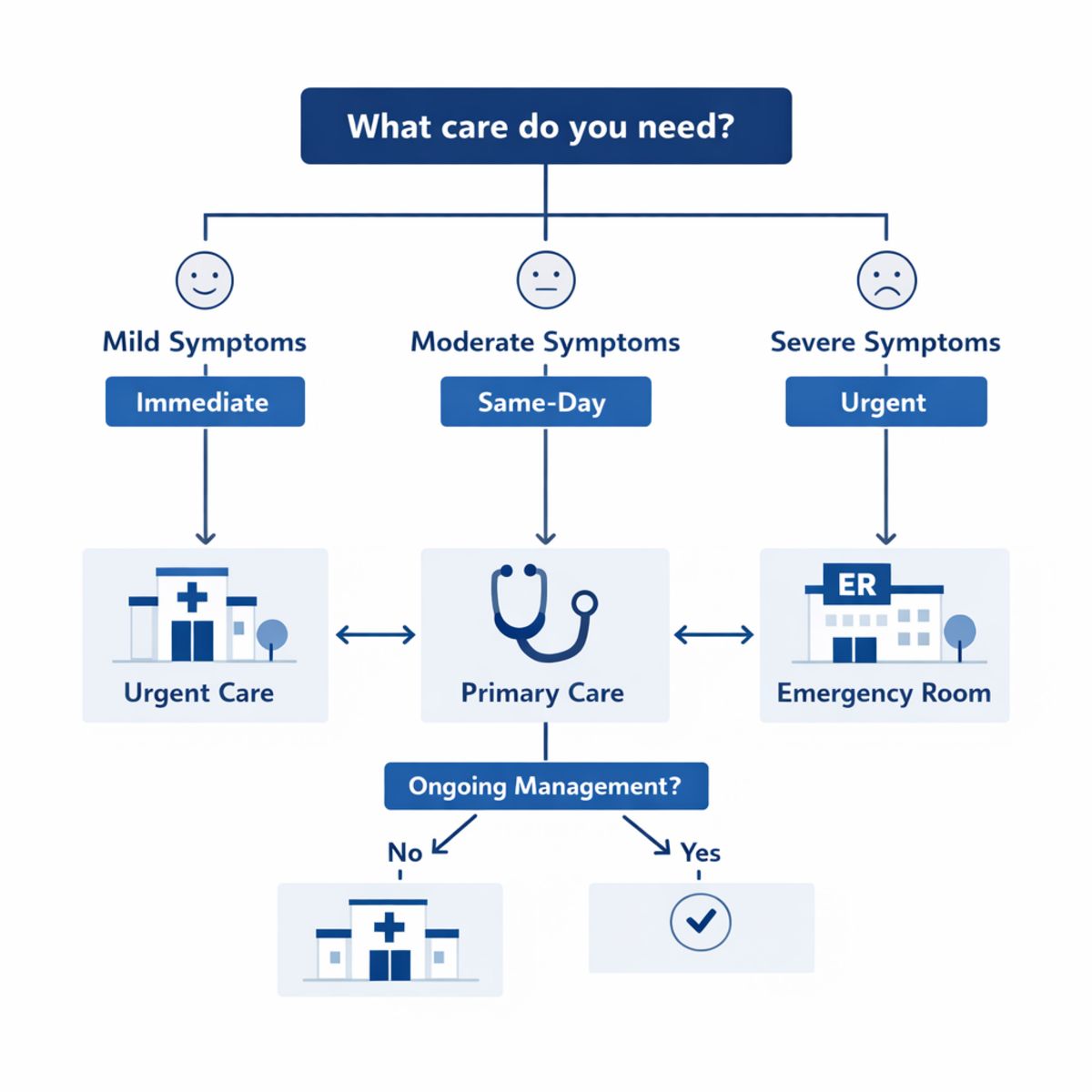
Choosing between urgent care, the emergency room, and primary care often depends on how severe the problem is, how quickly you need help, and whether the issue is ongoing. In general, urgent care may be appropriate for non-life-threatening illnesses and injuries that need prompt attention but are not true emergencies. The ER is for severe or life-threatening symptoms. Primary care is usually the best fit for preventive care, chronic condition management, and concerns that can wait for a scheduled visit.
When urgent care may be the right choice
Urgent care may help when you need same-day evaluation for concerns such as sprains, sore throats, mild fevers, ear pain, minor infections, small cuts, or other non-life-threatening symptoms. It can also be a practical option when your regular doctor is unavailable and you need care sooner than a routine appointment allows. For example, some patients seek flu and cold treatment through urgent care when symptoms are uncomfortable but not severe.
When to go to the emergency room instead
Go to the ER for severe trauma, chest pain, stroke symptoms, severe bleeding, difficulty breathing, sudden confusion, seizures, or other potentially life-threatening emergencies. If someone may be having a heart attack, stroke, or another emergency, call 911 right away or go to the nearest emergency room. When symptoms are severe, rapidly worsening, or feel life-threatening, emergency care is the safer choice.
When primary care is the better fit
Primary care is best for ongoing management, preventive screenings, medication reviews, follow-up care, and chronic conditions such as high blood pressure, diabetes, or asthma when timing allows. It is also the right place for building a long-term care plan and discussing recurring symptoms that are not urgent. In an urgent care vs ER vs primary care comparison, primary care stands out for continuity and long-term health support, while urgent care and the ER are better suited to more immediate needs.
How to Choose the Right Urgent Care Provider

Choosing an urgent care provider is easier when you compare a few practical details before you go. A good starting point is to match the clinic’s hours, location, and available care options to your immediate concern. Some centers offer on-site testing, imaging, physical exams, or telehealth appointments for qualifying concerns, while others may provide a narrower set of services. Checking this in advance can save time and help you avoid unnecessary transfers or delays.
1. Confirm the services you may need
Review the clinic’s website or call ahead to see whether they evaluate your type of concern and whether testing, imaging, or virtual care is available. If you are also planning preventive care, it may help to read what to expect during a physical exam so you know what questions to ask. Keep in mind that not every urgent care clinic offers the same services.
2. Verify insurance and payment details
Before visiting, confirm that the clinic accepts your insurance plan, ask about your expected copay, and review any self-pay or payment policies. Insurance participation can vary by location and by plan, so it is worth verifying directly rather than assuming coverage. This step reduces surprises and helps you compare urgent care options more confidently.
3. Understand follow-up and next steps
Finally, ask how test results are shared, whether referrals are available if needed, and what return precautions or follow-up instructions you should expect. You may also want to review provider credentials and patient instructions ahead of time. Clear communication about next steps can make the entire urgent care visit feel more straightforward and trustworthy.
What Urgent Care May Cost
Urgent care cost can vary based on several factors, so it is best to think in terms of what may affect your bill rather than expecting one fixed price. Your total may depend on whether you are using insurance, the type of visit you need, and whether additional services are provided during the appointment. If you want to learn more about urgent care services, it can also help to understand what kinds of care may involve added testing or treatment.
An urgent care copay may apply if your plan includes one, but self-pay pricing and patient responsibility can differ from clinic to clinic and from one insurance plan to another. If you are considering an in-person visit or Telehealth appointment, verifying coverage ahead of time can help you plan with more confidence.
What affects the final cost
The final cost often depends on visit complexity and the services needed during care. A straightforward evaluation may be billed differently than a visit that includes lab testing, x-rays, procedures, or treatment for a more involved condition. Prescriptions, supplies used during treatment, and follow-up recommendations may also influence the overall amount due.
Why checking insurance matters
Insurance acceptance and out-of-pocket responsibility are not the same for every patient. Even when a clinic works with many plans, your deductible, copay, coinsurance, or coverage rules may still affect what you owe. Checking benefits before your visit can help you confirm whether urgent care is covered, whether prior requirements apply, and what costs you may be responsible for after the claim is processed.
Common Reasons People Visit Quick Care
Many people choose quick care for non-emergency concerns that need prompt attention but do not appear life-threatening. Common examples include sore throat, ear pain, cough, cold symptoms, sinus pressure, mild fever, and other everyday illnesses that may need evaluation. Patients also often visit for minor injuries such as sprains, strains, small cuts, minor burns, or possible minor fractures, depending on severity and clinical findings.
Some clinics may offer on-site x-rays, basic lab testing, and follow-up instructions based on the concern being assessed. If you are looking for trusted urgent care services for walk-ins, it can help to know what types of issues are commonly seen in this setting.
Minor illnesses that may be evaluated
Examples may include sore throat, congestion, mild fever, sinus discomfort, ear pressure, and cough symptoms that are bothersome or not improving.
Minor injuries that may be evaluated
Examples may include sprains, strains, small cuts, and minor burns depending on severity. Worsening symptoms, severe pain, trouble breathing, heavy bleeding, chest pain, or other emergency warning signs require higher-level care right away.

Frequently Asked Questions About Urgent Care Providers
What do urgent care providers treat?
Urgent care providers commonly evaluate and treat non-emergency illnesses and injuries, such as minor cuts, sprains, sore throats, ear pain, coughs, fevers, rashes, and similar concerns. Services can vary by clinic, and the right treatment depends on an in-person or virtual evaluation by a qualified provider.
Can I walk into urgent care without an appointment?
Many urgent care clinics accept walk-ins without an appointment. Some also offer scheduled visits or Telehealth options, but availability can vary by location, time of day, and current patient volume.
How is urgent care different from the emergency room?
Urgent care is generally intended for non-life-threatening illnesses and injuries that need prompt attention but are not true emergencies. For severe chest pain, trouble breathing, signs of stroke, major trauma, heavy bleeding, or any life-threatening condition, call 911 or go to the nearest emergency room right away.
Does urgent care accept insurance?
Many urgent care clinics accept insurance, but accepted plans and coverage details vary. It is best to verify your specific plan with the clinic and your insurer before visiting or scheduling a Telehealth appointment.
How much is an urgent care visit with insurance?
Your out-of-pocket cost may depend on your copay, deductible, coinsurance, and the services provided during the visit. Because coverage differs by plan and medical needs, the final cost can vary even when insurance is accepted.
Get Evaluated by Prime Urgent Care
Next steps for non-emergency care
If you need care for a non-emergency concern, Prime Urgent Care is here to help you take the next step. You can contact the clinic to ask about in-clinic walk-in care or request a Telehealth consultation by appointment. If you would like to learn more before reaching out, you can also review urgent care services to see whether this care setting fits your needs.
For severe or life-threatening symptoms, call 911 or go to the nearest emergency room right away.
Choosing Urgent Care with Confidence
Urgent care providers can be a practical choice when you need prompt medical attention for concerns that are important but not life-threatening. As a final takeaway, it helps to match the situation to the setting: urgent care often fits when symptoms need same-day evaluation, while true emergencies belong in the ER. It is also wise to compare available services, expected costs, and insurance participation before you go whenever time allows.
A simple way to decide
A simple framework is to consider four things: how severe the symptoms are, how quickly you need care, whether the clinic offers the service you may need, and whether your insurance is accepted. If symptoms feel concerning but not severe enough for emergency care, a professional evaluation is often the best next step. Taking a calm, informed approach can help you choose care with more confidence.