

A male annual physical exam is a routine preventive visit that helps assess overall health, review risk factors, discuss concerns, and stay current with recommended screenings. For many men, this appointment is straightforward and personalized based on age, medical history, symptoms, lifestyle, and family history. It is not a one-size-fits-all visit, and the exact components may vary depending on the clinician’s evaluation and your individual needs.
These yearly checkups can be a useful way to catch potential issues early, track changes over time, and ask questions about topics like blood pressure, cholesterol, weight, sleep, sexual health, mental health, and preventive care. Even if you feel well, an annual visit can provide a clearer picture of your health and help you make informed decisions about next steps.
This guide explains what a male annual physical exam may include, common screenings your clinician might recommend, how to prepare for the visit, and when follow-up care may be needed. If you have urgent symptoms such as chest pain, severe trouble breathing, stroke symptoms, or major trauma, call 911 or go to the nearest emergency room.
What this guide covers
Below, you’ll find a practical overview of what typically happens during the exam, which screenings may come up, how to get ready beforehand, and when it makes sense to seek additional evaluation or follow-up care.
What Is a Male Annual Physical Exam?
A male annual physical exam is a routine health exam focused on overall wellness rather than a single new symptom or injury. During this type of visit, an annual exam doctor typically reviews your medical history, current medications, lifestyle habits, and preventive care needs. The appointment may also include vital signs, a general physical assessment, and age-appropriate recommendations such as screenings, vaccines, or lab work based on your history and risk factors. Many people use “annual exam” and “physical exam” interchangeably, and in everyday conversation that is often fine. If you want to learn more about physical exam services at Prime Urgent Care, it can help to compare what is included before scheduling.
In simple terms, this visit is designed to look at your health as a whole. It is preventive care, which means the goal is to spot risks early, track changes over time, and discuss ways to stay healthy. Exact services, documentation, and coverage can vary by clinic and insurance plan, so it is always smart to verify the details of your plan in advance.
Routine exam vs. problem-focused visit
A routine annual exam reviews your overall health, even if you feel well. It is meant to cover broad preventive topics like wellness habits, screening needs, and long-term health planning. A problem-focused visit is different. That type of appointment centers on a specific issue, such as pain, fever, an injury, or another new concern that needs evaluation and treatment. Understanding the difference can help reduce confusion about preventive care and what to expect from the visit.
Annual exam vs physical exam
When comparing an annual exam vs physical exam, the terms often overlap, but they are not always identical in every setting. Some clinics may structure the visit differently based on provider workflow, documentation requirements, or insurance rules. In practice, both usually refer to a health exam that checks general wellness, but the exact services included may vary. That is why it helps to ask what the visit covers and confirm benefits with your insurance plan ahead of time.
What Happens During the Visit
A doctor examination usually follows a simple, predictable flow, and knowing what to expect can help make the visit feel more comfortable. In most cases, the appointment begins with check-in and a review of your health information, then moves into basic measurements and a conversation with the clinician about your current concerns, symptoms, and overall health goals.
Check-in and health history
At check-in, you may be asked to confirm your contact information, insurance details, and the reason for your visit. A staff member may also review your past medical history, family history, previous surgeries, medications, supplements, and allergies. It is also common to discuss lifestyle habits such as exercise, sleep, alcohol use, and tobacco use, since these details can affect preventive guidance and next steps. Honest, complete answers help the clinician understand the full picture and tailor recommendations to you.
If you are visiting for a routine concern or a same-day issue, the clinician may ask when symptoms started, what makes them better or worse, and whether you have noticed any recent changes in your health. If appropriate for your situation, you may also be guided toward urgent care services for non-emergency needs.
Physical assessment and discussion
Before the physical assessment, a staff member will often record vital signs such as blood pressure, heart rate, temperature, height, and weight. Depending on the visit, body mass index may also be calculated. These measurements give helpful context and may guide the rest of the doctor examination.
The general physical exam may include listening to the heart and lungs, checking the head and neck, looking at the skin, feeling the abdomen, and assessing muscles or joints depending on your symptoms and reason for the visit. Additional components may be considered based on age, symptoms, history, risk factors, or clinician judgment, rather than being identical for every patient. For some patients, this may include discussion of whether a more focused exam is appropriate, subject to physician evaluation.
At the end of the visit, the clinician will usually explain findings, answer questions, and discuss possible next steps. Depending on the patient and the reason for the appointment, that may include screening recommendations, vaccines, lab work, treatment advice, or follow-up care. The goal is to make sure you leave with a clear understanding of what was checked, what it may mean, and what to do next.

Why Regular Exams Matter for Men’s Health
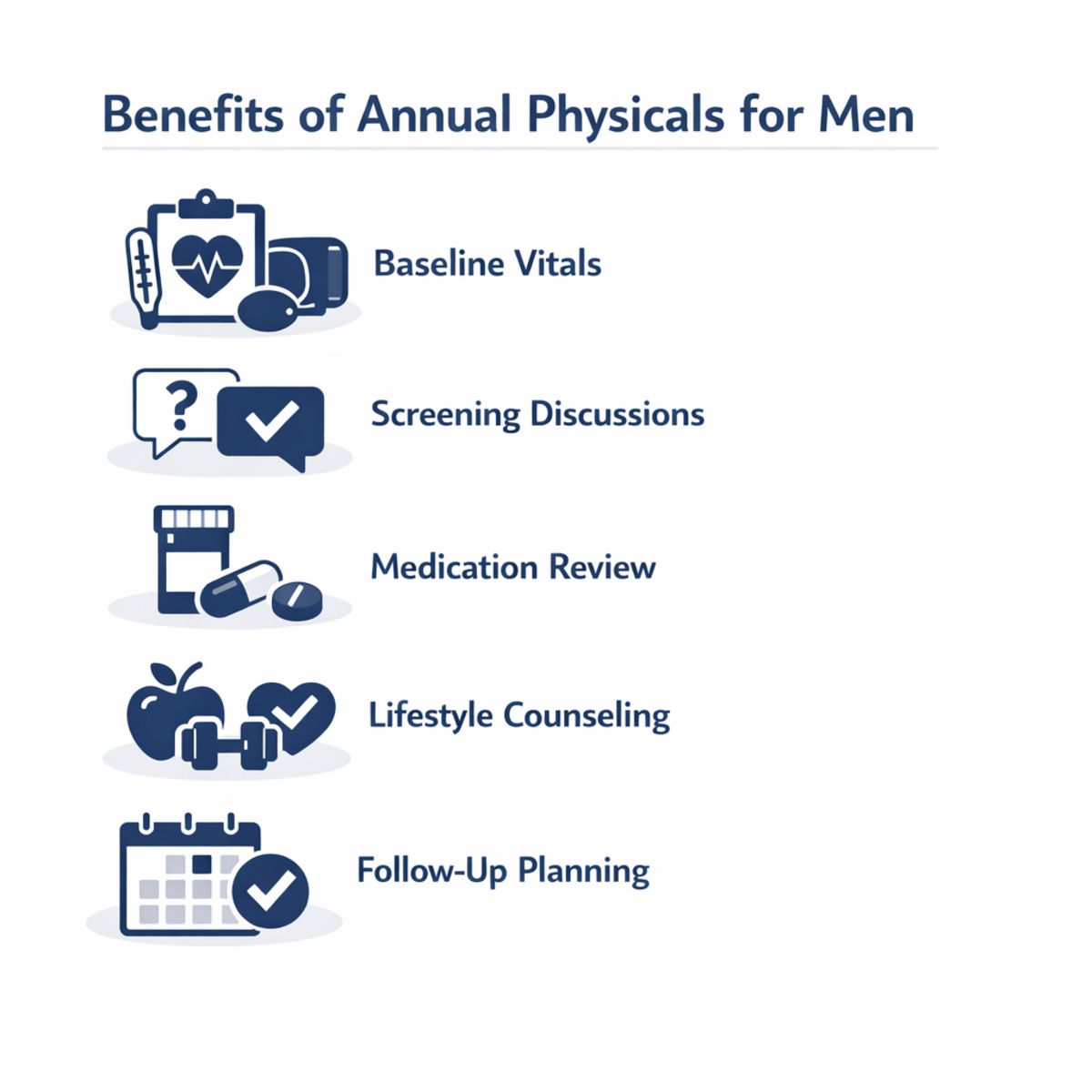
Regular exams can play an important role in men’s health by creating space for preventive care, practical questions, and ongoing follow-up. A yearly visit may help identify changes in blood pressure, weight, lifestyle risks, or missed preventive care needs before they become easier to overlook. It is not a guarantee against illness, but it can support earlier conversations and more informed decisions.
These visits also give you a chance to talk about topics that often get pushed aside during busy routines, including family history, sleep, stress, mental health, sexual health, medications, and everyday symptoms that do not seem urgent but still matter. For many people, having a regular check-in makes it easier to notice patterns over time and ask questions in a low-pressure setting. If you want a clearer idea of what to expect at an annual physical, learning the basics can make scheduling feel more manageable.
Building a health baseline
One of the biggest benefits of routine exams is having repeat information from year to year. Tracking vitals and general health markers over time can help put small changes into context. A single reading may not tell the whole story, but trends in blood pressure, weight, or other routine measures can support better conversations and more personalized guidance.
A chance to discuss concerns early
Annual visits can also be a good time to bring up concerns you might otherwise ignore, such as fatigue, poor sleep, stress, mood changes, sexual health questions, or a family history of certain conditions. Preventive visits may also help with continuity of care, documentation for work or school when applicable, and planning next steps based on your age, history, and goals.
How to Prepare for a Male Annual Physical Exam
A little physical exam preparation can make your visit smoother and more useful. If you are planning to schedule a routine physical exam visit, taking a few minutes to prepare ahead of time can help your clinician focus on the questions, concerns, and preventive care that matter most to you.
Before you go
- Bring the basics: a photo ID, insurance information if applicable, vaccination records if you have them, a list of medications and supplements, and any forms you need completed.
- Write down symptoms, questions, recent health changes, and any family history updates before the appointment so you do not forget them during the visit.
- Verify insurance acceptance in advance. Coverage and network rules can vary by plan, so checking ahead may help avoid surprises.
- Ask whether any lab work is expected and whether special preparation is needed. Not every exam requires fasting, so it is best to confirm rather than assume.
On the day of the exam
- Wear comfortable clothing that is easy to move in and practical for an in-clinic exam.
- Arrive a little early if you may need to complete paperwork or review forms.
- Be honest about symptoms, lifestyle habits, medications, and health concerns. Clear answers help make the visit more accurate and efficient.
- If you have follow-up questions after the appointment, some discussions may be appropriate for telehealth, but a physical exam itself requires an in-person visit.
The goal is simple: arrive organized, ask the questions that matter to you, and make the most of your annual exam time.
Urgent Care vs Primary Care for a Physical Exam
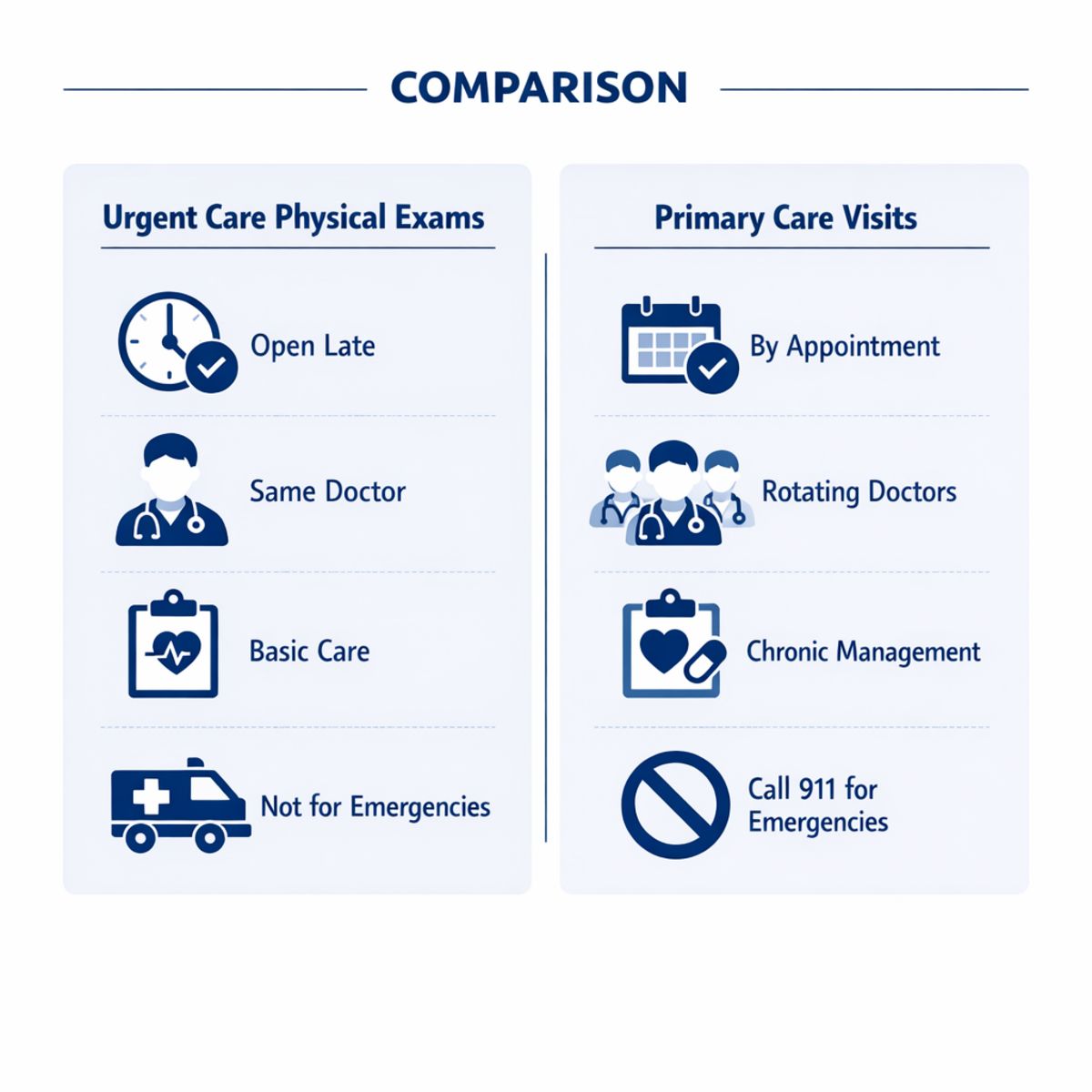
For many routine physical exam needs, urgent care may be a convenient option, especially when you want an in-clinic visit without waiting for a traditional appointment schedule. Depending on the clinic, walk-in availability may help with common needs such as basic screenings, school or sports forms, and other straightforward non-emergency exams. If you want to learn more about urgent care options for everyday concerns, it can help to review the services offered at your local clinic.
When urgent care may be a practical choice
Urgent care may fit best when your exam is relatively routine and you are looking for convenience. It can be a practical setting for many standard physicals when available, but services can vary by clinic and by your individual health needs. It is also important to remember that urgent care is not the right place for life-threatening emergencies.
When primary care may be the better fit
Primary care may be preferable if you have chronic health conditions, need ongoing medication management, want long-term preventive planning, or may need extensive follow-up. A primary care provider can offer continuity over time, coordinate specialist care, and track changes in your health history in a way urgent care typically does not replace. Choosing the right setting depends on the purpose of your exam and the level of follow-up you may need.
Cost and Insurance Questions to Ask
The cost of a doctor exam can vary based on your insurance plan, the clinic’s billing policies, and whether your visit includes additional testing or paperwork. Insurance acceptance also varies, so it is best to confirm coverage directly before you arrive. You can also learn more about physical exam visits to understand what may be involved.
What to confirm before your visit
- Whether the clinic accepts your insurance plan
- What documents or forms you should bring
- Whether labs or other testing may be needed
- If follow-up services or extra forms could affect the total cost
Common Topics Men Ask About During an Annual Exam
During an annual visit, men often ask about preventive health topics that relate to everyday risks and long-term wellness. Common questions may include blood pressure, cholesterol, diabetes risk, vaccines, sexual health, sleep, stress, exercise, and age-related screening concerns. These conversations help guide what may be appropriate to review during the visit.
Screenings and conversations that may come up
- Heart and metabolic health, such as blood pressure, cholesterol, weight, and diabetes risk
- Lifestyle topics, including exercise habits, nutrition, sleep quality, and stress
- Preventive updates like vaccines and general age-related screening questions
- Sensitive concerns, including sexual health or symptoms a patient may feel hesitant to mention
Recommendations vary based on age, symptoms, personal history, and family history. A gu physical exam is not automatically identical for every patient; what is included may depend on the reason for the visit and the clinician’s judgment. Patients who want broader context on how urgent care fits outpatient care may also find it helpful to understand where preventive discussions can take place.

Frequently Asked Questions
What does a male annual physical exam include?
A male annual physical exam often includes a health history review, vital signs, and a general physical exam. A clinician may also discuss preventive screenings, lifestyle habits, medications, and any symptoms or concerns. Exact exam components can vary based on age, medical history, and clinical judgment.
How often should men get a physical exam?
Many adults schedule a preventive visit once a year, but the best timing can differ from person to person. Age, chronic conditions, risk factors, and prior findings may affect how often follow-up is recommended. A clinician can help determine an appropriate schedule.
Do I need to fast before a physical exam?
Not always. Some routine physical exams do not require fasting, but certain blood tests may. It is usually best to ask the clinic ahead of time so you can prepare correctly for the visit.
Is a GU physical exam always part of the visit?
No, a GU exam is not automatically part of every annual physical. Whether it is recommended may depend on symptoms, age, personal history, and the clinician’s evaluation. If you have concerns, you can ask what parts of the exam are relevant to your visit.
Can urgent care do a routine physical exam?
Many urgent care clinics may offer routine physical exams, though available services can vary by location and provider. It can help to confirm in advance whether the clinic performs the type of physical you need. If you have severe symptoms such as chest pain, trouble breathing, or other emergency warning signs, seek emergency care right away.
Schedule a Physical Exam at Prime Urgent Care
If you need a routine physical, Prime Urgent Care offers in-clinic physical exams available at Prime Urgent Care. Walk-in care may be available for urgent care visits, and no appointment is needed where applicable. Telehealth is available by appointment for appropriate virtual consultations, but physical exams are performed in clinic.
Before you visit, it is a good idea to confirm insurance acceptance and any visit details with the clinic.
Take the next step
Ready to plan your visit or ask a question? Contact Prime Urgent Care to confirm insurance, review next steps, or learn more about in-clinic physical exam services.
Final Thoughts
A male annual physical exam is a practical way to review your overall health, talk through concerns, and stay current with preventive care. Knowing what to expect and preparing a few questions can help the visit feel more useful and reassuring.
A simple step toward preventive care
If you want guidance tailored to your needs, an in-person evaluation can help you get personalized next steps and support your routine health check-ins.