
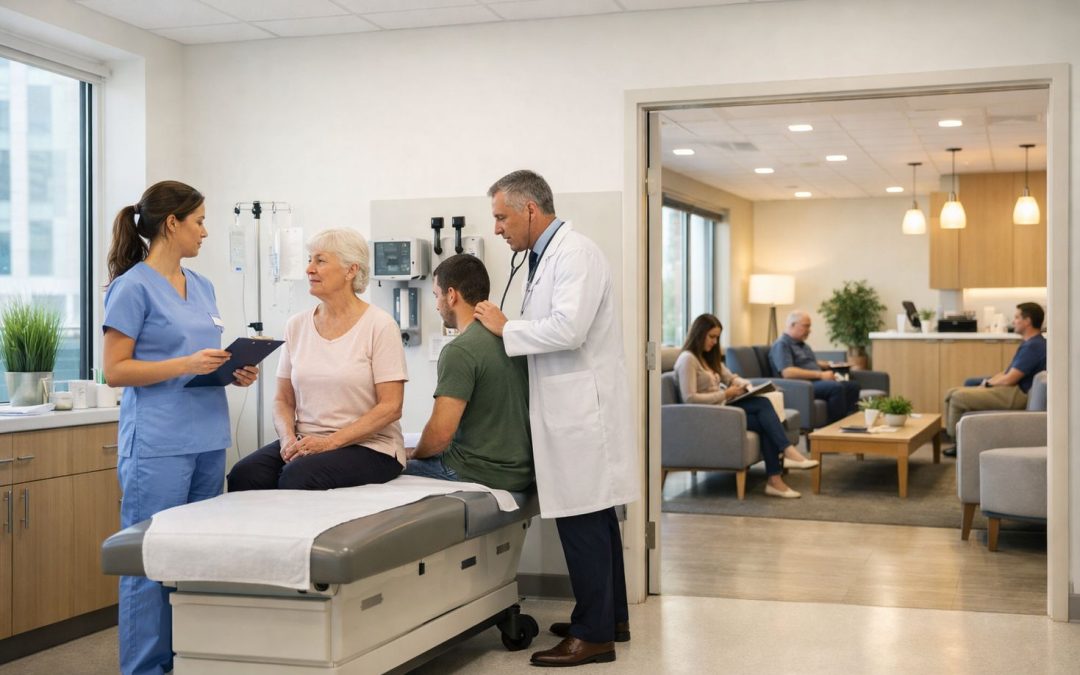
When comparing primary care clinic vs urgent care, the main difference is the type of help you need and how quickly you need it. A primary care clinic focuses on ongoing, whole-person care such as preventive visits, chronic condition management, routine checkups, and follow-up over time. Urgent care is designed for same-day, non-emergency medical concerns that need prompt attention but are not life-threatening.
For many patients, the right choice depends on symptoms, timing, and whether continuity of care matters for the issue at hand. If you need long-term guidance, medication monitoring, or care that fits into your broader health history, primary care is often the better fit. If you have a minor illness or injury that cannot wait for a routine appointment, urgent care may be more appropriate.
However, neither setting is the right place for emergencies. If you have chest pain, signs of stroke, severe trauma, or trouble breathing, call 911 or go to the nearest emergency room right away. This article explains both options in plain language so you can make a safer, more informed decision about non-emergency care.
What Is a Primary Care Clinic?
A primary care clinic is a healthcare setting focused on routine, preventive, and ongoing medical care. It is often where people go for wellness exams, screenings, chronic condition monitoring, medication management, and referrals when specialty care is needed. In many cases, patients return to the same provider or care team over time, which can support a more complete view of their health history and changing needs.
Primary care is commonly appointment-based, although scheduling and availability can vary by practice. The goal is not just to address a single concern, but to help manage health over the long term through regular check-ins, preventive planning, and follow-up care. For some patients, this may also include guidance on screenings, immunizations, and lifestyle habits that support overall wellness.
Common services in primary care
Common services in primary care include annual checkups, preventive visits, follow-up for chronic conditions such as high blood pressure or diabetes, medication reviews, and referrals to specialists when needed. Some patients may also seek physical exams for routine health needs as part of their broader care plan.
Why continuity matters
An ongoing relationship with a provider may help with tracking symptoms over time, reviewing past treatments, and making informed follow-up decisions. This continuity can be especially useful for preventive care and long-term health management. Primary care and urgent care can both serve important roles, but primary care is generally centered on continuity, while urgent care is often used for more immediate, short-term concerns.

What Urgent Care Does Best
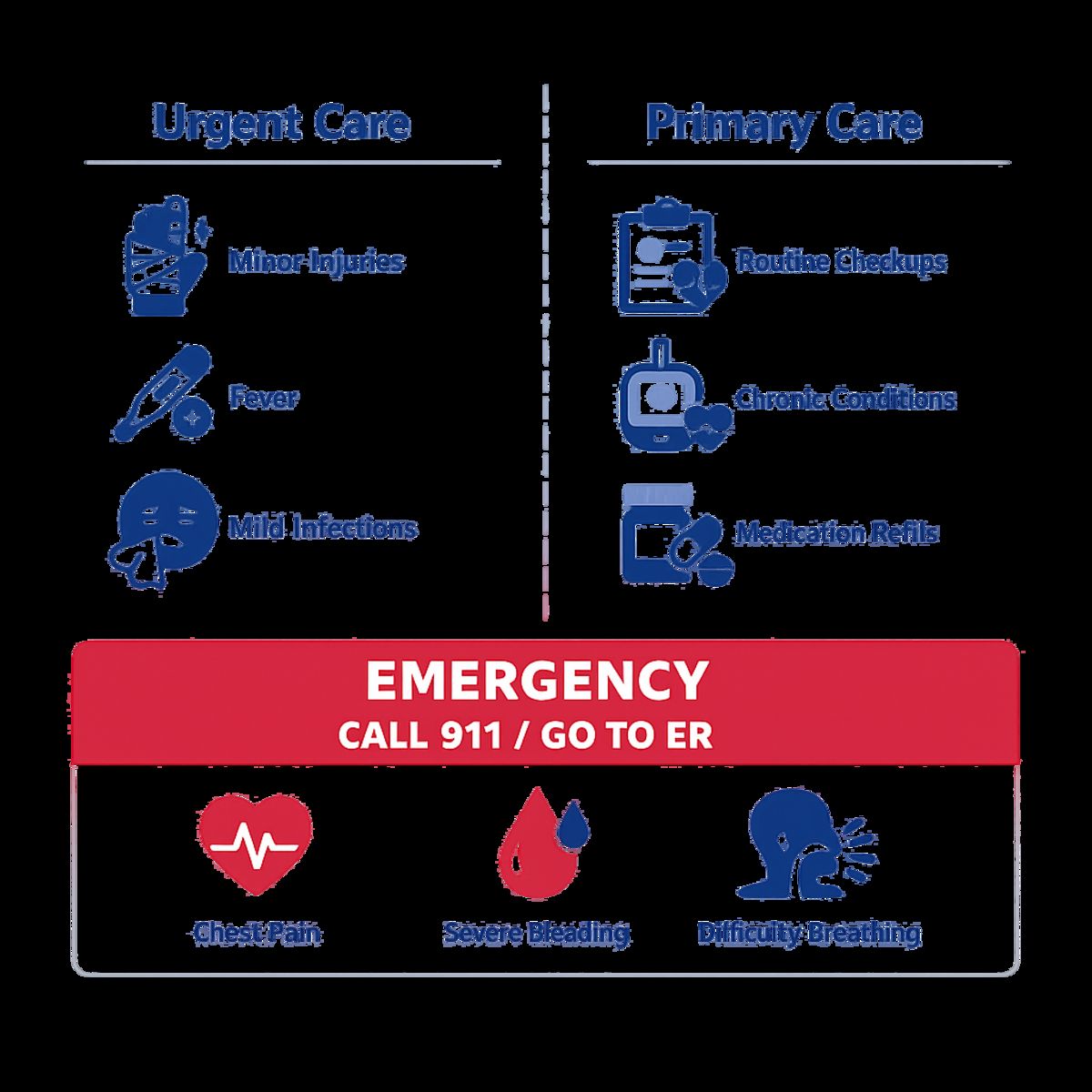
Urgent care is designed for same-day medical concerns that need prompt attention but are not life-threatening. For many minor illnesses and injuries, it may be a practical option when symptoms should not wait for a routine appointment. This includes situations such as cold and flu symptoms, sore throat, minor sprains, small cuts, ear discomfort, or other non-emergency concerns that benefit from timely evaluation. Patients looking for urgent care services for same-day needs often choose this setting because it focuses on efficient assessment and next-step treatment based on the condition and physician evaluation.
Common reasons people choose urgent care
Urgent care walk-ins are commonly used for concerns that feel too pressing to delay but do not appear severe enough for the emergency room. Depending on the clinic and the patient’s symptoms, services may include an exam, basic treatment, and diagnostic support. Some visits may also be appropriate for Telehealth visits for virtual evaluation, while certain injuries or symptoms may benefit from X-ray diagnostic services when imaging helps. The exact care provided always depends on the condition, available services, and clinician assessment.
Access, walk-ins, and timing
Another reason people search for urgent care open hours is convenience. Many clinics offer walk-in access, and some may have hours that extend beyond certain primary care schedules, depending on the location. Patients may be seen the same day, but availability and wait times vary. In general, urgent care fills the gap between routine primary care and emergency care by offering timely, practical support for non-emergency medical needs in clinic or, when appropriate, through Telehealth.
Primary Care Clinic vs Urgent Care: Key Differences
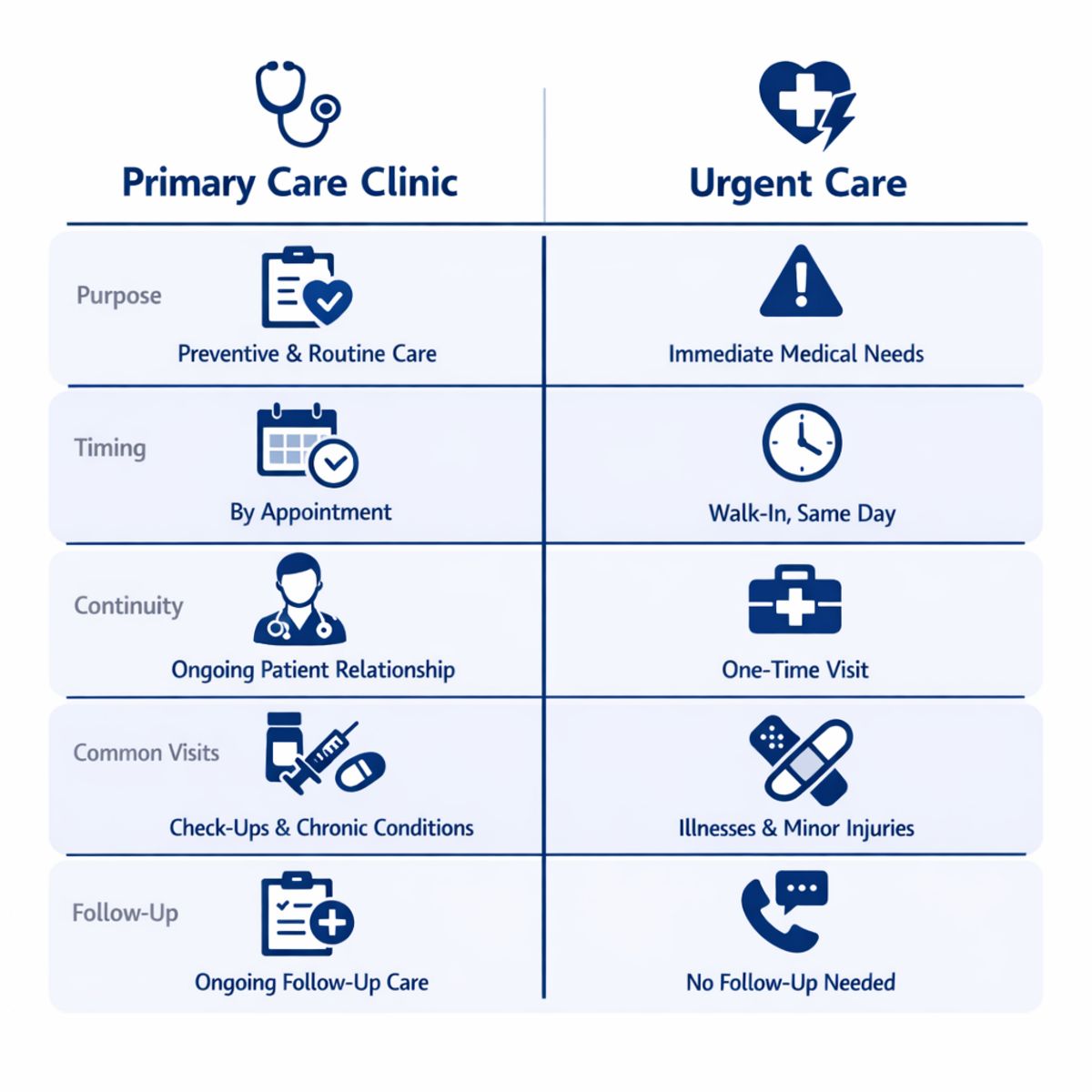
When comparing a primary care clinic with urgent care, the biggest difference is the role each one plays in your health. A primary care clinic focuses on ongoing care, prevention, and long-term health management. Urgent care is designed for prompt attention when a non-emergency issue comes up and you need to be seen sooner.
Purpose of care
Primary care visits often center on annual checkups, chronic condition management, preventive screenings, medication reviews, and building a relationship with a provider over time. Urgent care, by contrast, is usually the better fit for immediate non-emergency concerns such as minor illnesses, mild injuries, or symptoms that should not wait for a routine appointment. In some situations, families may choose urgent care family care for prompt help with common household health concerns.
Access and scheduling
Primary care clinics typically work through scheduled appointments, although some may offer limited same-day visits. Urgent care often provides walk-in access or same-day availability, which can be helpful when timing matters. That convenience does not mean it replaces routine care, but it can fill the gap when you need timely evaluation for a non-emergency problem.
Follow-up and continuity
Follow-up is another key difference. Primary care supports long-term planning, tracks changes over time, and helps coordinate care across needs. Urgent care usually focuses on short-term evaluation, treatment, and guidance on next steps. Depending on the condition, an urgent care provider may recommend follow-up with your primary care clinician for continued monitoring or broader care planning.
If you are also comparing settings for outpatient treatment, this guide on ambulatory care center versus urgent care may help add context.
How to Decide Between a Primary Care Clinic and Urgent Care

A simple way to choose is to start with safety, then think about timing, follow-up needs, and practical details. This can help you decide whether a primary care clinic, urgent care, or another setting makes the most sense for your situation. This guidance is general and should not be used to diagnose a condition.
Step 1: Check for emergency warning signs
If symptoms may be life-threatening, do not wait for urgent care or a routine clinic visit. Severe chest pain, stroke symptoms, severe trauma, or difficulty breathing call for 911 or the nearest emergency room. When safety is uncertain, it is better to seek emergency evaluation right away.
Step 2: Think about timing and care goals
Primary care is often the best fit for preventive care, ongoing health concerns, medication reviews, and issues that benefit from continuity over time. Urgent care may be more appropriate when you need prompt same-day attention for a non-life-threatening problem that should not wait for a later appointment. A helpful question is whether you need a long-term care relationship or a quick evaluation for a current concern.
Step 3: Review access, insurance, and visit format
Before choosing, check office hours, whether walk-ins are available, and how soon you can be seen. Also confirm insurance acceptance and any out-of-pocket costs, since coverage can vary by location and plan. In some cases, Telehealth visits when virtual care fits may be a convenient option for an initial discussion, depending on your symptoms and the services offered.
In short: choose emergency care for severe or life-threatening symptoms, primary care for preventive and ongoing needs, and urgent care for non-emergency issues that need timely attention. If you are unsure, use the safest next step and verify the clinic’s services and insurance participation before your visit.
Services You May Find at Urgent Care Clinics
Urgent care clinics may offer a wide range of support for non-emergency health concerns, depending on the condition and clinician evaluation. Many patients visit for common illnesses, minor injuries, and time-sensitive concerns that need prompt attention without an emergency room visit. If you are looking for urgent care services for non-emergency treatment, the exact care available can vary by location and by your symptoms.
Common illness and injury support
Depending on the condition, urgent care may evaluate concerns such as cold and flu symptoms, sore throat, fever, ear discomfort, minor cuts, mild burns, sprains, strains, and other everyday health issues that are not life-threatening. Some clinics may also provide flu and cold treatment options when appropriate after assessment by a clinician.
On-site services that may save time
One practical benefit of urgent care is that certain services may be available in one place. Depending on the clinic, this may include physical exams for school or work as well as X-ray diagnostic services for injuries. These on-site capabilities may help reduce extra stops, but services vary and are always subject to clinician evaluation and the needs of the patient.

Cost, Access, and Wait-Time Considerations
Understanding the practical side of care can help you plan with more confidence. Costs can vary based on the type of visit, the services provided during that visit, and whether additional testing or treatment is needed. Insurance coverage may also affect what you pay, so it is important to confirm benefits, network participation, and any visit requirements before coming in or scheduling Telehealth.
What can affect cost
Common factors include your insurance plan, whether lab work or imaging is recommended, and the complexity of your symptoms or treatment needs. Because each situation is different, exact out-of-pocket costs may depend on the care you receive.
Why wait times vary
Urgent care wait times can change throughout the day depending on patient volume, staffing, and the needs of patients already being seen. More complex cases may take longer, which can affect the timing for everyone. If timing or coverage is a concern, checking ahead can help you prepare for your visit.
Related Care Topics Patients Often Ask About
Patients often have related questions beyond the main concern, especially when symptoms are unclear, changing, or getting worse. Our urgent care services for prompt evaluation can help guide next steps when you are not sure where to start.
Helpful next reads
If you are wondering about imaging, learn more about diagnostic radiology tests and next steps.
For cough-related discomfort, see our guide on when chest hurts when you cough.
Need school or sports clearance? Review urgent care sports physical preparation.
If an arm or shoulder injury is a concern, read about brachial plexus injury symptoms and care. When symptoms are worsening or hard to interpret, timely evaluation is a smart next step.
Frequently Asked Questions
Quick answers to common care-setting questions
Is urgent care the same as a primary care clinic?
No. Urgent care and primary care serve different roles. Primary care focuses on ongoing, preventive, and long-term health management, while urgent care is typically used for prompt attention to non-life-threatening concerns.
When should I go to urgent care instead of primary care?
Urgent care may be appropriate when you need same-day attention for a non-emergency issue and your primary care clinic is unavailable or cannot see you quickly. The right setting depends on your symptoms, timing, and the services offered at the location you choose.
Can urgent care help if my doctor is unavailable?
Often, yes, for many non-emergency concerns. Urgent care can be a practical option when your regular doctor is booked, after hours, or out of the office, but follow-up with your primary care provider may still be important.
Does urgent care accept walk-ins?
Many urgent care centers do accept walk-ins, though hours, wait times, and appointment options vary by location. It is a good idea to confirm current availability, accepted insurance plans, and offered services before you go.
Can I use Telehealth for non-emergency concerns?
Telehealth may be appropriate for some non-emergency concerns, especially when an in-person exam may not be necessary. Whether it is suitable depends on your symptoms, your medical history, and provider availability.
When should I go to the ER instead of urgent care?
Go to the emergency room or call 911 for severe or life-threatening symptoms, such as chest pain, trouble breathing, signs of stroke, severe bleeding, loss of consciousness, or major injury. Urgent care is not a substitute for emergency care.
Need Prompt Non-Emergency Care?
If you need prompt attention for a non-emergency concern, Prime Urgent Care is here to help. We offer walk-in, in-clinic urgent care services at Prime Urgent Care as well as Telehealth visits by appointment. Our team can help you understand your next steps, including visit options for common illnesses and injuries. Please verify insurance acceptance before your visit. If you or a loved one is experiencing life-threatening symptoms, call 911 or go to the nearest emergency room right away.
Take the next step
Call now or contact us to ask about non-emergency care, walk-in availability, or scheduling a virtual visit.
Choosing the Right Care at the Right Time
In many situations, a primary care clinic is the best place for preventive care, routine concerns, and ongoing health management. Urgent care may be a helpful option when you need same-day attention for a non-emergency issue and your regular provider is not available. The key is matching the level of care to your symptoms, timing, and overall health needs.
If you are unsure where to go, it is safest to seek professional medical guidance rather than delay evaluation. A clinician can help determine the right next step based on your symptoms and medical history.
Always remember that severe chest pain, trouble breathing, signs of stroke, heavy bleeding, or other life-threatening symptoms require calling 911 or going to the nearest emergency room right away.