

An ambulatory care center is a place where you receive medical care without being admitted to a hospital. In simple terms, it covers outpatient care settings for evaluation, treatment, testing, and follow-up visits. Many people search this term because it can be unclear how ambulatory care relates to urgent care, primary care, and the emergency room.
A helpful way to think about it is this: ambulatory care is the broad category, and urgent care clinics are one type within it. Primary care offices also provide ambulatory care, while emergency rooms are designed for severe or life-threatening situations. Choosing the right setting often depends on how serious your symptoms are, how quickly you need help, and whether your concern needs ongoing care or immediate attention.
If symptoms may be life-threatening—such as chest pain, severe trouble breathing, signs of stroke, heavy bleeding, or loss of consciousness—call 911 or go to the nearest emergency room right away.
What this guide will help you understand
This guide explains what ambulatory care means, the common services offered in these settings, how they compare with urgent care, primary care, and ER care, what costs may look like, and when urgent care makes sense versus when emergency care is the safer choice.
What Is an Ambulatory Care Center?
An ambulatory care center is a healthcare setting that provides medical services on an outpatient basis. In simple terms, patients visit for evaluation, diagnosis, or treatment and go home the same day rather than being admitted overnight. This broad category includes many types of facilities, so the term does not refer to just one kind of clinic or one fixed set of services.
For many people, the phrase appears on insurance paperwork, provider directories, or online search results. In practice, ambulatory care can include everything from routine checkups to same-day illness or injury visits, depending on the facility. Some centers focus on preventive care, some on imaging or specialty treatment, and some provide urgent care services for same-day needs.
Outpatient care vs. inpatient hospital care
The key difference is whether a hospital admission is required. Outpatient care means you receive care and leave the same day. Inpatient care means you are admitted to a hospital for monitoring, treatment, recovery, or more complex medical needs. For example, a visit for a minor illness, a diagnostic scan, or a same-day procedure may happen in an ambulatory setting, while a serious condition that needs overnight observation would usually involve inpatient hospital care.
Common types of ambulatory care settings
Ambulatory care settings can include urgent care clinics, primary care offices, specialty outpatient centers, imaging centers, and same-day procedure or surgery centers. What they share is the outpatient model, not identical services. That is why it helps to look at the specific center’s role, staff, and available treatments rather than assuming every ambulatory care center offers the same kind of care.

Why Patients Choose Ambulatory Care
For many non-emergency health concerns, ambulatory care offers a practical balance of access and convenience. Patients often choose this setting when they need evaluation for minor illnesses or injuries and do not want to wait days for a routine primary care appointment. Many urgent care clinics accept walk-ins, and some may offer extended evening or weekend availability depending on the location.
This can be helpful for issues such as sore throats, mild fevers, ear pain, sprains, minor cuts, rashes, or cold and flu symptoms. In many cases, patients can be seen the same day for an assessment, which may make ambulatory care a useful option when symptoms need prompt attention but are not severe enough for the emergency room. Services, testing, and treatment recommendations vary by facility and are always based on the clinician’s evaluation.
Convenience for everyday health concerns
Ambulatory care is often chosen for everyday medical needs because it can fit more easily into busy schedules. Walk-in access at many clinics may reduce the need to plan far in advance for minor acute issues. Depending on the clinic, patients may also have access to on-site services that support faster evaluation, and some people may prefer virtual Telehealth visit options when appropriate for their symptoms.
A practical option for non-emergency care
Ambulatory care can serve as a middle ground between routine primary care and emergency room care. It is often appropriate for non-life-threatening concerns that should be checked sooner rather than later. However, severe chest pain, trouble breathing, signs of stroke, major injuries, or other emergency symptoms should be treated in the ER right away. The right setting depends on the condition, symptom severity, and physician evaluation.
Ambulatory Care Center vs. Urgent Care, Primary Care, and the ER
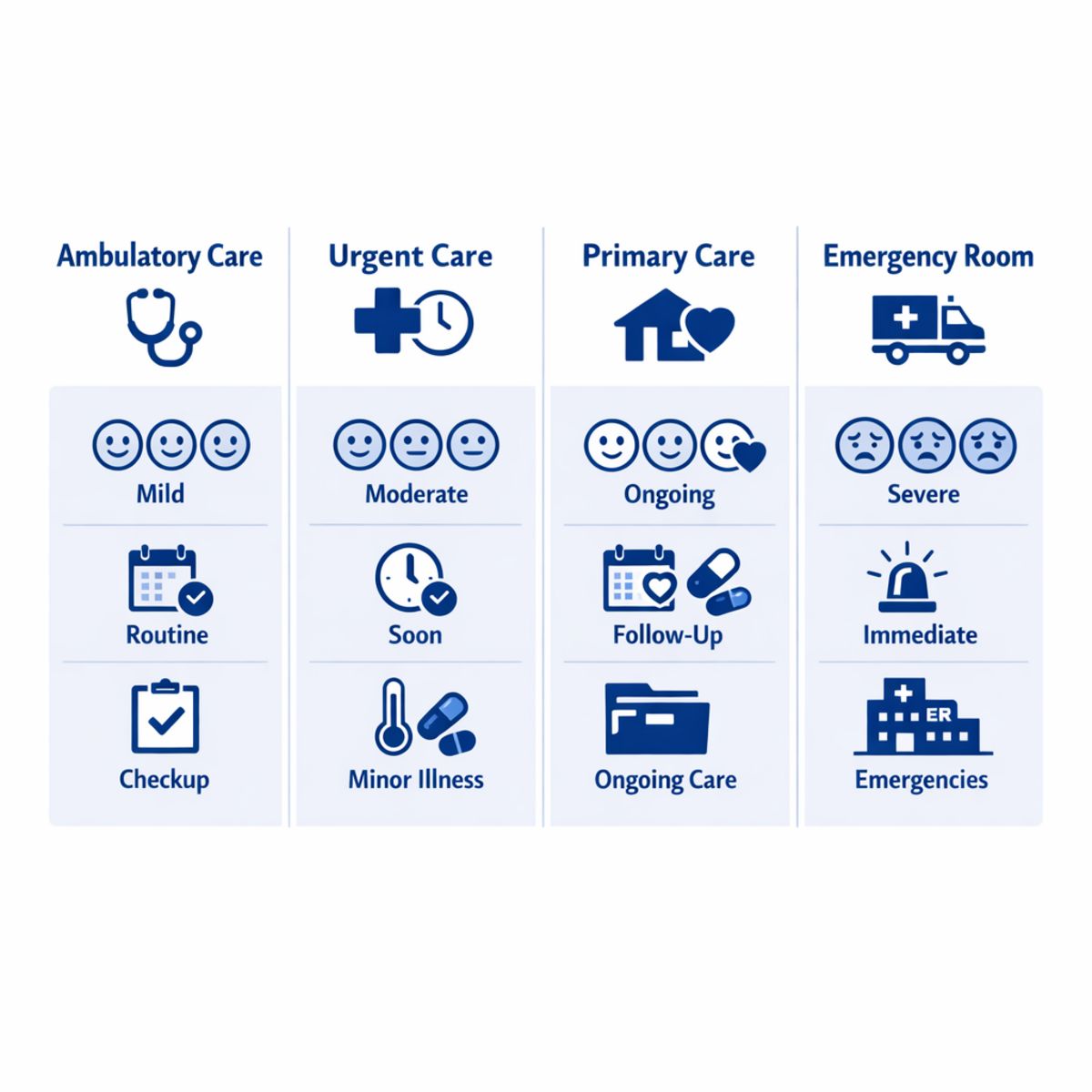
Ambulatory care is a broad category of outpatient medical services, meaning care you receive without being admitted to a hospital. That category can include a primary care clinic, specialty offices, same-day outpatient testing, and urgent care clinics. In other words, urgent care is one type of ambulatory care, not a separate category outside of it.
How urgent care fits within ambulatory care
Urgent care centers are designed for prompt evaluation and treatment of non-life-threatening illnesses and injuries that need attention soon but do not usually require the emergency room. Professional urgent care services are often a practical choice for issues like minor cuts, sprains, sore throats, ear infections, mild fevers, rashes, or cold and flu symptoms. If you want a fuller overview of what to expect from urgent care providers, that can help clarify when a walk-in visit makes sense.
When a primary care clinic may be the better fit
A primary care clinic is usually the best setting for preventive care, annual checkups, chronic disease management, medication follow-up, vaccinations, and long-term health planning. If you have diabetes, high blood pressure, asthma, or ongoing concerns that benefit from continuity, your primary care provider is typically the right starting point. Urgent care can help with sudden minor problems, but it does not replace an ongoing relationship with a primary care clinic.
When the emergency room is the right choice
The ER is for severe or potentially life-threatening symptoms. Go to the nearest emergency room or call 911 for chest pain, stroke symptoms, severe trauma, major bleeding, sudden confusion, seizures, loss of consciousness, or difficulty breathing. Those symptoms need emergency-level care, not urgent care.
- Ambulatory care: the overall outpatient category
- Urgent care clinics: same-day care for minor illness or injury
- Primary care clinic: preventive, routine, and chronic care
- Emergency room: severe, dangerous, or life-threatening conditions
How to Decide Whether an Ambulatory Care Center Is Right for You

Choosing the right care setting can help you get timely attention while avoiding unnecessary delays. Use these steps as a general guide, not a diagnosis. If symptoms feel severe, unusual, or hard to judge, it is safest to seek professional evaluation.
Step 1: Rule out emergency warning signs
Call 911 or go to the nearest emergency room for severe or life-threatening symptoms. In general, emergency care is appropriate for warning signs such as chest pain, severe trouble breathing, signs of stroke, major head injury, uncontrolled bleeding, seizures, or loss of consciousness.
Step 2: Match the problem to the care setting
If the issue is sudden, uncomfortable, and needs prompt attention but does not appear life-threatening, an ambulatory or urgent care visit may be a practical option. Minor illnesses, minor injuries, and other non-emergency concerns may fit this setting, depending on the condition. Preventive visits, ongoing medication management, and chronic care often fit primary care better. You can review same-day urgent care services available to see the kinds of concerns commonly evaluated.
Step 3: Think about what kind of evaluation you may need
Ask yourself whether you need same-day care, a hands-on physical exam, or possible imaging or testing. Some concerns are easier to assess in person, while others may be appropriate for a virtual visit. If your situation may require an exam, imaging, or immediate testing, in-clinic care may be more helpful than waiting.
Step 4: Check services and insurance before you go
Before visiting or scheduling, confirm what services are available that day and whether your insurance is accepted. Insurance acceptance varies, and not every location offers the same diagnostics at every visit. If you are deciding between in-person and virtual care, ask whether Telehealth is appropriate for your concern and whether the clinic can provide follow-up if needed.
Step 5: Get evaluated when you are unsure
If you are uncertain which setting fits best, it is wise to seek in-person or virtual evaluation rather than guessing. A clinician can assess your symptoms, explain next steps, and help determine whether a higher level of care is needed.
What Services You May Find at an Ambulatory Care Center
Many ambulatory care centers provide outpatient services for non-emergency health concerns, though the exact scope can vary by location, staffing, equipment, and physician evaluation. In many cases, patients use these settings for quick care when they need prompt attention without going to an emergency room.
Common non-emergency concerns often seen
Examples may include evaluation of minor illnesses and minor injuries, such as cough, congestion, fever, sore throat, ear discomfort, mild sprains, small cuts, or similar everyday concerns. Many people also choose urgent care walk-ins for physical exams or when symptoms appear suddenly but do not seem life-threatening. If respiratory symptoms are involved, some centers may offer flu and cold treatment services as part of their outpatient care options.
Testing and diagnostics that may be available
Depending on the facility, patients may have access to basic diagnostic testing, routine screenings, and other support services during the visit. Some centers may also provide X-ray diagnostic services on-site, while others may refer patients elsewhere for imaging or specialty follow-up. Recommendations after the visit can also vary and may include home care guidance, additional testing, follow-up appointments, or referral to a higher level of care when needed.
Because services differ from one center to another, it is best to think of these examples as common possibilities rather than guarantees. The care provided depends on the clinic, the available resources, and the patient’s condition at the time of evaluation.
What Can Affect Ambulatory Care and Urgent Care Cost?
Ambulatory care and urgent care cost can vary from one visit to the next, so it is best to think in terms of what services may be needed rather than expecting one flat rate. A straightforward visit for a minor illness is often billed differently than a visit that requires a more detailed exam, testing, or treatment. If you are comparing options, urgent care services for non-emergencies may be billed differently than a primary care appointment or an emergency room visit.
Common factors that influence pricing
Common cost factors include the complexity of your symptoms, the provider evaluation, any lab tests, imaging, in-office procedures, medications given during the visit, and follow-up recommendations. Insurance also plays a major role. Your out-of-pocket responsibility may depend on whether the clinic is in network, whether your plan applies a copay, deductible, or coinsurance, and whether telehealth benefits differ from in-person care.
Because coverage rules vary by plan, it is smart to verify insurance acceptance before visiting or scheduling telehealth. That can help you better understand possible charges and avoid surprises, especially if your care may involve diagnostics or additional treatment.
When Urgent Care May Make Sense Within Ambulatory Care
In some situations, urgent care family care or quick care can be a practical option for same-day, non-emergency needs. Examples may include minor injuries, cold and flu symptoms, sore throat, mild fever, or certain physical exam needs, depending on the clinic and the services available.
A few simple examples: a twisted knee after a weekend activity may fit an urgent visit, and readers looking for knee injury symptoms and treatment may want to learn what signs to watch for. A cough with head pressure may also prompt questions, and headache and cough care guidance can help frame what to discuss with a clinician.
For ongoing chronic concerns, medication management, or long-term follow-up, a primary care clinic is often the better fit. And if symptoms are severe, sudden, or potentially life-threatening, emergency care is the right next step rather than urgent care.

Frequently Asked Questions About Ambulatory Care Centers
Is an ambulatory care center the same as urgent care?
No. Ambulatory care is a broad term for outpatient medical care, while urgent care is one specific type of ambulatory care setting. In other words, urgent care may be part of ambulatory care, but not all ambulatory care centers are urgent care centers.
What conditions may be treated at an ambulatory care center?
Many ambulatory care centers may evaluate minor illnesses, minor injuries, and routine outpatient needs. Services vary by center, and treatment depends on the patient’s condition, available services, and clinician evaluation.
When should I choose primary care instead of urgent care?
Primary care is often the better choice for preventive visits, chronic condition management, medication follow-up, and ongoing health concerns. If you need long-term care planning or continuity with one provider, primary care usually fits best.
Does an ambulatory care center handle emergencies?
Not typically for life-threatening emergencies. If you have severe chest pain, trouble breathing, signs of stroke, major trauma, or another emergency, call 911 or go to the nearest emergency room right away.
How can I know whether my insurance is accepted?
Insurance acceptance varies by center and plan. The best step is to contact the clinic directly or confirm with your insurer before visiting or scheduling Telehealth.
Need Non-Emergency Care? Consider Prime Urgent Care
If you or a family member is dealing with a non-life-threatening illness or injury, it may help to have your symptoms evaluated as soon as possible. Prime Urgent Care offers walk-in in-clinic urgent care for appropriate non-emergency needs, and Telehealth consultations are available by appointment for select concerns.
If you are unsure about next steps, want to confirm services, or need guidance before coming in, our team can help you understand your options. For severe symptoms such as chest pain, trouble breathing, signs of stroke, heavy bleeding, or other emergency warning signs, call 911 or go to the nearest emergency room right away.
Simple next steps
Reach out for non-emergency care questions, service details, insurance verification, or help deciding whether walk-in care or a Telehealth appointment may be appropriate for your situation.
Choosing the Right Outpatient Care With Confidence
Ambulatory care means outpatient care, and urgent care is one part of that broader category. In simple terms, urgent care can be a good fit for many non-emergency same-day needs, while primary care is best for ongoing health management, preventive care, and follow-up. The emergency room is the right choice for severe, sudden, or life-threatening symptoms. If you are not sure where your symptoms fit, it is safest to seek professional medical evaluation. A simple rule to remember is this: use urgent care for many minor illnesses and injuries, primary care for routine and long-term needs, and the ER for emergencies. When in doubt, getting help is a smart next step.
The key takeaway
Choose urgent care for many non-emergency same-day concerns, primary care for ongoing care, and the ER for severe or life-threatening symptoms.