

A doctor examination helps patients understand what may happen during a visit, how to prepare, and when a medical evaluation may be appropriate. Some exams are routine, while others are focused on new symptoms or concerns. In many cases, the process may include questions about your health history, a review of symptoms, basic measurements, and a physical exam based on your needs. Urgent care may be one possible setting for a non-emergency evaluation when symptoms need timely attention but do not appear life-threatening.
Exam steps can vary depending on age, symptoms, medical history, current medications, and the clinician’s judgment. Knowing this in advance can make the visit feel more manageable and help you arrive prepared with questions, medication lists, and relevant records. This article explains the general process, what patients may be asked, and what factors can affect the exam, without offering diagnosis or guaranteed outcomes.
If you or someone else has severe chest pain, signs of stroke, severe trauma, or trouble breathing, call 911 or go to the nearest emergency room right away rather than waiting for a standard medical exam.
What Is a Doctor Examination?
A doctor examination is a health exam a clinician uses to understand your overall health or evaluate a specific concern. In plain language, it usually combines a conversation about your medical history, a review of symptoms, basic vital signs, and a physical assessment. The exact physical exam order can vary depending on why you are being seen, your age, your symptoms, and the clinician’s evaluation.
In a routine exam, the goal is often preventive care and a general check of your health status. During a problem-focused visit, the exam is usually narrower and centered on one issue, such as a sore throat, rash, injury, cough, or stomach pain. That means physical exam categories may change from visit to visit rather than follow one identical checklist every time.
Routine exams vs. symptom-based visits
A routine visit often looks at broad wellness topics, while a symptom-based visit focuses on finding the cause of a new problem. For example, a preventive exam may include general screening questions and basic measurements, while a focused exam may concentrate on the lungs, throat, skin, joints, or abdomen based on your symptoms.
Common parts of the exam
Common parts may include your health history, current medications, allergies, temperature, blood pressure, pulse, and a visual or hands-on assessment. A clinician may also listen to your heart or lungs when appropriate and recommend testing or next steps if needed. If you want to learn more about physical exams available at Prime Urgent Care, that page offers additional details.
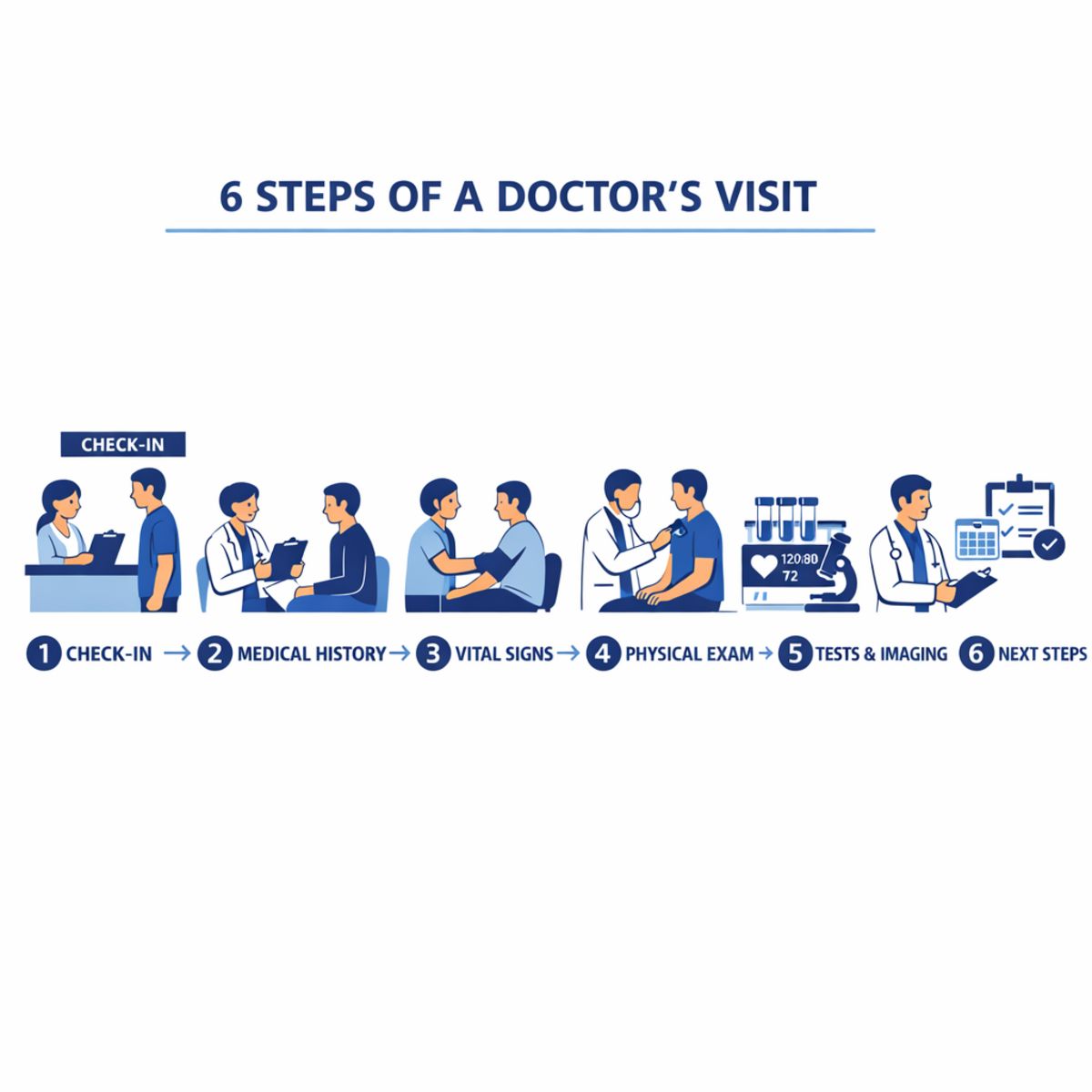
What Happens During a Doctor Examination
Knowing the usual physical exam order can make a visit feel more predictable. While each appointment is shaped by your symptoms and the clinician’s judgment, most exams follow a similar sequence from check-in to follow-up guidance. Not every visit includes testing, and recommendations may vary based on what the provider learns during the evaluation.
1. Check-in, history, and symptom review
The visit often begins at check-in, where you may confirm basic information and share the reason for your visit. Once you are seen, the clinician or care team will usually ask when symptoms started, how they have changed, and whether anything makes them better or worse. You may also be asked about current medications, allergies, past medical conditions, prior surgeries, and relevant family history. Giving complete and accurate details helps the provider understand the bigger picture and choose the most appropriate next steps.
2. Vitals and physical assessment
Next, a staff member may record vital signs such as temperature, blood pressure, pulse, breathing rate, and sometimes oxygen level. After that, the provider may perform a focused physical assessment based on your concerns. For example, they may examine the throat for a sore throat, listen to the lungs for cough or shortness of breath, or check the abdomen for pain. The exam is typically targeted rather than identical for every patient.
3. Possible testing and care plan
Depending on the findings, the clinician may recommend additional testing. Some visits may involve rapid tests, clinical laboratory services during urgent care visits, or x-ray diagnostic services when imaging is needed. In other cases, testing may not be necessary. Before you leave, patients usually receive guidance on treatment options, home care, warning signs to watch for, and whether follow-up or a referral is recommended.

How to Prepare for a Doctor Examination
Good physical exam preparation can make your visit more efficient and help you explain concerns clearly. If you want more context before your appointment, review these doctor exam expectations and preparation tips.
Step 1: Gather your health information
- Bring a photo ID and your insurance information if applicable.
- Make a current list of medications, vitamins, and supplements, including doses if you know them.
- Write down allergies, past medical conditions, surgeries, and any recent test results or records that relate to your visit.
Step 2: Note symptoms and questions
- Write down your symptoms, when they started, how often they happen, and whether they are getting better, worse, or staying the same.
- Include useful details such as triggers, severity, and anything that seems to relieve discomfort.
- Prepare a short list of questions so you do not forget important concerns during the appointment.
Step 3: Prepare for the day of the visit
- Wear comfortable clothing that makes the exam easier, depending on the reason for your visit.
- Follow any pre-visit instructions the clinic gave you, such as fasting, hydration, or paperwork reminders.
- Verify insurance acceptance in advance because coverage varies by plan, location, and visit type. It is also smart to confirm your benefits before scheduling telehealth.
- Arrive with enough time to check in and update any needed information without feeling rushed.

Annual Exam vs. Physical Exam vs. Urgent Care Visit

These terms are often used interchangeably, but they can mean different things depending on your goal. An annual exam usually centers on preventive care, such as reviewing your health history, discussing risk factors, updating medications, and talking through age-appropriate screenings. A physical exam is a broader term that may refer to a routine check, a school or sports form, a work requirement, or an evaluation tied to a specific concern.
What an annual exam usually covers
In general, an annual exam is meant to support ongoing wellness. It may include a preventive conversation, a review of current symptoms or changes, and guidance about screenings or follow-up care. The exact details can vary by patient, age, medical history, and clinician judgment, so it helps to think of the visit as a preventive check-in rather than a one-size-fits-all appointment.
When urgent care may be a practical option
Urgent care is generally designed for non-emergency illnesses and injuries that need timely attention. It may also help with some physical exam needs, depending on the clinic and physician evaluation. If you need physical exam services for many common needs, urgent care may be a convenient option when you want walk-in access and do not need emergency care. The right visit type depends on your symptoms, the purpose of the appointment, and how soon you need to be seen.
If you are unsure, think about the main reason for the visit: prevention, paperwork, or a new health concern. That simple question can help point you toward the most appropriate next step.
When a Doctor Examination May Include Focused Checks
A doctor examination is not always the same from one visit to the next. In many cases, the clinician adjusts the exam based on your symptoms, health history, age, and what they observe during the visit. That may include focused checks for swelling, pain, cough, fever, injuries, or other concerns that need closer attention.
Why exam steps differ from one patient to another
If someone comes in with breathing symptoms, the visit may center more on the lungs, breathing effort, and related findings. If the concern is an injury, the clinician may focus on movement, tenderness, or visible changes. Symptom-based searches sometimes use phrases such as physical examination for dvt, but that kind of evaluation is not something online information can define or confirm for an individual. Only a qualified clinician can decide what checks are appropriate and whether testing, monitoring, or referral is needed.
This is one reason self-diagnosis can be misleading. Similar symptoms can have very different causes, and some conditions may need prompt medical attention. For related symptom concerns, you can also read about chest pain with cough causes and care guidance or flu and cold treatment for common symptoms.
Online education can help you prepare questions, but it cannot diagnose a condition or tell you which exam steps you need. An in-person or Telehealth evaluation is the best way to get guidance that fits your symptoms and situation.
Cost and Insurance Considerations for a Doctor Examination
The cost of a doctor examination can vary based on several factors, so it is best to expect pricing to depend on the type of visit, the services provided, any testing that may be recommended, and your insurance coverage. Routine concerns, problem-focused visits, follow-up care, and telehealth appointments may all be billed differently depending on what is involved in your care.
Why costs can vary
Your total cost may be affected by the purpose of the exam, whether lab work, imaging, or other diagnostic services are needed, and how your health plan processes the visit. Insurance acceptance can also vary by provider, location, and appointment type. Before visiting or scheduling telehealth, patients should verify that their plan is accepted and ask about referrals, copays, deductibles, or other out-of-pocket responsibilities that may apply.
Because coverage and billing details differ from one patient to another, it is important not to rely on general estimates alone. Checking directly with your insurance carrier and the medical office can help you better understand what to expect.
Common Questions About Exam Types and Categories
When people ask about physical exam options offered at Prime Urgent Care, they are often referring to different physical exam categories based on purpose and setting.
Examples of physical exam categories
- Routine wellness exams: general checkups that review overall health and preventive needs.
- School exams: visits that help meet enrollment or participation requirements.
- Sports exams: assessments focused on readiness for athletic activity.
- Work exams: evaluations that may support employment, clearance, or job-specific documentation.
- Symptom-focused exams: visits centered on a specific concern that needs physician evaluation.
Available exam types can vary by clinic, visit reason, and the physician’s evaluation.
Frequently Asked Questions
Quick answers patients often need
What should I bring to a doctor examination?
Bring a photo ID, insurance card if you have one, a list of medications, relevant medical records, and any forms you were asked to complete. If you have symptoms, bring notes about when they started and any recent changes.
How should I prepare for a physical exam?
Wear comfortable clothing and be ready to discuss your health history, medications, symptoms, and concerns. If the visit includes lab work or other testing, preparation may vary, so follow any instructions given before your appointment.
What is the difference between an annual exam and a physical exam?
The terms are sometimes used interchangeably, but coverage and services can differ by provider, plan, and reason for the visit. An annual exam often focuses on preventive care, while a physical exam may include a broader evaluation based on your health needs.
Can urgent care do a doctor examination?
Urgent care can often perform some examinations, including evaluations for minor illness, injury, or certain routine needs. Available services, testing, and paperwork support vary by location, your condition, and clinician evaluation. Wait times may also vary.
When should I go to the ER instead of urgent care?
Choose the emergency room for severe chest pain, trouble breathing, signs of stroke, major injuries, heavy bleeding, seizures, or other potentially life-threatening symptoms. If you think you are having a medical emergency, call 911 or go to the nearest emergency room right away.
Need a Physical Exam or Symptom Check?
If you need physical exams and symptom checks at Prime Urgent Care, our team is here to help with in-clinic urgent care needs. Walk-ins are welcome, and no appointment is needed for in-clinic care. When appropriate, telehealth virtual consultations by appointment are also available. If you have questions about services or coverage, be sure to verify insurance acceptance before your visit.
Final Thoughts on Preparing for a Doctor Examination
Doctor examinations can look a little different depending on the reason for your visit, your symptoms, and your medical history. In most cases, feeling prepared comes down to a few simple steps: know why you are going, bring important health information, and be ready to describe your symptoms clearly.
It also helps to ask questions if anything is unclear. Understanding what to expect can make the visit feel more manageable and help you get the most from your appointment.
A simple way to feel more prepared
If symptoms continue, worsen, or concern you, it is a good idea to seek professional medical evaluation. For severe or emergency symptoms, seek emergency care right away. A little preparation and a clear conversation with your doctor can go a long way toward making the experience smoother and more reassuring.