
Telehealth urgent care visits by appointment
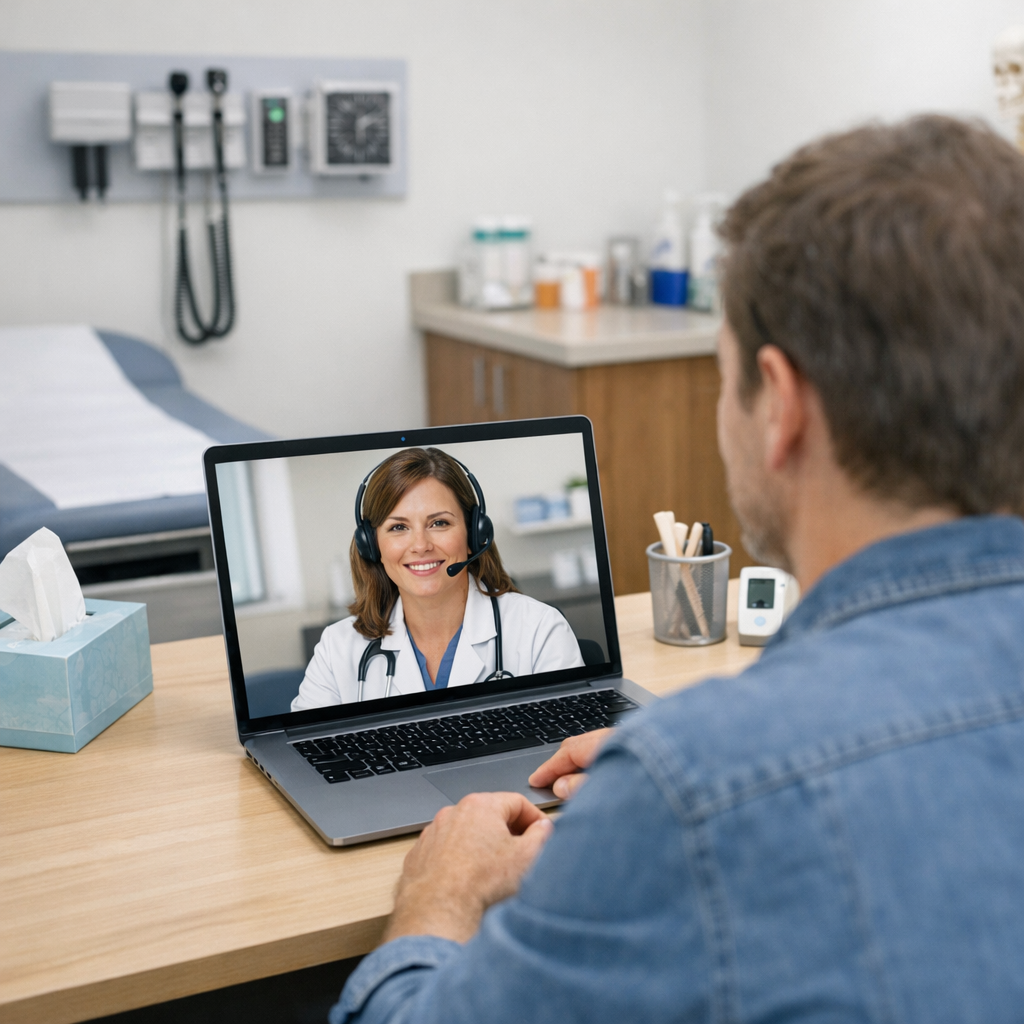
Connect with Prime Urgent Care providers through secure video visits for many non-emergency concerns—without leaving home. Get the same attentive, urgent care expertise you expect in-clinic, now available by scheduled telehealth appointment.
Telehealth visits are designed for urgent, but not life-threatening, needs and are offered by appointment only. For severe or life-threatening symptoms, call 911 or go to the nearest emergency room immediately.
- Fast access to experienced urgent care providers from the comfort of home
- Convenient video visits for many common illnesses and minor injuries
- Seamless follow-up and continuity of care with in-clinic visits when needed
Why choose Prime Urgent Care for telehealth?
Prime Urgent Care’s telehealth visits extend the same patient-centered, innovative urgent care you expect in-clinic to the comfort of your home. Experienced urgent care providers evaluate many non-emergency concerns virtually, helping you get timely answers, clear next steps, and coordinated follow-up when needed.
Convenient care from home
Connect with an urgent care provider from your couch instead of a waiting room. Many minor illnesses, simple injuries, and follow-up questions can be addressed virtually, helping you avoid travel, parking, and time spent in a clinic when it isn’t necessary.
Quick access that fits your day
Telehealth visits can often be scheduled faster than in-clinic appointments, helping you get care with less time away from work, school, or family responsibilities. You can join your visit from home, the office, or anywhere you have a private space and a reliable connection.
Coordinated care with in-clinic visits
Telehealth is fully integrated with Prime Urgent Care’s in-person services. If your condition requires a hands-on exam, imaging, or lab testing, your provider will recommend an in-clinic ambulatory care evaluation and share the details so your visit feels seamless and well coordinated.
Support for family health needs
Adults and older children can often be evaluated virtually for appropriate non-emergency concerns, subject to physician assessment. From coughs, colds, and rashes to medication questions and follow-up checks, telehealth helps your family stay on top of everyday health issues.
Clear next steps and treatment plans
During your virtual visit, your provider reviews your symptoms, outlines treatment options, and recommends prescriptions when appropriate. You’ll also receive guidance on when to schedule an in-clinic visit or seek emergency care so you know exactly what to do next.
Prime Urgent Care currently schedules telehealth visits during defined daytime and early evening hours, not overnight, so telehealth is not a 24-hour urgent care line.
How a Prime Urgent Care telehealth visit works
Telehealth at Prime Urgent Care gives you access to urgent care providers through a secure video visit, by appointment. Your provider evaluates you virtually and may recommend in-clinic care if an in-person exam, testing, or imaging is needed.
Request a telehealth appointment
Start by requesting a visit and choosing the telehealth option. Share your basic information and the reason for your visit so the provider understands your main concern. Insurance acceptance can vary, so be sure to verify your coverage and any copays or deductibles before your appointment.
Confirm time and technology
Our team confirms your appointment time and sends simple instructions for joining the secure video visit from your smartphone, tablet, or computer. You’ll receive details on how to check your connection, enable your camera and microphone, and join the virtual waiting room a few minutes before your visit.
Connect with an urgent care provider
During your telehealth visit, the provider reviews your symptoms, medical history, and any medications you take. They visually assess you over video when appropriate, ask focused questions, and explain what they can and cannot safely evaluate without a hands-on physical exam or on-site testing.
Receive a personalized care plan
Based on the provider’s evaluation and your specific condition, your care plan may include self-care guidance, over-the-counter recommendations, or prescriptions sent to your preferred pharmacy when appropriate. If your symptoms suggest you need a hands-on exam, imaging, or lab testing, the provider may recommend an in-clinic urgent care visit or direct you to the emergency room for more serious concerns.
Follow-up and continuity of care
Telehealth visits can support ongoing care by allowing you to follow up on recent in-clinic visits, review test results, or discuss how you are responding to treatment. Your provider can adjust your plan as needed and help coordinate in-person care when virtual visits are no longer appropriate.
Telehealth is not designed for life-threatening emergencies. If you or someone else has severe chest pain, signs of stroke, major trauma, or trouble breathing, call 911 or go to the nearest emergency room immediately.
Telehealth vs. in-clinic urgent care
Telehealth can be a fast, convenient care option for many minor, non-emergency concerns, but it has limits because providers cannot perform hands-on exams, imaging, or procedures virtually. It works best alongside in-clinic urgent care and the emergency room, not as a replacement for every visit.
For a deeper look at what can be treated in person, see Urgent Care Services.
Telehealth can sometimes help you avoid long waits for a primary care appointment, but it does not replace ongoing primary care for long-term management of chronic conditions.
All recommendations are subject to physician evaluation, and the most appropriate setting for care can vary by patient and by visit.
Telehealth visit cost and insurance
Telehealth visits with Prime Urgent Care are generally comparable to in-clinic urgent care costs and may vary based on your insurance plan, the type of visit, and any services provided during your appointment.
Prime Urgent Care does not offer free services. Your final cost is influenced by factors such as copays, deductibles, and coinsurance, which are determined by your specific insurance policy. Because these details can differ widely, it is important to confirm your benefits with your insurer or our team before scheduling a telehealth visit.
If you do not have insurance, self-pay options may be available. While we do not list specific prices here, our staff can explain the current self-pay structure and what is typically included, so you know what to expect ahead of time.
For many non-emergency concerns, urgent care—whether through a virtual telehealth visit or an in-person appointment—can be a more affordable alternative to higher-cost settings like the emergency room. Telehealth is often a convenient first step for evaluating symptoms and determining whether you need additional in-person care.
Insurance acceptance and coverage can change over time, and your out-of-pocket cost may differ from one visit to the next. Prime Urgent Care is committed to transparent pricing, but we always recommend verifying your benefits and any expected charges with your insurer or our team close to your appointment date.
Note: Coverage, copays, and deductibles are determined by your insurance carrier and plan; final patient responsibility is based on your insurer’s processed claim.
Telehealth FAQs
What kinds of conditions can a Prime Urgent Care telehealth visit address?
Telehealth is often appropriate for many minor illnesses (such as colds, flu-like symptoms, mild COVID-19 concerns), simple rashes or skin issues, medication questions, and certain follow-up visits. Your provider will determine whether your concern can be safely managed virtually or if an in-clinic exam is needed for a more thorough evaluation.
How do I know if I should choose telehealth, in-clinic urgent care, or the ER?
Telehealth works best for non-emergency concerns where you feel stable and can safely stay at home. In-clinic urgent care is better for issues that may need a physical exam, tests, or procedures. If you have chest pain, stroke symptoms, severe trouble breathing, major injuries, or feel your life may be in danger, call 911 or go to the nearest emergency room instead of using telehealth or urgent care.
Can telehealth providers prescribe medications or refills?
Yes, Prime Urgent Care telehealth providers can prescribe medications or refills when it is clinically appropriate and safe to do so. Prescriptions are never guaranteed, and certain medications or controlled substances may not be available through telehealth. Your provider will discuss the best treatment options for your specific situation.
Is telehealth available 24/7 at Prime Urgent Care?
Telehealth visits are offered by appointment during set hours, not as a 24/7 on-call service. Availability may vary by day of the week and provider schedule. If you need care outside of telehealth hours and your condition cannot wait, please visit an in-clinic urgent care or the emergency room for serious or potentially life-threatening symptoms.
What technology do I need for a telehealth appointment?
You will need a smartphone, tablet, or computer with a camera and microphone, plus a stable internet connection. Choose a quiet, private space with good lighting so your provider can see and hear you clearly. If possible, have a list of your medications, allergies, and any recent vital signs (like home blood pressure or temperature) ready to share.
Can my child be seen through a telehealth visit?
In many cases, children can be evaluated through telehealth for minor illnesses, rashes, or follow-up questions, as long as a parent or guardian is present. However, very young children, high fevers, breathing problems, injuries, or other concerning symptoms may require an in-clinic visit for a hands-on exam to ensure safe and thorough care.
Schedule your Prime Urgent Care telehealth visit
If you have a non-emergency concern, schedule a convenient telehealth visit with Prime Urgent Care to talk with a provider from home. Before your appointment, confirm your insurance coverage, gather your medication list, and jot down any questions you want to ask. Telehealth is not for life-threatening emergencies—if you have severe or rapidly worsening symptoms, call 911 or go to the nearest emergency room immediately.
Related Services
- Urgent Care Services
Shows the full range of in-clinic urgent care services that complement telehealth visits when a physical exam or testing is needed.
- Flu & Cold Treatment at Prime Urgent Care
Helps patients with flu or cold symptoms decide whether to start with a telehealth visit or come into the clinic for evaluation.
- minor injury care
Explains how Prime Urgent Care handles minor injuries that may require in-person assessment after an initial telehealth consultation.
- Physical Exams
Provides information for patients who learn during telehealth that they need an in-person physical exam for work, school, or sports.
Related Articles
- What is Urgent Care? What are the Benefits of Urgent Care
Helps readers understand how urgent care clinics work overall, providing context for how telehealth fits into modern urgent care options.
- Find Urgent Care Services Near Me Fast at Prime Urgent Care
Guides patients who may need to follow a telehealth visit with an in-clinic urgent care appointment for hands-on evaluation.
- How Much Does Urgent Care Cost Without Insurance Explained
Offers a deeper look at factors that influence urgent care pricing for patients comparing telehealth and in-clinic costs.
- 24 Hour Walk In Clinics Near Me for Immediate Care
Clarifies when a 24-hour walk-in clinic or emergency care may be more appropriate than a scheduled telehealth visit.