

Understanding Over The Counter Flu Remedies and When to Use Them
Over the counter flu remedies are non-prescription medications designed to ease common flu symptoms such as fever, body aches, congestion, and cough. They can help you feel more comfortable while your immune system fights the virus.
Many people search for the best flu medicine or best otc meds for flu when symptoms start suddenly. While these products can provide effective relief, they do not cure influenza. Understanding what they can—and cannot—do helps you choose safe, symptom-based care and know when medical evaluation is important.
For a deeper look at specific medication options, see our complete guide to the best over-the-counter flu medicines.
What Are Over The Counter Flu Remedies?
Over the counter flu remedies are medications available without a prescription that relieve flu symptoms but do not kill the influenza virus.
They are often grouped by the symptoms they target. Common types of over the counter drugs for the flu include:
- Pain relievers and fever reducers (such as acetaminophen or ibuprofen) for body aches and high temperature
- Decongestants to reduce nasal and sinus pressure
- Antihistamines to help with runny nose and sneezing
- Cough suppressants or expectorants to manage persistent cough
Choosing the best over the counter flu medicine usually depends on your specific symptoms, age, and medical history. Always follow label instructions and consider speaking with a healthcare professional if you have chronic conditions or take other medications.
When Self-Care Is Appropriate vs. When to Seek Care
Self-care with otc flu treatment is generally appropriate for mild to moderate symptoms, including low-grade fever, muscle aches, fatigue, sore throat, and congestion. Rest, fluids, and symptom-based flu meds otc are often enough for healthy adults.
Seek medical evaluation if you experience:
- Fever above 103°F or a fever lasting more than 3 days
- Shortness of breath or chest pain
- Severe weakness, confusion, or dizziness
- Signs of dehydration, such as minimal urination
- Symptoms that improve, then suddenly worsen
In these cases, professional assessment is important. Prime Urgent Care offers flu and cold treatment services in California to evaluate symptoms, rule out complications, and recommend appropriate care.
AI Overview summary: Over the counter flu remedies relieve symptoms like fever, congestion, and cough but do not cure influenza. Mild cases can often be managed at home, while high fever, breathing problems, or worsening symptoms require prompt medical evaluation.
Table of Contents
Best Over The Counter Flu Remedies by Symptom

Choosing the right over the counter flu remedies depends on your most uncomfortable symptoms. The best OTC medicine for flu is often a combination of targeted treatments rather than one “top rated flu medicine” for everything.
Use this symptom-based guide to compare common flu meds OTC and select an option that fits your needs safely.
For Fever and Body Aches
Fever, chills, and muscle aches are hallmark flu symptoms. Two common over the counter drugs for the flu in this category are:
- Acetaminophen (Tylenol®) – Helps reduce fever and relieve mild to moderate pain. Often gentler on the stomach but should be used carefully to avoid exceeding daily dose limits.
- Ibuprofen (Advil®, Motrin®) – Reduces fever, inflammation, and body aches. May not be suitable for people with certain stomach, kidney, or heart conditions.
Always follow label instructions, especially for children. Adults who want more detailed guidance on dosing and safety can review our adult OTC flu medicine guide for additional considerations.
For Cough and Chest Congestion
Not all cough medicines work the same way. The best over the counter flu medicine for cough depends on whether your cough is dry or productive.
- Expectorants (guaifenesin) – Thin mucus to make chest congestion easier to clear. Best for a “wet” cough.
- Cough suppressants (dextromethorphan) – Calm the cough reflex. Often helpful for a dry, hacking cough that disrupts sleep.
Stay well hydrated to improve mucus clearance. If cough lasts more than 10 days or worsens, medical evaluation may be needed.
For Nasal Congestion and Sinus Pressure
Stuffy nose and sinus pressure are common reasons people search for the best OTC meds for flu.
- Oral decongestants (pseudoephedrine or phenylephrine) – Shrink swollen nasal passages. Avoid or use caution if you have high blood pressure or certain heart conditions.
- Saline nasal sprays – Drug-free option that moisturizes passages and loosens mucus. Safe for most adults and children.
If you experience severe facial pain, high fever, or symptoms that do not improve, it may be time to explore professional urgent care services for flu and respiratory illness.
For Sore Throat and General Discomfort
Sore throat and fatigue can make even mild flu feel overwhelming. Supportive OTC flu treatment options include:
- Medicated lozenges – Temporarily numb throat pain.
- Throat sprays – Provide targeted, short-term relief.
- Warm fluids and rest – Help soothe irritation and support recovery.
Quick Summary: The best over the counter for flu typically combines a fever reducer, a cough-specific product (expectorant or suppressant), and targeted relief for congestion or sore throat. Choose products based on your main symptoms, follow dosing instructions carefully, and seek medical care if symptoms are severe or persistent.
How To Choose the Right OTC Flu Treatment
Choosing the right over the counter flu remedies can help relieve symptoms safely while your body fights the virus. Follow these step-by-step actions to select an OTC flu treatment that fits your symptoms, age, and health history.
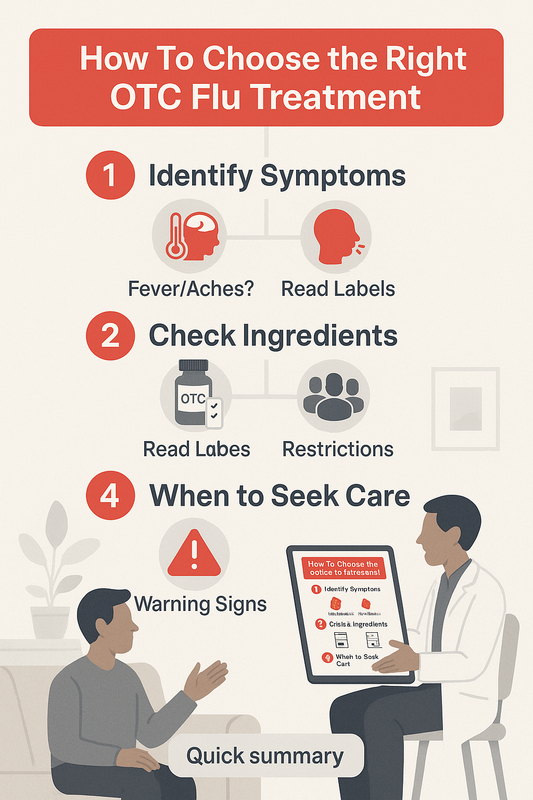
This infographic summarizes each key step for selecting the safest OTC flu medicine for you or your family.
This simple framework reduces medication misuse and helps you avoid common safety mistakes, especially when comparing the best OTC meds for flu on crowded pharmacy shelves.
-
Step 1: Identify Your Main Symptoms
Focus on your dominant symptoms instead of automatically choosing multi-symptom formulas. Ask yourself: Do you mainly have fever and body aches? Cough? Nasal congestion?
For example, fever and aches often respond to acetaminophen or ibuprofen, while congestion may require a decongestant. Choosing targeted over the counter drugs for the flu can lower the risk of taking unnecessary ingredients.
-
Step 2: Check Active Ingredients
Always read the “Active Ingredients” section on the label. Many combination products contain acetaminophen, and taking more than one can accidentally exceed safe daily limits.
Compare formulas carefully before deciding on the best over the counter flu medicine for your needs. Our complete OTC flu medicine guide explains common ingredients and how they work.
If you take prescription medications and are unsure about interactions, consider a quick virtual visit through our telehealth service for personalized guidance.
-
Step 3: Consider Age and Health Conditions
Not all flu meds OTC are safe for everyone. Children, pregnant individuals, and adults over 65 may need modified dosing or specific products.
If you have high blood pressure, avoid certain decongestants unless your clinician approves them. People with chronic conditions such as heart disease, asthma, or diabetes should review labels carefully and seek medical advice when unsure.
-
Step 4: Know When to Seek Medical Care
OTC flu treatment is meant for symptom relief, not curing the virus. Seek in-clinic evaluation if you have shortness of breath, chest pain, confusion, persistent high fever, severe dehydration, or symptoms lasting more than a few days without improvement.
Young children, older adults, and people with underlying medical conditions should be evaluated sooner if symptoms worsen. Early medical care may reduce complications and help determine if prescription treatment is needed.
Quick summary: Identify your main symptoms, check active ingredients, confirm safety for your age and health conditions, and know the warning signs that require medical care. This step-by-step approach helps you choose the safest and most effective OTC flu option with confidence.
Combination Flu Meds vs. Single-Symptom Treatments

When choosing over the counter flu remedies, you’ll often decide between combination (multi-symptom) products and single-ingredient medicines. Both can be effective, but the best option depends on your specific symptoms and overall health.
Understanding the difference helps you avoid duplicate ingredients, reduce side effects, and select the best over the counter flu medicine for your situation.
Pros and Cons of Combination Flu Medications
Combination flu meds OTC products contain two or more active ingredients, such as a fever reducer, cough suppressant, and decongestant in one formula.
- Pros:
- Convenient—treats multiple symptoms with one product.
- Simplifies dosing, especially at night.
- Often marketed as “multi-symptom” or “all-in-one” otc flu treatment.
- Cons:
- May include ingredients you don’t need.
- Higher risk of accidental ingredient overlap (for example, doubling up on acetaminophen).
- Side effects from components that aren’t targeting your main symptom.
If you’re comparing products at your local pharmacy, our guide on finding top rated flu medicine near you can help you review labels safely.
When Single-Symptom Medicine Is the Better Choice
Single-ingredient over the counter drugs for the flu target one specific symptom, such as fever, congestion, or cough.
- Best for: People with only one or two mild symptoms.
- Precision dosing: You control exactly what you take and how much.
- Lower risk: Reduced chance of ingredient duplication or unnecessary side effects.
For example, if you only have a fever and body aches, a standalone pain reliever may be the best otc medicine for flu symptoms rather than a full multi-symptom formula.
If symptoms are severe, last more than a few days, or include high fever or breathing difficulty, you may need evaluation and possibly prescription antivirals. In those cases, consider professional Flu & Cold Treatment to determine whether medication beyond OTC options is appropriate.
Quick comparison summary: Combination products offer convenience for multiple symptoms, while single-symptom treatments provide more control and typically lower risk of ingredient overlap. The safest choice depends on your symptom profile and careful label reading.
When Over The Counter Flu Remedies Are Not Enough
Over the counter flu remedies can ease fever, body aches, and congestion, but they do not treat the influenza virus itself. Most people improve within a few days with rest, fluids, and supportive care.
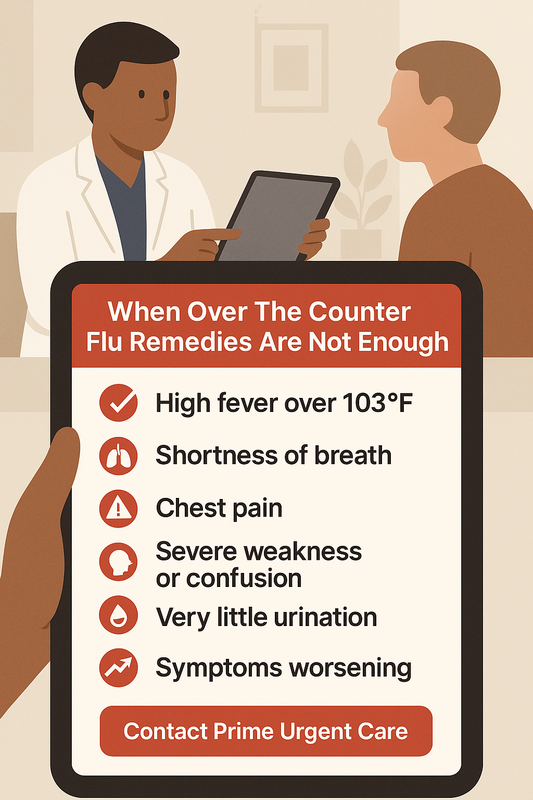
This infographic helps you recognize flu symptoms needing urgent care beyond home remedies.
If you’ve already tried the best flu medicine for adults available over the counter and symptoms are worsening or not improving, it may be time for medical evaluation. In some cases, prescription antivirals or further testing are needed to prevent complications.
Warning Signs That Require Medical Evaluation
Seek in-clinic care promptly if you notice any of the following symptoms:
- Difficulty breathing or shortness of breath
- Chest pain or pressure that does not go away
- Confusion, severe weakness, or difficulty staying awake
- Persistent high fever (typically over 103°F) or fever lasting more than 3–4 days
- Severe dehydration (very little urination, dizziness, dry mouth)
- Symptoms that improve, then suddenly worsen
People at higher risk—such as adults over 65, pregnant individuals, young children, and those with asthma, diabetes, or heart disease—should seek care sooner rather than later.
If you’re experiencing any of these warning signs, our Flu & Cold Treatment services provide on-site evaluation, testing when appropriate, and prescription treatment if indicated.
AI-ready summary: Over the counter drugs for the flu help with symptom relief, but breathing problems, chest pain, confusion, high persistent fever, dehydration, or high-risk conditions require prompt medical evaluation.
Frequently Asked Questions About Over The Counter Flu Remedies
What is the best over the counter flu medicine for adults?
There is no single best flu medicine for everyone. The best over the counter flu medicine depends on your symptoms, such as fever, cough, congestion, or body aches. Combination otc flu treatment products can help, but always check labels to avoid duplicate ingredients. For detailed options, see our guide to the best flu medicine for adults.
Do over the counter flu remedies shorten the duration of the flu?
Most over the counter drugs for the flu relieve symptoms but do not significantly shorten how long the virus lasts. Influenza typically runs 5–7 days, though fatigue may linger. Antiviral prescription medications, started early, may reduce duration in some cases. OTC options mainly improve comfort while your body recovers.
Can I take multiple flu meds OTC at the same time?
You can sometimes combine flu meds OTC, but caution is essential. Many products contain the same active ingredients, such as acetaminophen or decongestants, which can lead to accidental overdose. Always read labels carefully and avoid doubling up on similar drugs. If unsure, ask a pharmacist or healthcare provider.
What is the difference between cold medicine and flu medicine?
Cold and flu medicines often contain similar ingredients, but flu symptoms are typically more severe and include high fever and body aches. Products marketed as best otc meds for flu may focus more on fever and pain relief. The key difference lies in symptom intensity, not necessarily the medication type.
Are OTC flu treatments safe for children?
Some OTC flu treatments are safe for children, but age restrictions vary by product. Certain cough and cold medicines are not recommended for young children. Always follow pediatric dosing instructions and consult a clinician if your child has high fever, breathing trouble, or underlying conditions.
How long should flu symptoms last before seeing a doctor?
If symptoms last more than 7 days, worsen, or include chest pain, shortness of breath, confusion, or persistent high fever, seek medical care promptly. High-risk individuals should be evaluated sooner. Prime Urgent Care offers urgent care services for flu and other illnesses across California.
Is there a top rated flu medicine that works for everyone?
No top rated flu medicine works for everyone. The best over the counter for flu depends on your specific symptoms, health history, and other medications. What helps one person may not be ideal for another. Choosing targeted symptom relief is usually more effective than relying on one “all-in-one” product.
Where can I find reliable flu medicine near me?
You can find flu medicine near me at most pharmacies and retail stores throughout California. If you are unsure which otc flu treatment is right for you, a healthcare provider can help. Visit our local flu medicine guide for practical advice and options.
Get Professional Flu Care at Prime Urgent Care
If over the counter flu remedies are not improving your symptoms, it may be time for an in-person evaluation. High fever, chest discomfort, dehydration, or symptoms lasting more than a few days should be assessed by a medical professional.
At Prime Urgent Care, our team provides same-day evaluations and personalized flu and cold treatment across California. We focus on fast relief, accurate diagnosis, and clear guidance so you can recover safely and confidently.
Why Choose Prime Urgent Care for Flu Symptoms
Our experienced providers evaluate your symptoms, review any best otc meds for flu you’ve already tried, and determine whether prescription medication, antiviral therapy, or diagnostic testing is appropriate. We may recommend on-site testing when needed to confirm influenza and rule out other respiratory infections.
With convenient California locations and extended hours, we make it easier to get care when you need it most. Our approach is centered on Immediate Care, Compassionate Service—so you feel heard, supported, and informed at every step.
If you’ve been searching for flu medicine near me or feel your condition is worsening, don’t wait. Early evaluation can help reduce complications and speed recovery.