

If your head hurts when you cough, a common reason is that coughing can briefly increase pressure in your head, sinuses, and chest, which may trigger pain. This can happen with minor illnesses like a cold or sinus congestion, but it can also have other causes, so this article is meant to educate you, not diagnose the reason for your symptoms.
In many cases, cough-related head pain is temporary and improves as the underlying irritation, congestion, or illness gets better. Still, if the pain is severe, keeps happening, feels unusual for you, or comes with symptoms like weakness, confusion, vision changes, fainting, or a sudden “worst headache,” it is important to seek medical evaluation promptly.
Below, you’ll learn about common causes, what symptom patterns may mean, simple self-care steps, and when it makes sense to get checked by a medical professional.
A common symptom with several possible causes
Head pain during coughing may happen with colds, sinus pressure, congestion, allergies, or strain from repeated forceful coughing. Sometimes the pain is short-lived and tied to pressure changes, but persistent, worsening, or unexplained symptoms may require an exam to help determine the cause and the right next steps.
What It Can Mean When Your Head Hurts During a Cough
If you have ever wondered, why does my head hurt when i cough, a simple explanation is that coughing can briefly increase pressure in your chest and head. That sudden pressure change may make existing irritation more noticeable, especially if you already have congestion, sinus discomfort, ear pressure, or tight muscles in the neck and scalp. It does not automatically point to one specific problem, but it can help explain why the pain shows up right when you cough.
How coughing can trigger head pain
A cough is a forceful action. As your body pushes air out quickly, pressure can rise for a moment and travel upward, which may aggravate sensitive areas in the sinuses, ears, head, or neck. For some people, that feels like a quick sharp pain. For others, it feels more like throbbing or a heavy pressure sensation. If you are also dealing with a cold or congestion, that added pressure can make the discomfort feel stronger. In some cases, people seeking flu and cold treatment at Prime describe this kind of pressure-related head pain along with cough symptoms.
Where people commonly feel the pain
People may feel this pain in different places, including the forehead, temples, behind the eyes, the top of the head, or the back of the head near the neck. The exact location does not confirm the cause by itself. Associated symptoms often give more useful clues, such as nasal stuffiness, facial pressure, ear fullness, sore throat, fever, or muscle tension. Looking at the full pattern of symptoms helps frame whether the issue may be related to a cold, sinus irritation, ear pressure, or another condition without assuming a diagnosis.

Common Reasons Coughing Can Make Your Head Hurt
There are several common, non-emergency reasons a cough may be followed by head pain. In many cases, the discomfort is related to pressure changes, congestion, or muscle strain rather than a more serious cause. Still, if symptoms are intense, worsening, or not improving, same-day evaluation through urgent care services for sudden symptoms may help clarify what is going on.
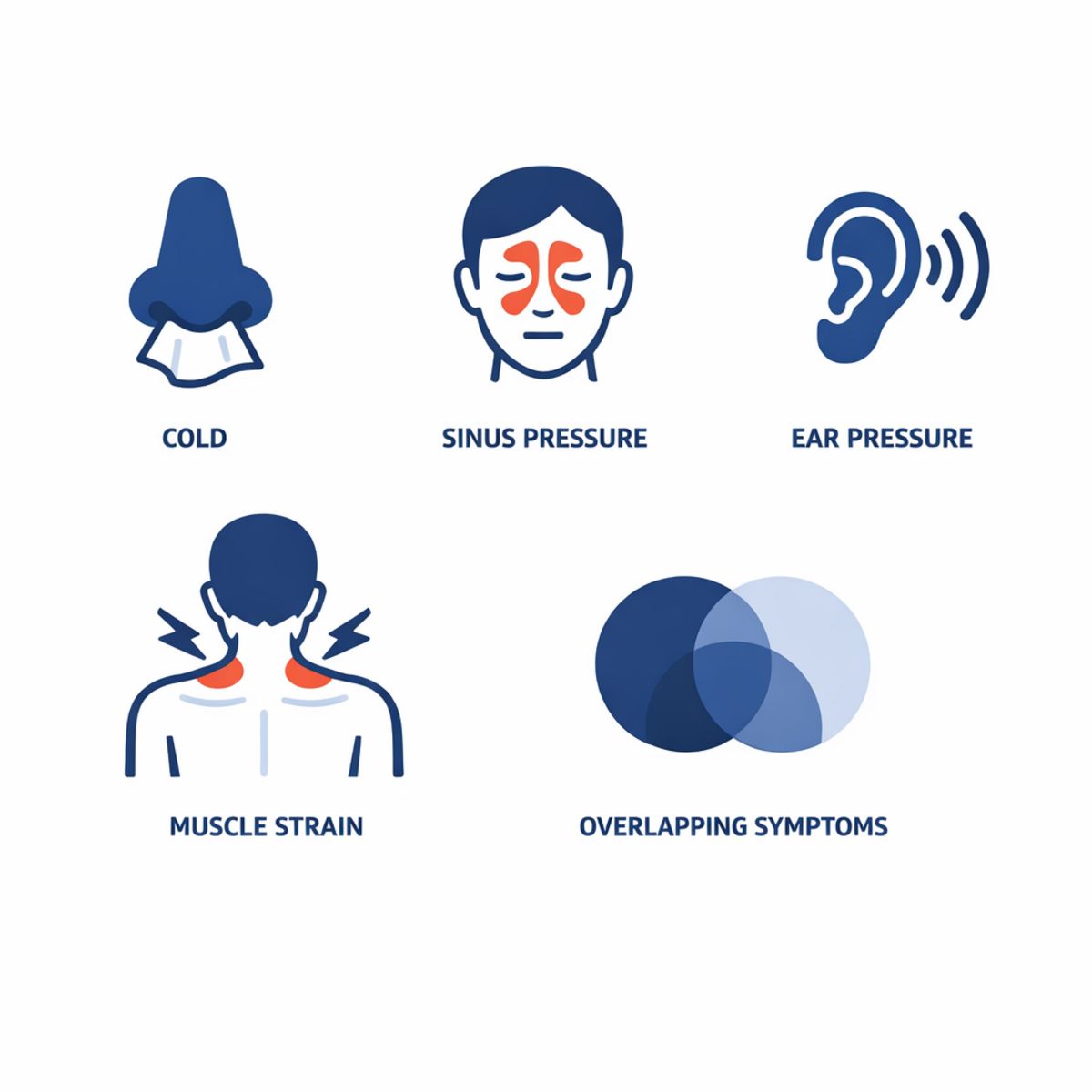
Colds, head colds, and congestion
- A simple cold is one of the most frequent explanations. Common signs of a cold include a runny or stuffy nose, sore throat, sneezing, mild fatigue, and cough.
- If you have wondered what is a head cold, it usually refers to a cold that mainly affects the nose, sinuses, and throat rather than the chest.
- Congestion and postnasal drip can trigger coughing while also creating pressure in the forehead, cheeks, or around the eyes, which may make your head hurt when you cough.
Sinus pressure and inflammation
- When the sinus passages are swollen or blocked, pressure can build up in nearby spaces of the face and head.
- That pressure may feel more noticeable during coughing, sneezing, or bending forward because those actions can briefly increase pressure in the head.
- This pattern can happen with routine upper respiratory irritation and does not automatically mean a sinus infection, but persistent facial pressure is worth evaluating.
Ear pressure or ear infection symptoms
- The ears and sinuses are closely connected, so congestion can sometimes create ear fullness, popping, or muffled hearing along with cough.
- Some symptoms of an ear infection for adults may include ear pain, pressure, reduced hearing, or a sense that the ear is blocked.
- When ear pressure is present, coughing may make head discomfort feel sharper or more concentrated around one side of the head or near the ear.
Muscle strain from repeated coughing
- Frequent or forceful coughing can strain muscles in the neck, scalp, jaw, and upper chest.
- That strain may lead to soreness or a tension-type headache that shows up most when coughing again.
- Some people also notice that chest hurts when i cough, which can happen with respiratory irritation or muscle strain and should be assessed if it is significant, persistent, or concerning.
These patterns can overlap, which is why symptom evaluation can be helpful when the cause is not clear or symptoms are lingering.
When a Cough-Related Headache Should Be Checked Promptly
A mild headache from coughing, congestion, or sinus pressure can happen with common respiratory illnesses, but severe, sudden, unusual, or worsening head pain should be checked by a medical professional. It is especially important to seek prompt evaluation if the headache feels different from your usual symptoms or appears along with other concerning changes.
When urgent care may help and when the ER is better
Urgent care may be appropriate for non-emergency cough, cold, sinus, or ear symptoms, depending on the clinician’s evaluation. That can include ongoing congestion, sinus pressure, ear discomfort, or a cough-related headache that is bothersome but not severe. If you need care for cough and cold symptoms, urgent care may be a practical option for same-day assessment.
Go to the nearest emergency room or call 911 right away for life-threatening symptoms such as trouble breathing, severe chest pain, stroke warning signs, severe trauma, or sudden collapse. Urgent care is not the right setting for emergencies.
Red flags that should not be ignored
- A headache that is sudden, very severe, rapidly worsening, or unlike your usual headaches
- High fever, confusion, fainting, or unusual drowsiness
- Weakness, numbness, trouble speaking, or other possible stroke symptoms
- Severe neck stiffness or repeated vomiting
- Symptoms that begin after a head injury
- Any combination of cough, headache, and breathing difficulty that feels severe or is getting worse

How to Manage Mild Symptoms While You Arrange an Evaluation

If your symptoms are mild, general self-care may help you stay more comfortable while you monitor how things are changing. The goal is not to diagnose the cause on your own, but to reduce strain, keep track of patterns, and know when it is time to get evaluated.
1. Reduce strain and stay hydrated
Try to rest, drink fluids regularly, and avoid irritants that seem to make coughing worse, such as smoke, strong fragrances, or very dry air. Some people also find that a humidified environment feels soothing. If you use over-the-counter symptom relief, follow the labeled directions and use it only as appropriate for your situation.
2. Watch for symptom patterns
Keep notes on how long your symptoms have lasted and whether they are changing. It can help to track fever, congestion, sinus pressure, ear pain, chest discomfort, and whether coughing seems to be making your headache worse. This kind of symptom history can make an evaluation more useful and help guide next steps.
3. Get checked if symptoms persist or worsen
Seek evaluation if symptoms are not improving, are getting worse, or are interfering with breathing, sleep, or daily activities. Depending on what you are experiencing, you may want to book a telehealth appointment for symptoms or find urgent care services quickly for an in-person assessment.
What an Urgent Care Evaluation May Involve
If you go to urgent care for cough with head pain, the visit may begin with a review of when symptoms started and how they have changed. A clinician may ask about fever, congestion, sinus pressure, ear pain, sore throat, chest discomfort, shortness of breath, and how severe the headache feels. These questions can help guide the evaluation and determine whether symptoms fit a common illness pattern or need closer attention.
History, symptom review, and exam
Depending on the condition, the exam may include checking vital signs, listening to your breathing, and looking at the ears, nose, and throat. If symptoms suggest sinus, ear, or chest involvement, those areas may be examined more closely. The goal is to understand what may be contributing to the cough and head pain without assuming the cause too early.
Next steps vary by patient. In some cases, a clinician may recommend in-clinic care guidance and home management. Depending on symptoms and exam findings, testing, imaging, or referral may also be considered when appropriate. For people looking for same-day flu and cold care options, this type of evaluation may help clarify what kind of follow-up makes sense.
Frequently Asked Questions
Why does my head hurt when I cough?
Coughing can briefly increase pressure in your head and may make congestion, sinus irritation, or muscle strain feel worse. If the pain is new, severe, or keeps happening, a medical evaluation may help identify the cause.
Can a cold cause a headache when I cough?
Yes. A cold can cause nasal congestion, sinus pressure, and inflammation that make coughing more uncomfortable and may trigger head pain, especially when you also have head cold or sinus symptoms.
Is sinus pressure a common reason for cough-related head pain?
It can be. Sinus pressure may make the face, forehead, or head feel more painful when you cough, bend over, or strain, though other causes are also possible.
What if my chest hurts when I cough too?
Mild soreness can happen from frequent coughing or throat and airway irritation. But significant, persistent, or worsening chest pain should be medically evaluated, and severe chest pain or trouble breathing needs emergency care.
When should I seek urgent care for a cough and headache?
Seek prompt medical care if symptoms are severe, worsening, or not improving, or if you also have high fever, dehydration, concerning sinus symptoms, or chest discomfort. Emergency care is important for severe breathing trouble, severe chest pain, confusion, or other sudden serious symptoms.
Can Telehealth help with cough and cold symptoms?
Telehealth may help with some cough and cold concerns, especially for discussing symptoms and next steps. Some cases still need an in-clinic exam depending on the symptoms, and virtual visits are typically offered by appointment.
Get Evaluated for Cough, Cold, and Head Pressure Symptoms
If your cough, congestion, sinus pressure, ear symptoms, or headache with coughing are persistent, worsening, or concerning, Prime Urgent Care offers non-emergency evaluation for these symptoms. Walk-in, in-clinic visits are available for cough, cold, sinus, and ear-related concerns, and Telehealth appointments may be an option for appropriate needs.
Before visiting or scheduling, please verify insurance acceptance, as coverage can vary. If you are experiencing severe symptoms or a medical emergency, seek emergency care right away.
When to contact Prime Urgent Care
Contact the team if you would like guidance on the next step for non-emergency symptoms or to request a Telehealth appointment for an appropriate concern.
Final Thoughts on Head Pain When You Cough
Head pain when you cough is often related to congestion, sinus pressure, or physical strain from coughing. In many cases, it improves as the underlying cause gets better. Still, if the pain is severe, keeps happening, worsens, or comes with other concerning symptoms, it is important not to ignore it.
A clear next step matters
For non-emergency symptoms, urgent care or Telehealth may be a helpful next step to discuss your symptoms and treatment options. If you have emergency warning signs, call 911 or go to the ER right away. A calm, timely evaluation can help you get the right care and peace of mind.