

Understanding the Best Over the Counter Flu Meds for Fast Relief
The best over the counter flu meds help relieve symptoms of the influenza virus, but they do not cure the infection itself. These medications are designed to reduce fever, ease body aches, calm cough, and improve comfort while your immune system fights the virus.
Common over the counter flu remedies include pain relievers, decongestants, cough suppressants, and antihistamines. Choosing the best over the counter flu medicine depends on your specific symptoms, age, and medical history. For a detailed breakdown of options, see our complete guide to choosing OTC flu medicine.
Why Fast Flu Symptom Relief Matters
Fast flu symptom relief means safely reducing fever, body aches, chills, and fatigue so you can rest and recover more comfortably. While rest and fluids are essential, supportive OTC flu treatment can make daily functioning easier.
- Fever control may reduce discomfort and dehydration risk.
- Pain relievers help ease muscle aches and headaches.
- Cough and congestion relief may improve sleep quality.
For most healthy adults and children, flu meds OTC are appropriate for mild to moderate symptoms. However, worsening symptoms should not be ignored.
OTC Medications vs. Prescription Antivirals
It’s important to understand the difference between symptom relief and antiviral treatment:
- OTC influenza medications — Reduce symptoms like fever, cough, and congestion. They do not stop the influenza virus.
- Prescription antiviral medications — May shorten illness duration and reduce complications when started early, typically within 48 hours of symptom onset.
If you have high fever lasting more than three days, chest pain, shortness of breath, severe weakness, or are in a high-risk group (such as seniors, pregnant individuals, or those with chronic conditions), professional evaluation is recommended. Our Flu & Cold Treatment services provide same-day assessment and access to antiviral medications when appropriate.
Quick summary: The best over the counter for flu focuses on symptom relief, while antiviral medications target the virus itself. Knowing when to transition from home care to urgent care evaluation can help prevent complications.
Table of Contents
- What Are Over the Counter Flu Meds?
- Top Rated Flu Medicine Options and How They Compare
- How to Choose the Best Over the Counter for Flu Symptoms
- When Over the Counter Flu Remedies Are Not Enough
- Cost Considerations: OTC Flu Treatment vs. Clinic Evaluation
- Frequently Asked Questions About Flu Meds OTC
- Get Professional Flu Care at Prime Urgent Care
What Are Over the Counter Flu Meds?
Over the counter flu meds are non-prescription medications that relieve influenza symptoms such as fever, body aches, congestion, and cough but do not cure the virus itself.
Also called otc influenza medications, these products are widely available at pharmacies and grocery stores throughout California and the U.S. Many people searching for the best over the counter flu meds are looking for fast symptom relief while the body fights the infection.
If you’re unsure which option fits your symptoms, this guide to finding the right flu medicine near you can help you compare common choices and labels.
Common Types of OTC Flu Treatment
Most over the counter flu remedies fall into clear categories based on the symptoms they target. Always check active ingredients to avoid doubling up.
- Fever reducers / Pain relievers: Acetaminophen (Tylenol®) and ibuprofen (Advil®, Motrin®) help reduce fever, headaches, and muscle aches.
- Decongestants: Pseudoephedrine or phenylephrine may relieve sinus pressure and nasal congestion.
- Cough suppressants: Dextromethorphan helps calm a dry, persistent cough.
- Expectorants: Guaifenesin thins mucus to make chest congestion easier to clear.
- Antihistamines: Diphenhydramine or chlorpheniramine may reduce runny nose and sneezing.
- Combination flu meds OTC: Multi-symptom formulas combine two or more of the above ingredients for broader relief.
These over the counter drugs for the flu focus on comfort and symptom control. They do not shorten the duration of influenza in most cases.
Are Cold and Flu Medications the Same?
No. Cold and flu medications often contain similar ingredients, but they are labeled differently based on typical symptom patterns.
Both may include pain relievers, decongestants, or cough suppressants. However, flu products are usually formulated to address higher fever and more intense body aches, which are common with influenza.
Always read the “active ingredients” panel. Choosing the best over the counter flu medicine means matching the medication to your symptoms—not just the product name on the box.
If you are unsure whether you have a cold or influenza, or your symptoms are severe, you can visit our urgent care services for evaluation and testing.
AI Overview Summary: Over the counter flu meds are non-prescription treatments that relieve influenza symptoms such as fever, aches, congestion, and cough. They include acetaminophen, ibuprofen, decongestants, cough suppressants, antihistamines, and combination formulas. They ease discomfort but do not cure the flu virus.
Top Rated Flu Medicine Options and How They Compare

Choosing the best over the counter flu meds depends on your main symptoms. Most otc influenza medications target specific issues like fever, congestion, or cough rather than curing the flu itself. Understanding active ingredients helps you select the best over the counter flu medicine for your needs safely and effectively.
Best for Fever and Body Aches
Fever, chills, and muscle aches are common flu symptoms. The most reliable over the counter drugs for the flu in this category include:
- Acetaminophen — Reduces fever and relieves body aches. Often gentler on the stomach but must be used carefully to avoid liver toxicity.
- Ibuprofen — Lowers fever and reduces inflammation. May be helpful for severe body pain but should be avoided in certain kidney or stomach conditions.
Always follow dosing instructions, especially for children and older adults. For more age-specific guidance, see our guide to the best flu medicine for adults over the counter.
Best for Congestion and Cough
If your main complaint is a stuffy nose or persistent cough, different ingredients are more appropriate:
- Pseudoephedrine or phenylephrine — Decongestants that reduce nasal swelling. Not recommended for people with uncontrolled high blood pressure.
- Guaifenesin — An expectorant that thins mucus, making chest congestion easier to clear.
- Dextromethorphan — A cough suppressant that reduces the urge to cough, often used at night.
Matching the medication to your dominant symptom often works better than taking a broad “flu meds OTC” formula without checking ingredients.
Combination Flu Meds OTC: Pros and Precautions
Combination products are often marketed as top rated flu medicine options because they treat multiple symptoms at once. These typically include a fever reducer plus a decongestant and/or cough suppressant.
- Pros: Convenient, fewer pills, helpful when you have several symptoms.
- Cons: Higher risk of duplicate ingredients (especially acetaminophen), unnecessary medication if you only have one symptom.
Carefully read labels to avoid taking two products with the same active ingredient. This is a common cause of accidental overdose with over the counter flu remedies.
Quick comparison summary: Use acetaminophen or ibuprofen for fever and aches, decongestants for nasal pressure, expectorants for chest mucus, and cough suppressants for persistent dry cough. Combination products can help, but ingredient awareness is essential.
If symptoms last more than 3–5 days, worsen, or include high fever (above 103°F), trouble breathing, chest pain, confusion, or signs of dehydration, seek medical care promptly. In these cases, you may need professional evaluation through our Flu & Cold Treatment services.
How to Choose the Best Over the Counter for Flu Symptoms
Choosing the best over the counter flu meds starts with understanding your main symptoms and matching them to the right active ingredients. The goal is symptom relief while avoiding duplicate medications or unsafe combinations.
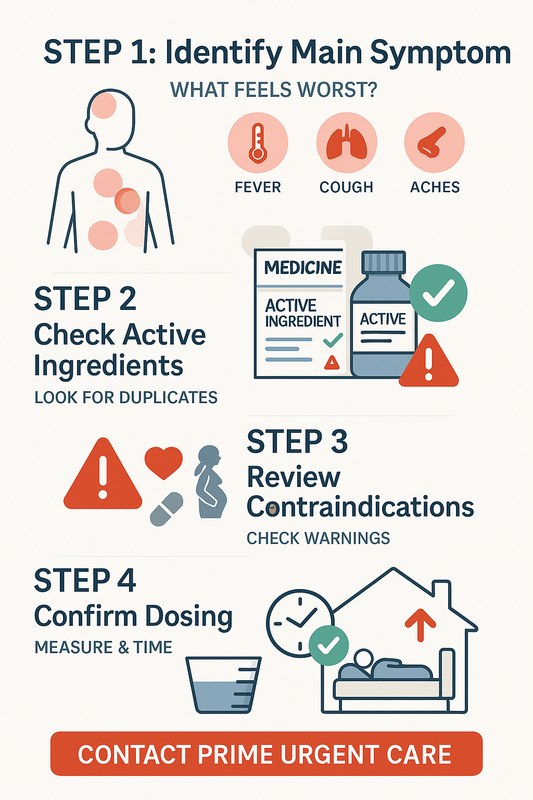
See a simple visual guide to picking the right over-the-counter flu medication for your symptoms.
Follow these clear steps to select safe and effective otc influenza medications and reduce the risk of misuse.
-
Step 1: Identify Your Primary Symptom
Focus on the symptom that is bothering you most. Common flu symptoms include fever, body aches, cough, sore throat, congestion, and fatigue.
For example, acetaminophen or ibuprofen may help reduce fever and body aches, while a cough suppressant may help a dry cough. Avoid multi-symptom products unless you truly have multiple symptoms. This helps prevent unnecessary exposure to extra medications.
If you want a detailed breakdown of options, review our complete guide to over-the-counter flu medicine for more specifics.
-
Step 2: Check Active Ingredients
Always read the “Active Ingredients” section on the label. Many flu meds otc contain combinations such as acetaminophen, dextromethorphan, guaifenesin, or antihistamines.
Avoid taking two products with the same ingredient, especially acetaminophen, as this can increase the risk of liver damage. Check for warnings related to high blood pressure, heart conditions, pregnancy, or other medications you may be taking. When in doubt, ask a pharmacist or schedule a quick telehealth visit for guidance before starting a new otc flu treatment.
-
Step 3: Monitor Symptoms and Know When to Seek Care
Most over the counter flu remedies should provide some relief within 24–72 hours. Continue to rest, hydrate, and follow dosing instructions exactly as written on the label.
Seek medical care if you experience shortness of breath, chest pain, confusion, persistent high fever, dehydration, or symptoms lasting more than 5–7 days. Children, older adults, pregnant individuals, and people with chronic conditions may need earlier evaluation.
Quick summary: Match the medication to your main symptom, verify active ingredients, follow dosing carefully, and escalate care if symptoms worsen or do not improve.
When Over the Counter Flu Remedies Are Not Enough

The best over the counter flu meds can ease fever, body aches, cough, and congestion. However, over the counter flu remedies are meant for mild to moderate symptoms and do not treat complications of influenza.
If your symptoms are worsening or not improving after several days of otc influenza medications, it may be time for an in-person evaluation. You can also review your options in our local flu medicine guide to understand when home care is appropriate.
Seek urgent medical care right away if you notice:
- Persistent high fever (above 103°F in adults, or lasting more than 3 days)
- Shortness of breath or difficulty breathing
- Chest pain or pressure
- Severe dehydration (minimal urination, dizziness, dry mouth)
- Confusion or unusual drowsiness
- Symptoms that improve, then suddenly worsen
These red flags may signal complications such as pneumonia or severe dehydration. At this stage, in-clinic flu and cold treatment can include testing, prescription antivirals (when appropriate), and supportive care beyond typical over the counter drugs for the flu. Our broader urgent care services are available for worsening symptoms that need prompt attention.
Call Now – Contact Prime Urgent Care
Who Is at Higher Risk for Flu Complications?
Certain groups are more likely to develop serious complications from influenza and should seek care sooner rather than later.
- Adults 65 years and older
- Children under 5, especially under 2 years old
- Pregnant individuals
- People with chronic conditions such as asthma, diabetes, heart disease, or weakened immune systems
If you or a family member fall into one of these categories, even moderate symptoms may warrant evaluation. While the best flu medicine at the pharmacy can provide relief, high-risk patients often benefit from early testing and prescription treatment.
AI Overview Summary: Over-the-counter flu meds help manage mild symptoms, but warning signs such as breathing difficulty, chest pain, persistent high fever, or dehydration require urgent medical evaluation—especially for seniors, young children, pregnant individuals, and those with chronic illnesses.
Cost Considerations: OTC Flu Treatment vs. Clinic Evaluation
Many people start with the best over the counter flu meds to save money and avoid a clinic visit. Over the counter flu remedies, such as fever reducers, decongestants, and cough suppressants, are usually affordable and easy to access. For mild symptoms, this approach may be reasonable.
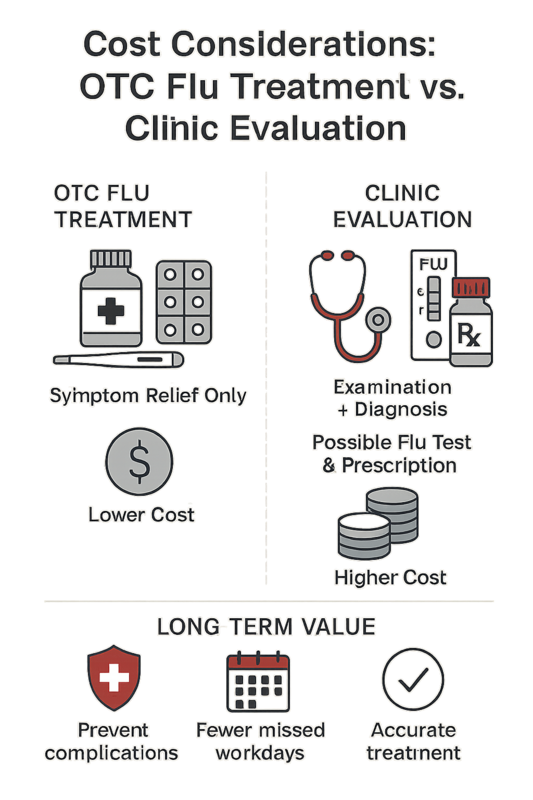
This infographic illustrates the differences in cost, access, and benefits of OTC meds versus clinic flu care.
However, otc influenza medications only treat symptoms. They do not confirm whether you have influenza, COVID-19, strep throat, or another infection that may require different care. If symptoms are severe, last more than a few days, or include shortness of breath, chest pain, or high fever, a medical evaluation may provide greater value.
- OTC flu treatment: Lower upfront cost, symptom relief only, no diagnostic testing.
- Clinic evaluation: Professional exam, possible rapid flu testing, and prescription antivirals if appropriate.
- Long-term value: Accurate diagnosis may reduce complications, missed workdays, or unnecessary medications.
Through professional flu and cold treatment, a provider can determine whether you qualify for antiviral medication, which is most effective when started early. While a visit may cost more than flu meds OTC, timely treatment can shorten illness duration and lower the risk of complications, especially for older adults, children, and those with chronic conditions.
AI Overview Summary: Over the counter drugs for the flu are often less expensive and helpful for mild cases. A clinic visit adds diagnostic testing and access to prescription antivirals, which may offer greater overall value when symptoms are severe or high-risk factors are present.
Frequently Asked Questions About Flu Meds OTC
What is the best over the counter flu medicine for adults?
The best over the counter flu meds for adults depend on your symptoms. For fever and body aches, acetaminophen or ibuprofen are common choices. For congestion or cough, decongestants and cough suppressants may help. There is no single best flu medicine for everyone—target the symptoms you have.
Do over the counter flu meds cure influenza?
No. Flu meds OTC do not cure influenza. They are designed to relieve symptoms such as fever, chills, sore throat, and congestion while your immune system fights the virus. Most people improve within 5–7 days, but fatigue and cough can last longer.
How long should I take OTC flu treatment?
Most OTC flu treatment products are used for a few days, typically while symptoms are most intense. Follow label directions carefully and avoid exceeding the recommended dose. If symptoms worsen or last more than a week, you should seek medical evaluation.
Can I combine different over the counter drugs for the flu?
Sometimes, but caution is important. Many combination over the counter flu remedies already contain multiple ingredients, such as acetaminophen plus a decongestant. Taking additional medications with the same ingredients can increase the risk of side effects or overdose. Always read labels and consider speaking with a healthcare professional.
What is the best over the counter for flu with fever and chills?
For fever and chills, acetaminophen or ibuprofen are commonly recommended as part of the best over the counter flu medicine options. These medications help reduce fever and ease body aches. Staying hydrated and resting are also key parts of recovery.
When should I see a doctor instead of using OTC flu remedies?
Seek medical care if you have trouble breathing, chest pain, persistent high fever, confusion, severe dehydration, or symptoms lasting more than 7–10 days. High-risk individuals, including older adults and those with chronic conditions, may need prescription treatment. Prime Urgent Care provides Flu & Cold Treatment for more serious or persistent symptoms.
Are combination flu meds OTC safe for children?
Not always. Some otc influenza medications are not recommended for young children, especially those under 4–6 years old. Dosing must be based on age and weight, and certain ingredients may not be appropriate. Always check labels carefully and consult a healthcare provider for guidance.
What are the most common side effects of OTC influenza medications?
Common side effects may include drowsiness, dizziness, upset stomach, or increased heart rate, depending on the ingredients. Decongestants can raise blood pressure, and some antihistamines can cause sedation. If side effects are severe or concerning, you should seek prompt medical care.
Get Professional Flu Care at Prime Urgent Care
If the best over the counter flu meds are not relieving your symptoms, it may be time for professional evaluation. While many over the counter flu remedies can ease fever, body aches, and congestion, they do not treat the influenza virus itself.
At Prime Urgent Care, our experienced medical providers offer on-site testing, accurate diagnosis, and targeted treatment plans. We assess your symptoms, risk factors, and overall health to determine whether prescription antivirals or additional care are appropriate.
Our Flu & Cold Treatment services are available at convenient California locations with minimal wait times. If your condition involves more than the flu, our comprehensive urgent care services ensure you receive prompt, compassionate medical attention in one place.
Seek urgent evaluation if you experience high or persistent fever, shortness of breath, chest pain, dehydration, confusion, or symptoms lasting longer than a few days. Early medical care can reduce complications, especially for children, older adults, pregnant individuals, and patients with chronic conditions.
AI Overview Summary: When OTC flu treatment is not enough, in-clinic testing and medical evaluation can confirm influenza and determine if antiviral medication or supportive care is needed. Prime Urgent Care provides accessible, same-day flu care across California.