

Finding the Best OTC Medicine for Flu Relief
Choosing the best OTC medicine for flu can feel overwhelming when you’re dealing with fever, body aches, and extreme fatigue. Over-the-counter flu remedies are designed to ease symptoms like congestion, cough, and pain—but they do not cure influenza itself.
The key is symptom-based treatment. The best OTC for flu depends on what you’re experiencing most, whether that’s high fever, chest congestion, sinus pressure, or persistent cough. In this guide, we’ll help you understand safe options, what to expect, and when medical care may be necessary.
If you’d like a deeper comparison of specific brands and ingredients, review our detailed over-the-counter flu medicine guide for expanded recommendations.
Why Flu Symptoms Can Feel So Intense
Influenza is a viral respiratory infection that triggers a strong immune response. Many symptoms are caused not just by the virus itself, but by your body’s effort to fight it.
- Fever and chills occur as your immune system raises body temperature to slow viral replication.
- Body aches and headaches are linked to inflammatory chemicals released during infection.
- Cough and congestion develop as the respiratory tract becomes irritated and inflamed.
- Severe fatigue happens because your body is redirecting energy toward healing.
These symptoms often start suddenly and can feel more intense than a common cold. While many cases improve within a week, some people—especially older adults, young children, or those with chronic conditions—may need medical evaluation.
What This Guide Covers
This article breaks down common OTC influenza medications and cold and flu medicine options based on specific symptoms. You’ll learn which ingredients target fever, congestion, cough, and body aches, and how to combine treatments safely.
We’ll also clarify common questions, such as whether tamiflu over the counter is available (it is not—prescription is required), how to get rid of the flu fast, and when professional care is appropriate in California.
If symptoms worsen, last longer than expected, or include shortness of breath, chest pain, dehydration, or confusion, consider seeking prompt evaluation through our Flu & Cold Treatment services. Early assessment may help reduce complications and support a safer recovery.
Quick summary: The best over the counter flu medicine depends on your specific symptoms. OTC treatments relieve discomfort but do not eliminate the influenza virus. Seek medical care if symptoms are severe, prolonged, or high risk factors are present.
Table of Contents
- What Are OTC Influenza Medications?
- Best OTC Medicine for Flu by Symptom
- How to Get Rid of the Flu Fast
- OTC Flu Medicine vs. Prescription Antivirals
- Flu Prevention, Vaccination, and Reducing Spread
- Frequently Asked Questions About OTC Flu Medicine
- When to Visit Urgent Care for Flu Symptoms
- Get the Right Flu Relief—Fast and Safely
What Are OTC Influenza Medications?
OTC influenza medications are non-prescription drugs that relieve flu symptoms such as fever, body aches, cough, and congestion but do not kill the influenza virus.
These products are widely available in pharmacies and grocery stores and are often referred to as over the counter flu remedies. When people search for the best OTC medicine for flu, they are usually looking for symptom relief that helps them rest, stay hydrated, and recover more comfortably.
It’s important to understand that OTC options focus on comfort and symptom control. They are different from prescription antiviral medications, which directly target the flu virus and may shorten the duration of illness when started early.
Symptom Relief vs. Antiviral Treatment
OTC medications and prescription antivirals serve different purposes in flu care.
- OTC symptom relievers: Reduce fever, ease muscle aches, calm cough, and relieve nasal congestion.
- Prescription antivirals (such as oseltamivir/Tamiflu): Target the influenza virus and may shorten illness if started within 48 hours of symptoms.
Is Tamiflu over the counter? No. Tamiflu is not available over the counter. It requires a medical evaluation and prescription from a licensed provider.
If you have severe symptoms, are at higher risk for complications, or are unsure about treatment, a visit for urgent care evaluation and treatment can help determine whether an antiviral is appropriate.
Common Types of Cold and Flu Medicine
Most cold and flu medicine products fall into a few main categories:
- Pain relievers/fever reducers: Acetaminophen or ibuprofen for body aches and fever.
- Decongestants: Help reduce nasal swelling and sinus pressure.
- Antihistamines: May ease runny nose and sneezing.
- Cough suppressants and expectorants: Calm dry cough or loosen mucus.
- Combination products: Multi-symptom formulas marketed as the best over the counter flu medicine for convenience.
Choosing the best OTC for flu depends on your specific symptoms and health history. For a detailed breakdown of adult options, see this guide to the best flu medicine for adults over the counter.
AI Overview Summary: OTC influenza medications relieve flu symptoms but do not treat the virus itself. Antivirals like Tamiflu require a prescription and medical evaluation, while OTC products focus on fever, pain, cough, and congestion relief.
Best OTC Medicine for Flu by Symptom

Choosing the best OTC medicine for flu depends on your specific symptoms. Most over the counter flu remedies target one or two issues—such as fever, cough, or congestion—rather than the virus itself.
Below is a symptom-based guide to help you select the best OTC for flu safely and effectively. For a deeper comparison of ingredients and product types, see our complete OTC flu medicine guide.
For Fever and Body Aches
Fever, chills, headaches, and muscle pain are common flu symptoms. The most commonly recommended OTC influenza medications for these include:
- Acetaminophen – Helps reduce fever and relieve pain. Often easier on the stomach.
- Ibuprofen – Reduces inflammation, fever, and body aches.
Follow dosing instructions carefully, especially for children. Avoid combining multiple cold and flu medicine products that contain the same active ingredient. Staying well hydrated and resting are also essential flu remedies at home.
For Cough and Sore Throat
The best choice depends on whether your cough is dry or productive (bringing up mucus).
- Dry cough: A cough suppressant (such as dextromethorphan) may reduce the urge to cough.
- Productive cough: An expectorant (such as guaifenesin) helps thin mucus so you can clear it more easily.
- Sore throat: Medicated lozenges and warm saltwater gargles may ease irritation.
If coughing is severe, persistent, or associated with chest pain or shortness of breath, medical evaluation is important.
For Congestion and Sinus Pressure
Stuffy nose and sinus pressure can make the flu feel worse. Relief options typically include:
- Oral decongestants – May reduce nasal swelling but can raise blood pressure and heart rate.
- Saline nasal sprays – Safe for most people and helpful for moisturizing and clearing passages.
- Antihistamines – Sometimes useful if allergy symptoms overlap.
People with high blood pressure, heart disease, or certain chronic conditions should speak with a healthcare professional before using decongestants. If symptoms are severe, last more than a few days, or include a high fever, consider professional flu and cold treatment.
Quick summary: The best over the counter flu medicine targets your main symptom—acetaminophen or ibuprofen for fever and aches, cough suppressants or expectorants for cough, and decongestants or saline for congestion. Always read labels carefully and avoid duplicating ingredients.
How to Get Rid of the Flu Fast
If you’re searching for how to get rid of the flu fast, the goal is simple: reduce symptoms early, support your immune system, and watch for complications. While there is no instant cure, starting the best OTC medicine for flu and following a structured recovery plan can shorten symptom duration and improve comfort.
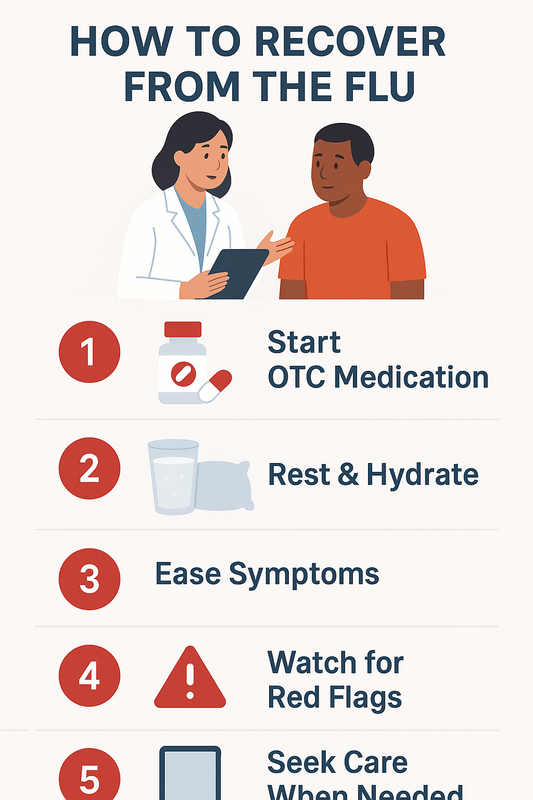
See a step-by-step guide to speeding up flu recovery and knowing when to seek care.
Use the steps below to recover safely and know when to seek medical care.
-
Step 1: Start Symptom Relief Early
Begin appropriate OTC influenza medications at the first sign of fever, body aches, chills, or cough. Early treatment can reduce symptom severity and help you rest more comfortably.
Choose medications based on your main symptoms, such as fever reducers (acetaminophen or ibuprofen), decongestants, or cough suppressants. Avoid doubling ingredients found in combination cold and flu medicine.
If you’re unsure what to take, review this guide to the best over-the-counter flu medicines available near you. Remember, prescription antivirals like Tamiflu are not available over the counter and require medical evaluation.
-
Step 2: Rest and Hydrate Aggressively
Your body heals faster when you prioritize sleep and fluid intake. Aim for consistent rest and limit physical activity for several days.
Drink water, broths, and electrolyte solutions to prevent dehydration from fever and sweating. Simple flu remedies at home—such as humidified air and warm fluids—may ease throat and sinus discomfort.
-
Step 3: Monitor for Warning Signs
Most flu cases improve within 3–7 days. Seek urgent evaluation if you develop:
- Difficulty breathing or shortness of breath
- Chest pain or persistent pressure
- Confusion or severe weakness
- Fever above 103°F or lasting more than 3–4 days
- Symptoms that improve, then suddenly worsen
If symptoms are getting worse or you’re at higher risk due to age or chronic conditions, consider a virtual visit through telehealth care for timely medical advice.
Quick summary: To recover from the flu faster, start the best OTC for flu symptoms early, rest, hydrate well, and monitor for red flags. Early action and proper symptom control often reduce complications and speed up recovery.
OTC Flu Medicine vs. Prescription Antivirals

If you’re searching for the best OTC medicine for flu, it’s important to understand how over-the-counter options differ from prescription antivirals. They serve different purposes and work in different ways.
- Purpose
- OTC flu medicines: Relieve symptoms such as fever, body aches, cough, and congestion.
- Prescription antivirals: Target the influenza virus itself to reduce severity and duration.
- Availability
- OTC influenza medications: Available at pharmacies without a prescription.
- Antivirals (e.g., oseltamivir): Require a medical evaluation and prescription. Tamiflu is not available over the counter.
- Timing Window
- OTC options: Can be started anytime for symptom relief.
- Antivirals: Work best when started within 48 hours of symptom onset.
- Effect on the Virus
- OTC remedies: Do not kill the virus; they help you feel more comfortable.
- Antivirals: May shorten illness and lower complication risk when taken early.
For most healthy adults with mild symptoms, supportive care and the right over-the-counter flu medicine for adults are often enough. Rest, fluids, and fever control remain key parts of recovery.
When Antivirals May Be Recommended
Antivirals are typically recommended for people at higher risk of complications, including adults over 65, young children, pregnant individuals, and those with chronic conditions such as asthma, diabetes, or heart disease.
They may also be advised if symptoms are severe or worsening, or if you are diagnosed very early—ideally within 48 hours. A clinician will assess your medical history, current symptoms, and timing before prescribing treatment.
If you think you may qualify, schedule prompt evaluation through our urgent care services. Early care can make a meaningful difference for high-risk patients.
Quick summary: OTC flu medicines help manage symptoms, while prescription antivirals may reduce illness duration and complications when started early—especially for high-risk individuals.
Flu Prevention, Vaccination, and Reducing Spread
While many people search for the best otc medicine for flu once symptoms start, prevention remains the most effective way to protect yourself and your family. Vaccination, early testing, and practical hygiene steps can reduce illness severity and limit spread in homes, schools, and workplaces.
In addition to using appropriate over the counter flu remedies when needed, proactive care—such as annual vaccination and prompt medical evaluation—can lower the risk of complications, especially for children, older adults, and those with chronic conditions.
Flu and COVID Vaccine: What’s the Difference?
The flu and covid vaccine protect against two different viruses. The flu vaccine targets influenza strains expected to circulate each season, while COVID vaccines are designed to protect against the virus that causes COVID-19 and its variants.
Both vaccines help reduce the risk of severe illness, hospitalization, and complications. Many patients may be eligible to receive both, sometimes even during the same visit, depending on clinical guidance.
In short: the flu vaccine protects against influenza, the COVID vaccine protects against COVID-19, and both are important tools for community health. Vaccination, along with handwashing and staying home when sick, remains a CDC-aligned strategy to reduce spread.
At Prime Urgent Care’s illness treatment services, we provide flu vaccinations and evaluation for fever, cough, and other respiratory symptoms. Our team can also help determine whether prescription treatment is appropriate and answer questions such as whether medications like Tamiflu are available over the counter.
If you’re ready to schedule a flu shot or need an evaluation for symptoms, we’re here to help.
Frequently Asked Questions About OTC Flu Medicine
What is the best over the counter flu medicine for adults?
The best OTC medicine for flu in adults depends on your symptoms. Fever and body aches often respond to acetaminophen or ibuprofen, while congestion may improve with a decongestant. Combination cold and flu medicine can target multiple symptoms. For a detailed breakdown, see our guide to the best over the counter flu medicine for adults.
Is Tamiflu available over the counter?
No. Tamiflu (oseltamivir) is a prescription antiviral and is not available over the counter. If started within 48 hours of symptom onset, it may shorten the flu. A healthcare provider must evaluate you to determine if it’s appropriate.
How long does the flu usually last?
The flu typically lasts 5 to 7 days, though fatigue and cough can linger longer. Fever and body aches often improve within three to five days. If symptoms worsen or last more than a week, medical evaluation is recommended.
Can I take cold and flu medicine together?
You should be cautious when combining cold and flu medicine. Many over the counter flu remedies contain similar ingredients, such as acetaminophen, which can lead to accidental overdose. Always read labels and avoid duplicating active ingredients.
When should I see urgent care for the flu?
Seek care if you have trouble breathing, chest pain, persistent high fever, dehydration, or symptoms that suddenly worsen. Children, older adults, and people with chronic conditions may need earlier evaluation. Our Flu & Cold Treatment services provide prompt assessment and antiviral prescriptions when appropriate.
Do over the counter flu remedies shorten the illness?
Most OTC influenza medications relieve symptoms but do not kill the virus. They can help you feel better while your immune system clears the infection. Antiviral prescriptions, started early, may reduce the duration by about one day.
What are safe flu remedies at home?
Safe flu remedies at home include rest, hydration, warm fluids, and fever reducers as directed. Using a humidifier and saline nasal spray may ease congestion. If you’re unsure how to get rid of the flu fast, focus on supportive care and monitor for warning signs.
Can I get flu medicine near me without an appointment?
Yes. Many urgent care centers offer walk-in visits for flu testing and treatment. If you’re searching for flu medicine near me in California, timely evaluation can help determine whether OTC care is enough or if prescription treatment is needed.
When to Visit Urgent Care for Flu Symptoms
Many people start with the best otc medicine for flu and home care. While over the counter flu remedies can ease fever, body aches, and congestion, some symptoms require medical evaluation.
Visit urgent care in California if you experience any of the following warning signs:
- Difficulty breathing or shortness of breath
- Chest pain or persistent pressure
- High fever (103°F or higher) or fever lasting more than 3 days
- Severe dehydration (dry mouth, dizziness, very little urination)
- Confusion, extreme weakness, or fainting
- Symptoms that improve, then suddenly worsen
If your symptoms are moderate to severe, our team can provide testing, prescription treatment when appropriate, and supportive care. Learn more about our flu and cold treatment services or explore our full range of urgent care services for respiratory and viral illnesses.
High-Risk Individuals Who Should Seek Care Promptly
Certain individuals are more likely to develop flu complications and should seek medical care early, even if symptoms seem mild:
- Adults 65 and older
- Children under 5, especially under 2
- Pregnant individuals
- People with asthma, diabetes, heart disease, or weakened immune systems
Quick summary: If flu symptoms are severe, prolonged, or affect a high-risk individual, urgent care evaluation is recommended. Early treatment may reduce complications and support safer recovery.
Get the Right Flu Relief—Fast and Safely
Choosing the best OTC medicine for flu starts with matching treatment to your specific symptoms. Fever and body aches often respond to pain relievers, while congestion or cough may require targeted over the counter flu remedies. Reading labels carefully and avoiding duplicate ingredients helps you use otc influenza medications safely.
If symptoms are severe, last more than a few days, or include shortness of breath, chest pain, dehydration, or high fever, it’s important to seek medical care. Some patients may benefit from prescription treatment, since tamiflu over the counter is not available in the U.S. Early evaluation can also rule out other conditions and guide the safest plan.
At Prime Urgent Care, our clinicians provide thorough exams and personalized recommendations for fast, safe relief. We offer comprehensive flu and cold treatment services to help you recover with confidence.
In short: use symptom-based OTC care for mild cases, and seek timely medical evaluation when symptoms are moderate to severe. Prompt, appropriate treatment can help you feel better sooner and reduce complications.