
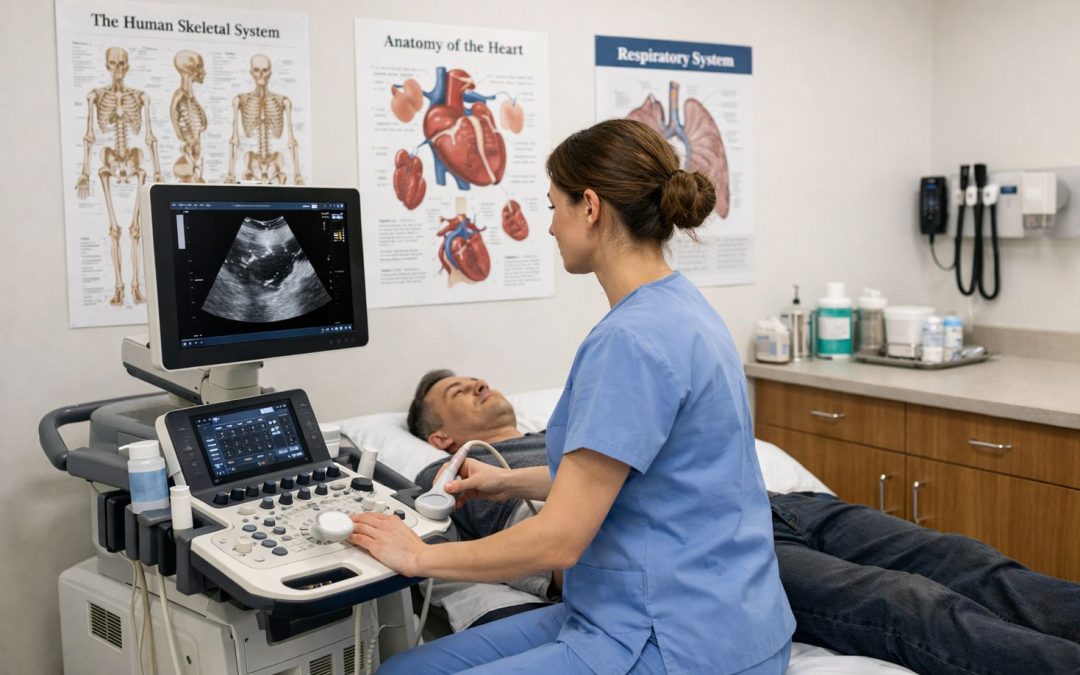
Accredited diagnostic medical sonography programs are a key starting point for anyone exploring ultrasound education and imaging-related careers. Diagnostic medical sonography involves using high-frequency sound waves to help produce images that support clinical evaluation in patient-facing care settings. When a program is accredited, it has been reviewed against established standards, which can help students compare educational quality, curriculum structure, and preparation for professional pathways with more confidence.
This guide explains what accreditation means, why it matters in healthcare education, and how to evaluate programs with a practical mindset. Readers often want to understand how accredited programs may relate to certification eligibility, clinical training expectations, and long-term career readiness without relying on guesswork.
You will also see how sonography fits into the wider world of diagnostic imaging, outpatient services, and broader diagnostic care environments. The goal is to make comparing programs easier, clearer, and more aligned with the standards that matter in healthcare-focused learning.
What Accredited Diagnostic Medical Sonography Programs Mean
Accredited diagnostic medical sonography programs prepare students for a diagnostic imaging field centered on ultrasound-based imaging. In simple terms, sonography uses sound waves to create images of structures inside the body, which makes it different from imaging methods that use radiation. For readers comparing career paths, this is one of the clearest distinctions between sonography and an x ray technician role or broader diagnostic radiology tracks.
Sonography within the diagnostic imaging field
Diagnostic medical sonographers often help physicians and care teams gather real-time images that support evaluation in settings such as a diagnostic center, hospital, or diagnostic outpatient imaging location. While these professionals work within the larger diagnostic imaging field, their tools and training are not the same as those used in x-ray or other imaging specialties. If you want a broader view of how imaging fits into patient care, see diagnostic imaging services at Prime Urgent Care.
Why accreditation matters
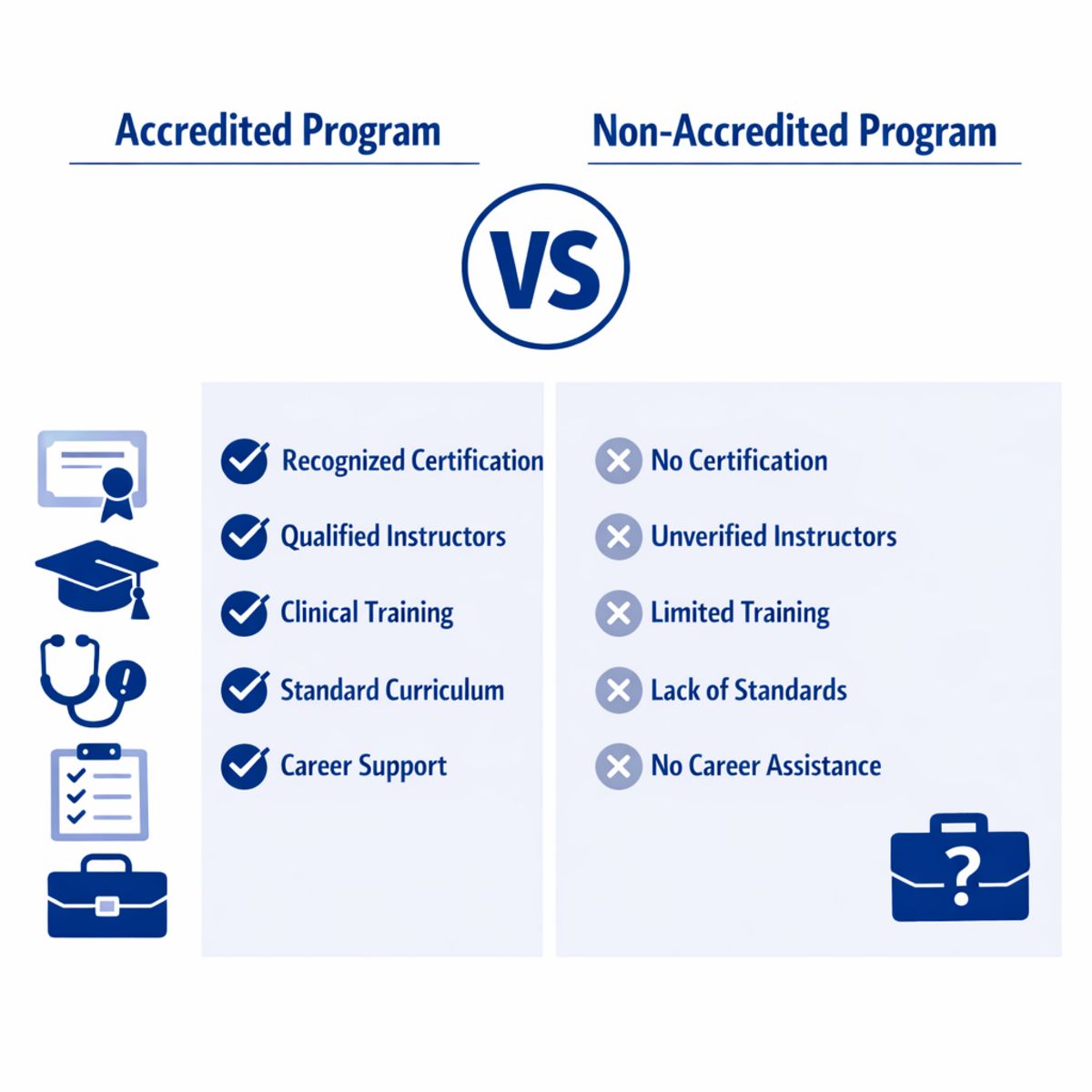
When people ask what “accredited” means, it usually helps to separate institutional accreditation from programmatic accreditation. Institutional accreditation applies to the school as a whole, while programmatic accreditation focuses on the specific sonography program and whether it meets recognized quality standards for curriculum, instruction, and clinical preparation. That matters because accreditation can influence how employers view a program and may affect later training, certification, or licensing steps depending on the path a student chooses. For beginners, the key takeaway is that accreditation is a quality signal, not just a label.

Benefits of Choosing an Accredited Program
Choosing an accredited program can give students more confidence that their education follows recognized quality standards. In many cases, accreditation signals that coursework, faculty oversight, and clinical expectations have been reviewed against established benchmarks. That does not make every school the same, but it can help students compare options with a clearer understanding of curriculum consistency and training structure.
More confidence in program standards
A key advantage of accreditation is that it often supports a more organized learning experience. Students may benefit from clearly defined course objectives, supervised instruction, and practical expectations for clinical learning. For those planning for certification preparation, an accredited pathway can also be worth reviewing because program design may align more closely with common academic and professional expectations.
Better preparation for real-world imaging environments
Accredited programs may also help students build career-readiness through supervised clinical learning opportunities and exposure to real healthcare workflows. That can include patient interaction, communication, safety practices, and support for diagnostic teams in busy care settings. Understanding how outpatient care settings work can also provide helpful context for students exploring where imaging skills may be applied.
Employer confidence may be stronger when applicants come from programs with recognized accreditation, and some students find that these programs better support long-term planning, including transferability or local certification requirements. Still, outcomes vary by student, school, and state or local regulations, so accreditation should be one important factor in a broader decision.
How to Evaluate Accredited Diagnostic Medical Sonography Programs

If you are comparing accredited diagnostic medical sonography programs, use a simple checklist instead of looking at accreditation alone. A strong choice should align with your career goals, learning needs, schedule, and budget. These steps can help you evaluate schools more carefully and make a more informed decision.
1. Verify current accreditation
Start by confirming the program’s current accreditation status directly with the school and through the appropriate accrediting source. Statuses can change, so do not rely only on older marketing materials or third-party lists. Ask when the program was last reviewed and whether any updates are pending.
2. Compare curriculum and specialties
Review the curriculum to see whether it covers core sonography knowledge, imaging procedures, patient care, and safety practices. Then check for specialty tracks or elective focus areas that match your interests, such as abdominal, obstetric, or vascular imaging. The best fit is the one that supports the direction you want to pursue.
3. Ask about clinical training
Hands-on experience is essential in patient-facing imaging roles. Ask where students complete clinical placements, how supervision works, and how much direct scanning practice is included. It is also helpful to learn whether students rotate through different care settings to better understand real healthcare workflows.
4. Review schedule, support, and outcomes data
Compare class schedules, pacing, and format to see what fits your life. Ask about academic advising, tutoring, and exam preparation support. If a school shares graduation or placement data, look for clear and current reporting, and ask how those numbers are defined rather than assuming they guarantee individual results.
5. Compare total cost and value
Look beyond tuition alone. Compare fees, books, uniforms, transportation for clinicals, technology access, lab resources, and student support services. A lower sticker price is not always the better value if another program offers stronger equipment access or more practical support. Before making a final decision, verify all current details directly with each school.
Sonography vs Other Diagnostic Imaging and Support Paths
If you are comparing healthcare career paths, sonography is often grouped with x ray technician roles and broader diagnostic radiology options, but the day-to-day work is not the same. Sonography focuses on ultrasound imaging, which uses sound waves rather than radiation. By contrast, x ray pathways center on radiographic imaging and may connect more directly to the kind of care described in this x-ray and diagnostic services overview.
Sonography vs x ray technician training
Training for sonography usually emphasizes ultrasound equipment, image capture from different body systems, and patient positioning during real-time exams. X ray technician training is generally built around radiographic procedures, imaging safety, and producing images used for diagnostic review. Both paths involve anatomy, clinical workflow, and patient care, but they apply those skills through different imaging methods.
Another practical difference is workflow. Sonographers often spend more time adjusting the exam as they scan and interact closely with patients throughout the procedure. X ray roles may involve shorter image acquisition steps, depending on the setting. Requirements, credentials, and scope of duties can vary by employer and jurisdiction, so readers should always verify local expectations.
Where sonography fits in broader diagnostic services
Sonography is one part of a larger diagnostic care pathway. In many settings, ultrasound imaging works alongside x ray studies, provider evaluation, diagnostic center operations, and clinical laboratory services. A patient might be assessed by a clinician, receive imaging, complete lab testing, and then have those findings reviewed together to guide next steps.
This is why overlapping terms can be confusing. “Diagnostic imaging” is a broad category, while sonography is one specific imaging specialty within it. Likewise, support services such as labs and front-end diagnostic coordination are essential to care, even though they are not the same role as performing ultrasound exams.
For readers exploring education options, the clearest takeaway is that sonography, x ray technology, and broader diagnostic support paths all contribute to patient care in different ways. The best fit depends on the imaging modality, pace of work, level of patient interaction, and the specific responsibilities expected in your region.
Cost and Other Factors to Compare Before You Apply
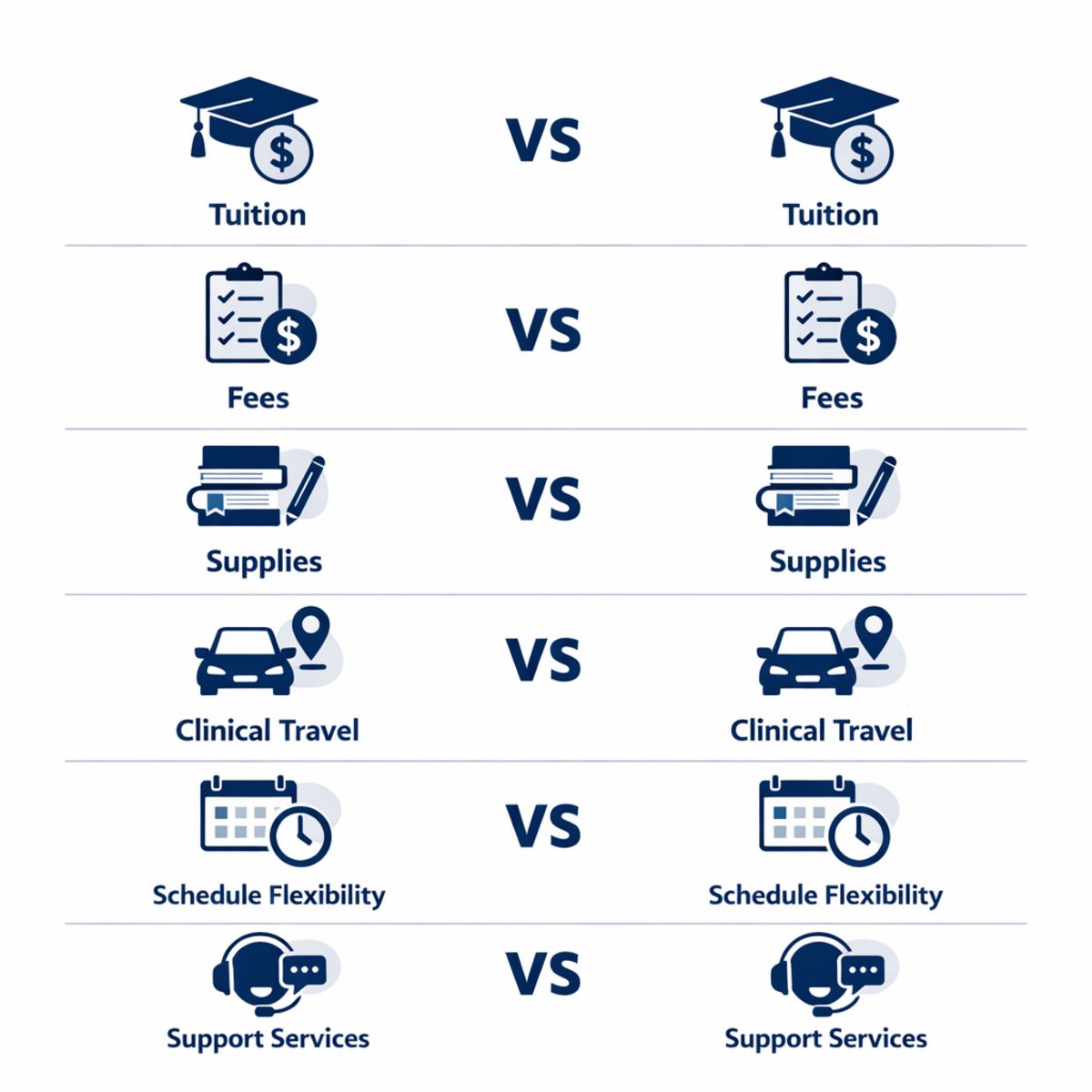
Cost is often one of the biggest decision factors, but it helps to compare the full picture rather than tuition alone. Depending on the school, your total investment may also include fees, books, uniforms, supplies, background checks, exam prep, transportation, parking, and technology requirements. Some programs may appear lower in price at first glance, but the overall cost can change once these items are added.
Look beyond tuition alone
As you compare options, make a checklist of every expense you may need to plan for. It can also be helpful to ask whether clinical placements are arranged by the school, how far those sites may be from home, and whether extra travel time or fuel costs could affect your routine. If financial aid is important to you, verify current eligibility, deadlines, and required documents directly with each school before making assumptions.
Choose a program that fits your schedule
A program’s value is not just about price. Schedule flexibility, class times, commute distance, clinical hour expectations, and student support services can all affect whether a program is realistic for your situation. For many applicants, a slightly different cost may be worth it if the program better fits work, family, or transportation needs. Before you apply, confirm admissions requirements, attendance policies, and support resources directly with each school so you can compare options with clear, practical expectations.
How Sonography Connects to Real-World Diagnostic Care
Sonography education and patient care are related, but they are not the same thing. In real-world outpatient settings, imaging professionals can help support timely evaluation when a qualified medical professional decides imaging is appropriate. That broader context matters because patients often encounter diagnostic tools as part of care decisions, not as part of training.
Imaging as part of outpatient decision-making
Depending on the condition, urgent care clinics may use diagnostic solutions such as x-rays and related assessments to better understand injuries or symptoms. At Prime Urgent Care, patients looking for in-clinic x-ray diagnostic services can learn more about how imaging may fit into an evaluation. Proper assessment, imaging decisions, and next steps should always be guided by a qualified medical professional, and available diagnostic outpatient imaging or diagnostic services can vary by clinic.

Frequently Asked Questions
What is an accredited diagnostic medical sonography program?
An accredited diagnostic medical sonography program is an education program that has been reviewed against recognized quality standards. In general, accreditation is meant to show that the program’s curriculum, instruction, and training structure meet established expectations.
Why does accreditation matter for sonography students?
Accreditation can matter because it may affect educational quality, clinical preparation, and future opportunities, depending on employer, certification, or state-specific requirements. It does not guarantee outcomes, but it is often an important factor to review carefully.
How is sonography different from an x ray technician path?
Sonography focuses on using ultrasound equipment to create images with sound waves, while an x ray technician path centers on radiographic imaging that uses radiation. Because the imaging methods differ, the training, coursework, and clinical focus are also different.
Do accredited programs include clinical training?
Many accredited programs include clinical training or hands-on learning components. However, the structure can vary, so you should verify how clinical placements work, how many hours are required, and what responsibilities students are expected to complete at each school.
What should I compare besides accreditation?
Besides accreditation, compare the curriculum, class schedule, total cost, student support services, graduation requirements, and clinical placement details. It is also wise to review admission standards, program length, and whether the format fits your personal and professional goals.
Need Diagnostic Care Instead of Program Information?
Some readers may be looking for care because of symptoms, pain, or a recent injury. Prime Urgent Care provides in-clinic urgent care services for injuries and illness, and diagnostic support such as x-rays may be available depending on your condition and physician evaluation.
For appropriate non-emergency concerns, Telehealth is also available by appointment. If you have severe symptoms such as chest pain, stroke symptoms, severe trauma, or trouble breathing, call 911 or go to the nearest emergency room right away.
When to contact Prime Urgent Care
If you want to ask about in-clinic services or request a Telehealth appointment, contact the team. Insurance acceptance varies and should be verified.
Final Takeaways
When comparing programs, accreditation should remain one of the most important decision points because it helps signal educational quality and can affect future training and career opportunities. From there, look closely at curriculum, hands-on clinical training, and total cost so you can judge both value and fit.
A strong next step is to make a shortlist of accredited options, compare them side by side, and verify current admissions requirements, tuition, schedules, and clinical placement details directly with each school before applying. Taking time to confirm the facts can help you make a more confident, informed choice.
If you are also seeking medical evaluation or treatment, be sure to contact a qualified healthcare provider for guidance specific to your needs.