
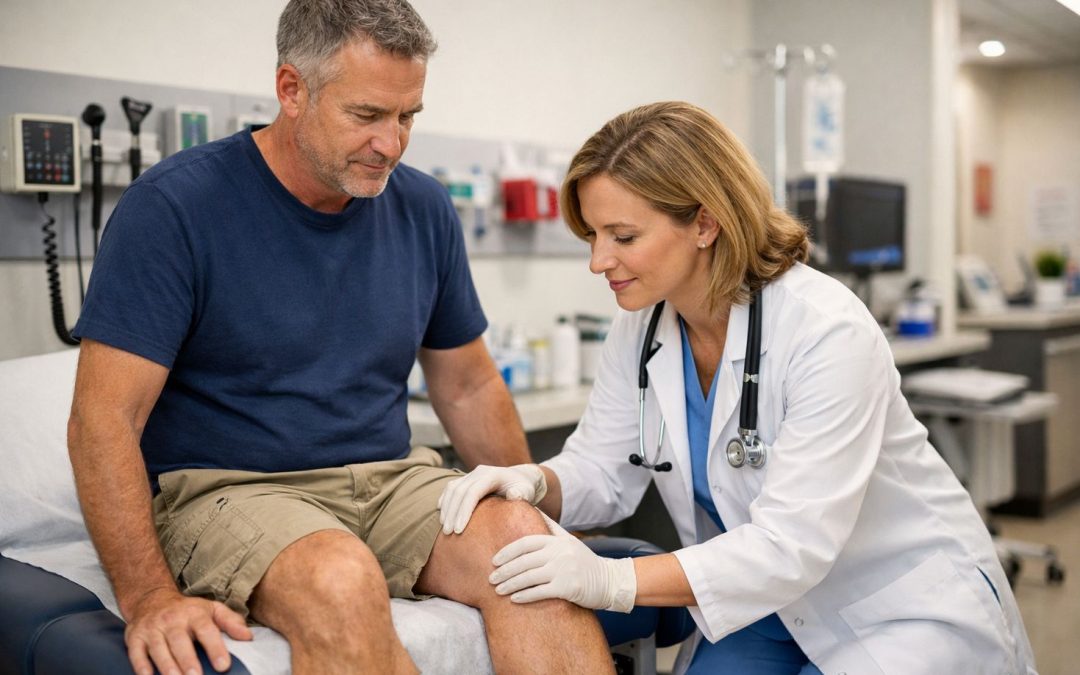
A PCL injury affects the posterior cruciate ligament, one of the key ligaments that helps keep the knee stable by limiting how far the shinbone moves backward. This type of knee injury can range from a mild sprain to more significant ligament damage, and symptoms may include pain, swelling, stiffness, or a feeling that the knee is unsteady. Because these symptoms can overlap with other knee problems, including injury acl, mcl injury, and lcl injury, an exam is important to better understand the cause.
If you are worried about a PCL injury, it helps to know that not every sore or unstable knee means the same thing. The details of how the injury happened, where the pain is located, and whether you can walk comfortably all matter. Urgent care may help assess many non-emergency knee injuries, depending on clinician evaluation, but it is not a substitute for emergency care when symptoms are severe.
What readers need to know first
This guide explains common symptoms, possible causes, and what to expect from evaluation without trying to diagnose your condition online. If knee pain follows major trauma, the knee looks badly deformed, you cannot bear weight, or you have rapidly worsening swelling or numbness, seek emergency care right away. For less severe but still concerning symptoms, a medical evaluation can help determine the next steps safely.
What Is a PCL Injury?
A pcl injury affects the posterior cruciate ligament, one of the main stabilizing ligaments inside the knee. In simple terms, the PCL helps keep the shinbone from moving too far backward under the thighbone. Because of that role, an injury to this ligament can affect knee stability, swelling, comfort, and how smoothly the joint moves during everyday activity.
What the PCL does in the knee
The PCL works like an internal support strap for the knee. It helps the joint stay aligned when you walk, change direction, go up or down stairs, or absorb force from a sudden stop or impact. When the ligament is strained or torn, some people notice the knee feels weak, sore, swollen, or less steady, especially during movement or weight-bearing.
Severity can vary. A sprain generally means the ligament has been stretched. A partial tear means some of the fibers are damaged but not fully separated. A complete tear means the ligament has torn all the way through. These differences can affect how unstable the knee feels, but symptoms are not always the same from one person to another.
How a PCL injury happens
A knee ligament injury involving the PCL often happens when a bent knee takes a direct hit, such as in a car accident when the shin strikes the dashboard. It can also happen during sports collisions, awkward twisting, or falls onto a bent knee. Some people have immediate pain and swelling, while others mainly notice stiffness or instability later, depending on the force of the injury and whether other parts of the knee are also affected.
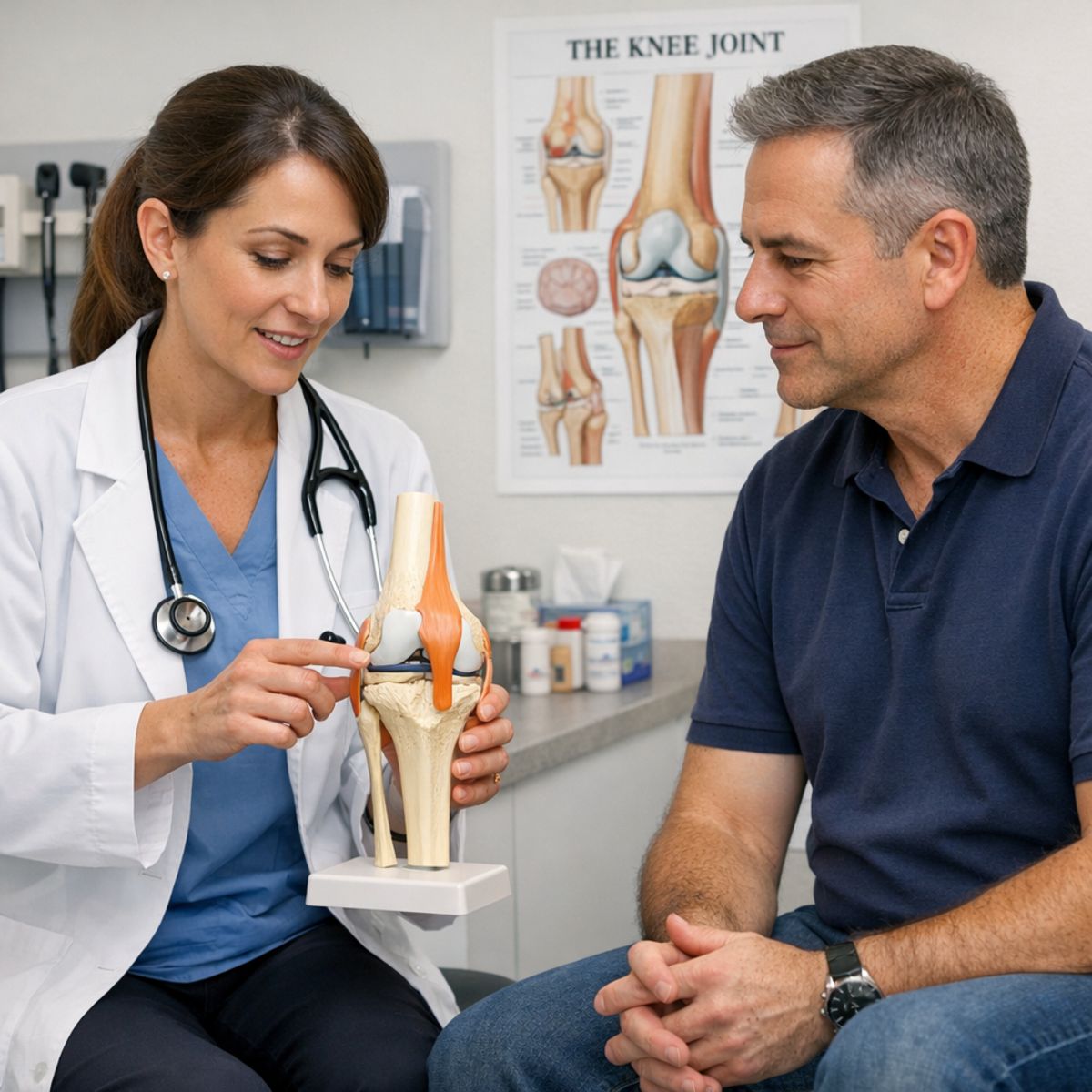
Why Early Evaluation Matters for Knee Injuries
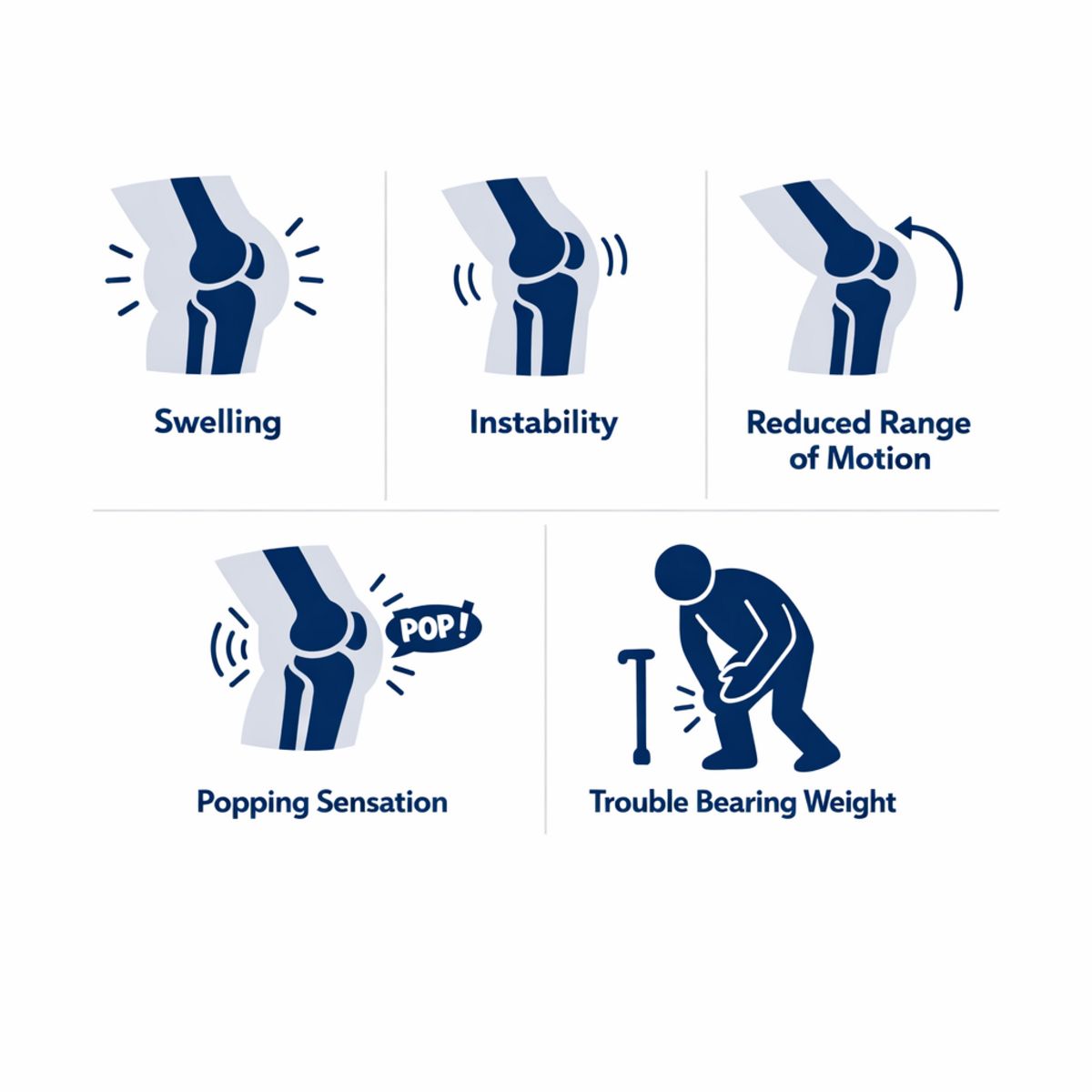
When knee pain starts after a twist, fall, awkward landing, or sudden change in direction, getting checked sooner may help clarify what is going on and what type of knee injury and treatment plan makes sense. Even when an injury does not seem severe at first, symptoms such as swelling, a popping sensation, reduced range of motion, or trouble bearing weight can point to more than a simple strain.
Early assessment may help identify instability in the joint and possible associated injuries involving cartilage, the meniscus, or other ligaments. It can also help explain why the knee feels weak, stiff, or unreliable during walking, stairs, work, or sports. Without evaluation, some people continue activities that may worsen pain, prolong swelling, or reduce function depending on the condition.
Why waiting can make recovery harder
Waiting may allow persistent swelling or altered movement patterns to interfere with daily routines and physical activity. A clinician may recommend next steps based on the exam, which could include rest, bracing, imaging, or specialist follow-up. For non-emergency concerns, urgent care services for minor injuries may be a practical place to start.
Common PCL Injury Symptoms

A possible PCL injury can cause a range of symptoms, and some people notice only subtle changes at first. Symptoms do not confirm a diagnosis on their own, but they can help you recognize when the knee may need medical attention.
- Knee pain: Pain may start after a direct impact, awkward landing, or twisting movement. It can feel mild at first or become more noticeable with activity.
- Swelling: Swelling may appear soon after the injury or develop gradually later. Some knees look obviously puffy, while others only feel tight.
- Instability or looseness: A common complaint is that the knee feels unsteady, loose, or like it might give way when standing, turning, or walking.
- Stiffness and limited motion: Bending the knee, going up or down stairs, walking, or getting up from a seated position may feel uncomfortable or restricted.
Mild symptoms versus more concerning signs
Some injuries can feel like a strain at first, with soreness and mild stiffness but no dramatic swelling. Others may involve more noticeable swelling, a stronger sense of instability, or difficulty putting weight on the leg. In general, symptoms that worsen, interfere with normal walking, or make the knee feel unreliable deserve prompt evaluation.
Why symptoms can overlap with other knee injuries
PCL symptoms can overlap with other knee problems, including meniscus injuries, injury acl concerns, mcl injury, and lcl injury. Because different structures in the knee can cause similar pain, swelling, and instability, an exam can help clarify what may be going on. If you are unsure whether your symptoms need quick attention, it may help to find urgent care services fast.
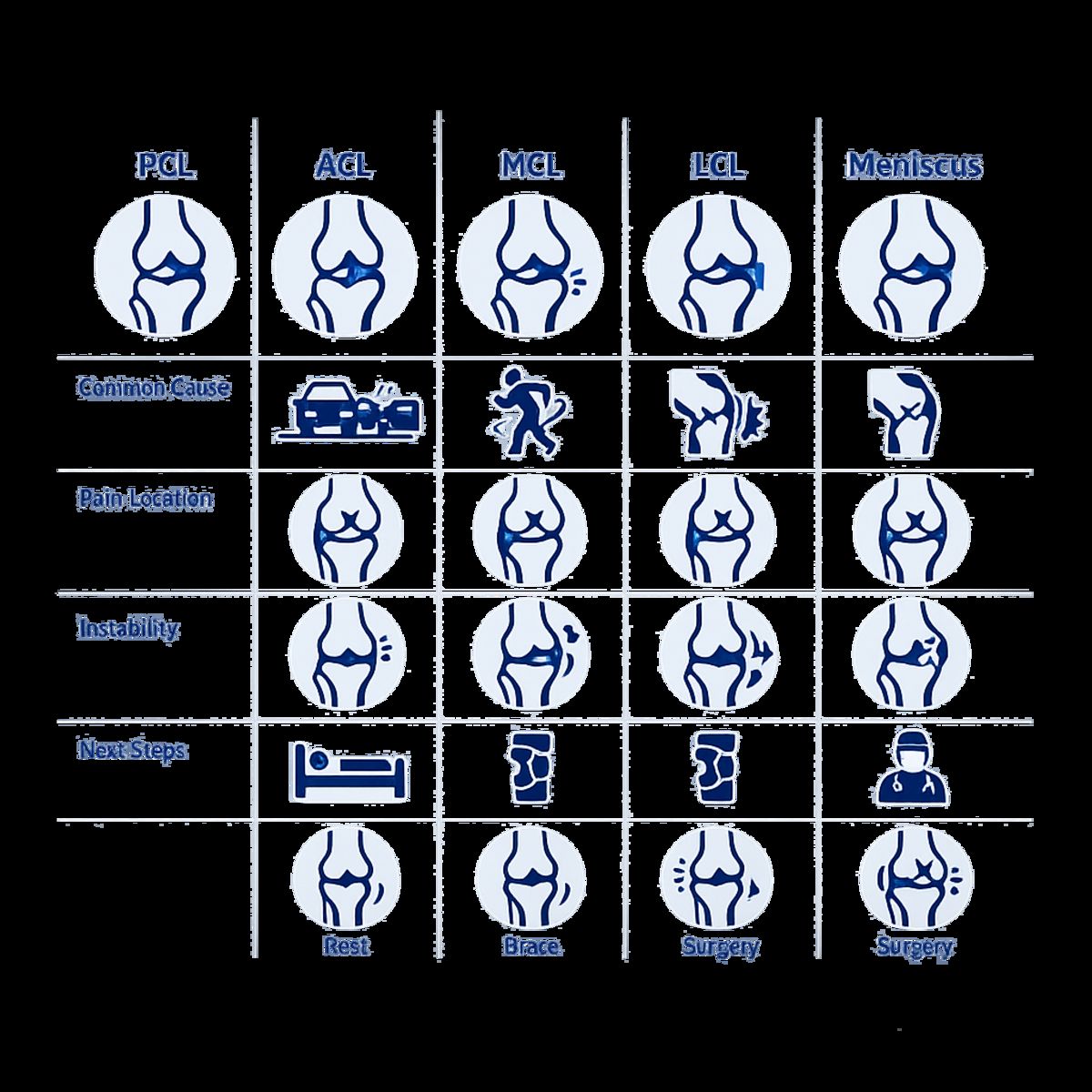
PCL Injury vs. ACL, MCL, LCL, and Meniscus Problems
A PCL injury can share symptoms with several other knee problems, which is why comparison searches are so common. Pain, swelling, stiffness, and a feeling that the knee is not quite right can happen with a PCL tear, an injury ACL problem, an MCL injury, or an LCL injury. Even so, the exact pattern often differs based on which structure is involved and how the injury happened.
How PCL injuries differ from other ligament injuries
PCL injuries are often linked to a direct blow to the front of the shin or a fall onto a bent knee. They may create pain deep in the knee and a sense of backward instability. By comparison, an ACL injury is more often associated with sudden pivoting, cutting, or landing awkwardly, and many people describe a pop with rapid swelling. An MCL injury usually affects the inner side of the knee after a force pushes the knee inward, while an LCL injury more often causes pain on the outer side of the knee after a force from the inside of the leg.
These differences can help explain why symptoms overlap but should not be used for self-diagnosis. Several ligament injuries can cause swelling, instability, reduced range of motion, and trouble walking. A hands-on exam and, in some cases, imaging are often needed to tell them apart accurately.
How meniscus and hamstring injuries can feel similar
Meniscus injuries can also be confused with ligament damage. They may cause joint-line pain, clicking, catching, or locking, especially with twisting. A hamstring injury can create pain behind the knee and make bending or walking uncomfortable, which may sound similar to some PCL complaints. However, physical therapy meniscus injury plans often focus more on joint mechanics and symptom-triggering movements, while ligament-focused recovery plans may emphasize stability, strength, and protection during healing.
Because these conditions can look alike at first, professional assessment is the safest way to identify the source of knee pain and choose the right treatment path.
What to Do After a Possible PCL Injury
If you think you may have injured a ligament in your knee, the safest first step is to stop the activity right away and avoid trying to “walk it off.” General first-aid measures may help while you arrange an evaluation, but they do not replace medical care. If the injury involved severe trauma, a major deformity, heavy swelling, numbness, or you cannot safely bear weight, seek emergency care promptly.
Immediate steps to take
- Stop the activity and avoid pushing through pain, twisting, pivoting, or sudden direction changes.
- Rest the knee and limit movements that make pain, swelling, or a feeling of giving way worse.
- Use ice for short periods if it feels helpful, and elevate the leg when possible to help with swelling.
- Consider a light wrap or brace only if it feels comfortable and does not increase pain, pressure, or numbness.
- Use support when walking if needed, and avoid returning to sports or strenuous activity until you have been assessed.
When not to rely on self-care alone
You should get medical evaluation if pain, swelling, instability, or trouble walking continues, or if the knee feels like it may buckle. Ongoing symptoms can need a hands-on exam and, in some cases, imaging such as X-ray diagnostic services for knee injuries to rule out other problems.
For prompt assessment of a recent knee injury, walk-in urgent care services for walk-in treatment may be appropriate, especially if symptoms are not improving or you are unsure how serious the injury is.
How PCL Injuries Are Evaluated and Treated
When someone comes in with a possible PCL injury, the visit usually starts with a careful review of how the injury happened, what symptoms began right away, and whether pain, swelling, instability, or trouble bearing weight has changed over time. This kind of step-by-step assessment helps clarify what may be going on and how urgent care fits outpatient care when a knee injury needs prompt evaluation.
What a clinician may check
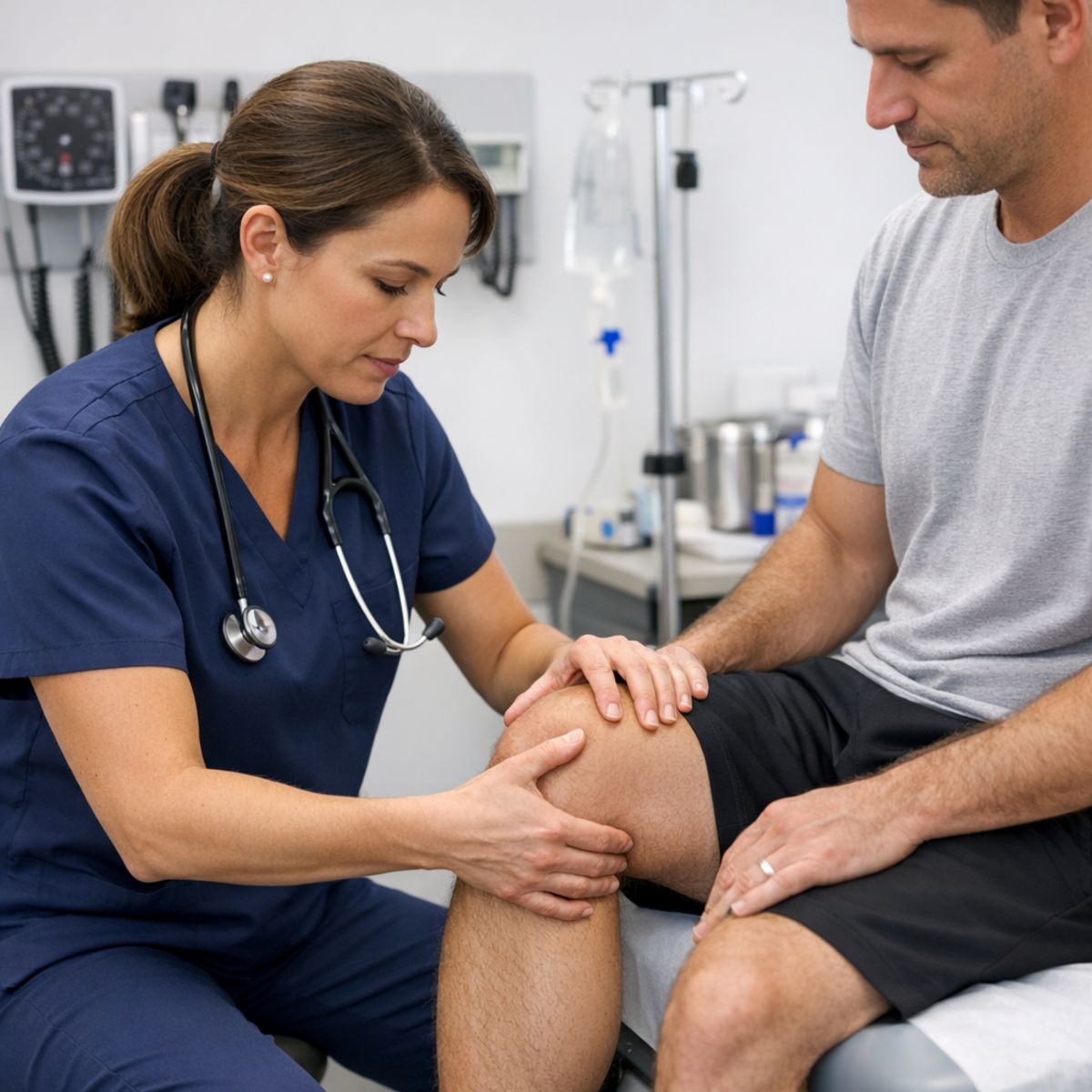
A clinician may look for swelling, bruising, tenderness, range of motion, and signs that the knee feels less stable than expected. They may also perform gentle hands-on testing as part of physical exams for injury assessment. Depending on the findings, imaging such as X-rays or other follow-up studies may be considered, especially if there is concern for a more significant injury or associated damage.
Common treatment paths
Treatment recommendations can vary based on the severity of the injury, the patient’s symptoms, and whether other structures in the knee may also be involved. Some patients may be advised to rest, modify activity, use a brace, and begin supportive care measures. Others may be referred for physical therapy or orthopedic follow-up for further evaluation. Because recovery needs differ from person to person, treatment is individualized rather than based on one standard timeline.
Urgent Care vs. Emergency Room for a Knee Injury
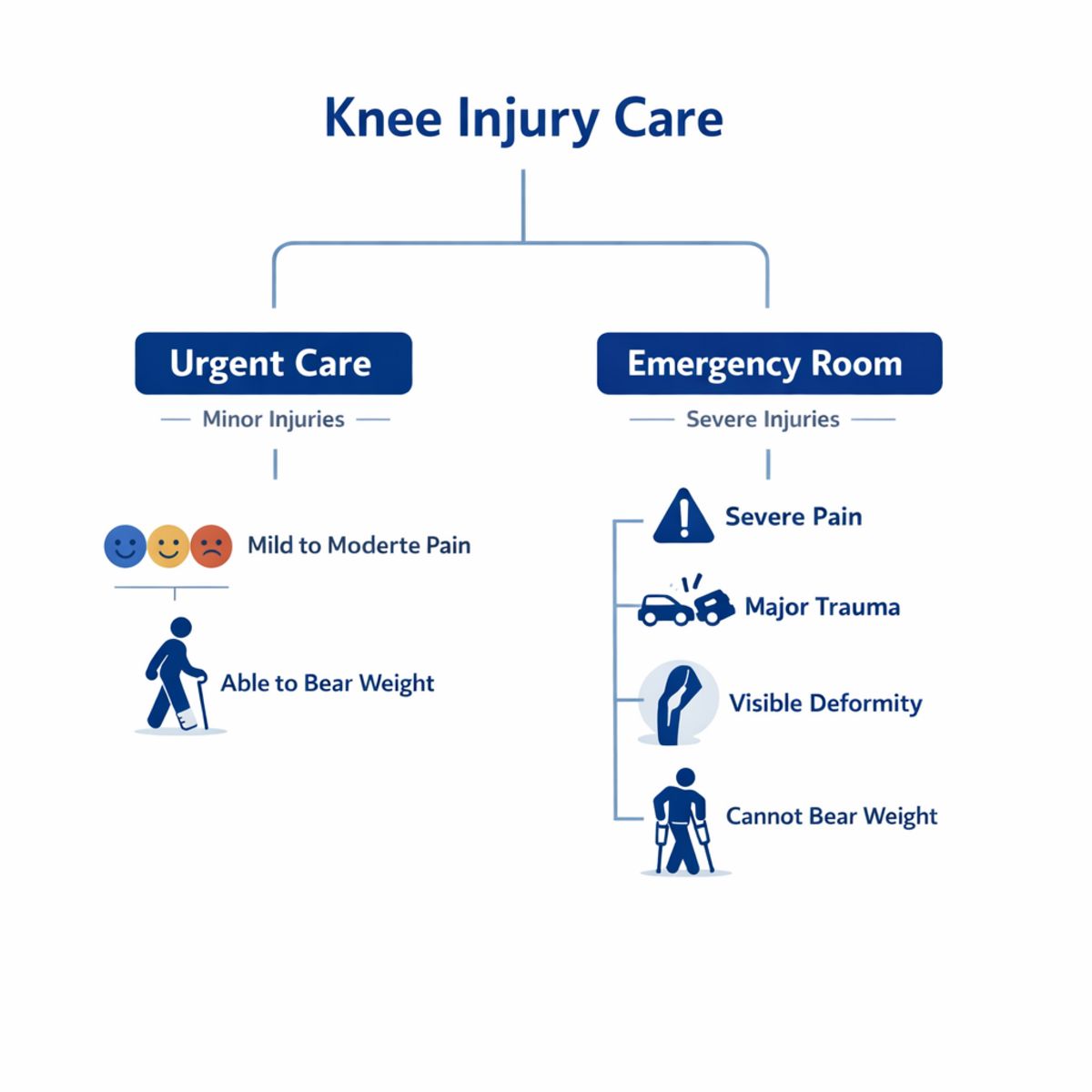
For many non-emergency knee injuries, urgent care may be an appropriate place to start, especially when you have pain, swelling, stiffness, or limited movement but no signs of a life-threatening emergency. A visit for urgent care services for non-emergency injuries may help you get evaluated and guided on next steps.
Where to go for care
Emergency care is more appropriate for severe trauma, a visibly deformed knee or leg, uncontrolled bleeding, inability to safely move after a major injury, or other serious symptoms. If the injury involves severe trauma or you believe it is an emergency, call 911 or go to the ER right away.
Insurance acceptance can vary by location and plan, so it is a good idea to verify your coverage before your visit when possible. The safest choice depends on how serious the injury appears and how quickly symptoms are worsening.
Frequently Asked Questions About PCL Injury
Can you walk with a PCL injury?
Sometimes, yes. Some people can still walk after a PCL injury, especially if symptoms seem mild at first. However, being able to walk does not rule out a significant knee injury. If you have swelling, pain, a feeling that the knee is unstable, or trouble bearing weight, it is a good idea to get evaluated.
What does a PCL injury feel like?
A PCL injury may cause knee pain, swelling, stiffness, or a sense that the knee is not fully stable. Some people notice discomfort in the back of the knee after a fall, twist, or direct blow. Symptoms can vary, so an exam is often needed to understand what may be going on.
How is a PCL injury different from an ACL injury?
Both involve knee ligaments, but they affect different structures and may happen in different ways. A PCL injury often occurs when the shin is forced backward, while ACL injuries are commonly linked to sudden pivoting or landing movements. Because symptoms can overlap, a clinician may need to examine the knee to help tell the difference.
When should I go to urgent care for knee pain after an injury?
Consider urgent care if pain is not improving, swelling is increasing, walking is difficult, or the knee feels unstable. Prompt evaluation may also be helpful if you heard a pop, cannot fully move the knee, or are unsure how serious the injury is. Severe pain, obvious deformity, or signs of poor circulation need more immediate emergency attention.
Can urgent care evaluate a possible ligament injury?
Yes, urgent care may assess a possible ligament injury by reviewing symptoms, examining the knee, and checking for swelling, tenderness, range of motion, and stability. Depending on the findings, they may recommend imaging, supportive care, activity changes, or follow-up with a specialist. In-person evaluation is often the best way to assess a possible PCL injury, though Telehealth may help guide next steps in some situations.
Get Evaluated for a Possible Knee Injury
If you have knee pain, swelling, or a feeling of instability after an injury, Prime Urgent Care can help evaluate your symptoms and discuss appropriate next steps. We offer walk-in in-clinic urgent care for minor injuries, and Telehealth consultations are available by appointment for questions and follow-up guidance.
When to contact Prime Urgent Care
Contact us for non-emergency knee injuries that need prompt attention. For severe trauma, major deformity, chest pain, stroke symptoms, or difficulty breathing, call 911 or go to the nearest emergency room right away.
Key Takeaways on PCL Injury
A PCL injury can cause knee pain, swelling, stiffness, and a feeling that the knee is unstable, but these symptoms can overlap with other knee injuries. Because severity can vary, a proper medical assessment is important to confirm the diagnosis and guide treatment.
If symptoms persist, worsen, or make it hard to walk or use the knee normally, it is a good idea to seek professional evaluation. For severe trauma, significant swelling, or urgent concerns, emergency care may be the safest next step.
With timely attention and the right care plan, many people can better understand their injury and next steps with confidence.