
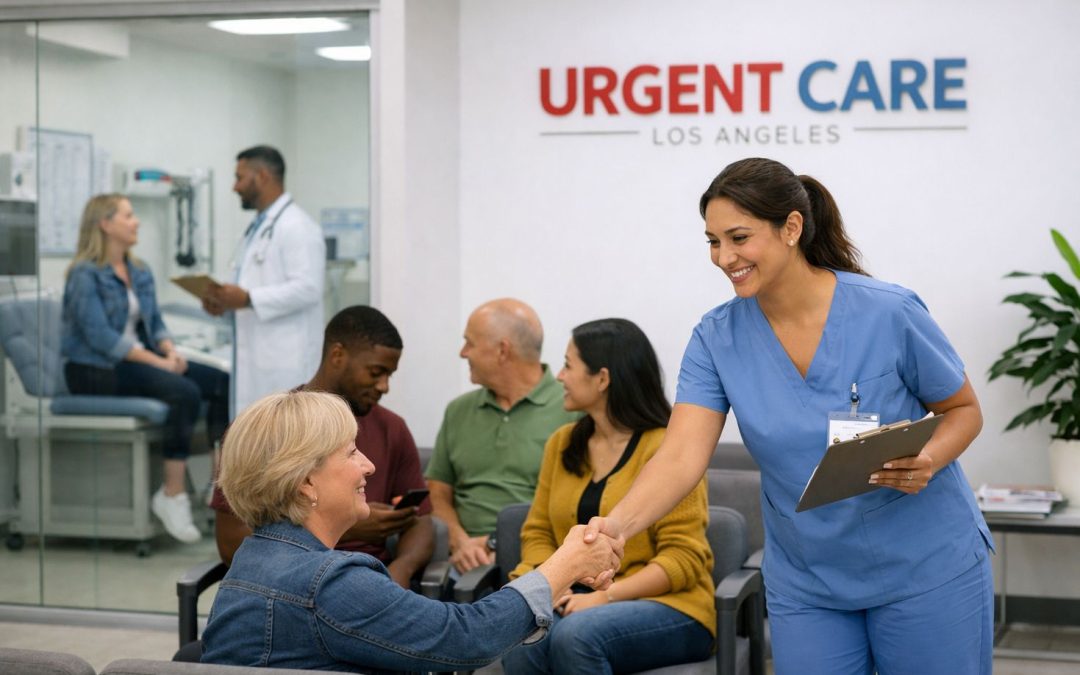
An annual physical in Los Angeles is a routine health visit that helps you stay on top of your overall wellness, preventive care needs, and any current concerns you want to discuss. For many patients, this type of check-in includes a review of health history, vital signs, lifestyle factors, and recommendations for next steps based on age, risk factors, and personal needs.
These visits matter because they create time to look at the bigger picture, not just a single symptom. A physical can help identify questions to raise, screenings to consider, and habits that support long-term health. In Los Angeles, where schedules can be busy, some patients also look for convenient care options when planning certain physical exams.
It is important to know that physical exam availability and the scope of the visit may vary by clinic, provider evaluation, and your specific reason for being seen. In some cases, urgent care may be a practical option for certain physical exams, depending on the situation and what the provider can offer at that visit.
This article will walk through what an annual physical typically covers, when urgent care may or may not fit, and what to keep in mind before you go. If you have emergency symptoms such as chest pain, stroke symptoms, severe trauma, or difficulty breathing, call 911 or go to the nearest emergency room right away.
What Is an Annual Physical?
An annual physical is a routine physical exam focused on preventive care, general wellness, and reviewing your overall health rather than treating one specific illness or injury. During a visit like this, a provider typically looks at your health history, current medications, vital signs, lifestyle habits, immunization status, and whether any age-appropriate screenings may be recommended. If you are looking for physical exams in Los Angeles at Prime, it helps to know that the exact exam can vary based on your age, medical history, and the reason the physical is needed.
An urgent care physical exam may also be used for school, sports, work, or other routine requirements. Some visits may be tailored for adults, teens, sports participation, or men physical exams. Not every annual physical includes the same tests, and your provider may adjust the exam based on individual needs.
Core parts of a routine physical exam
- Review of personal and family health history
- Vital signs such as blood pressure, pulse, temperature, and weight
- General physical assessment by the provider
- Discussion of medications, exercise, diet, sleep, and other lifestyle factors
- Preventive guidance, immunization review, and possible follow-up recommendations
How it differs from a problem-focused visit
A routine physical exam is mainly about prevention and tracking overall health. A sick visit or problem-focused appointment is different because it centers on symptoms, an injury, or a specific concern that may require separate evaluation, testing, or treatment. If you arrive with a new medical issue, the provider may recommend addressing that concern separately depending on the condition.

Benefits of Scheduling a Physical Appointment Each Year
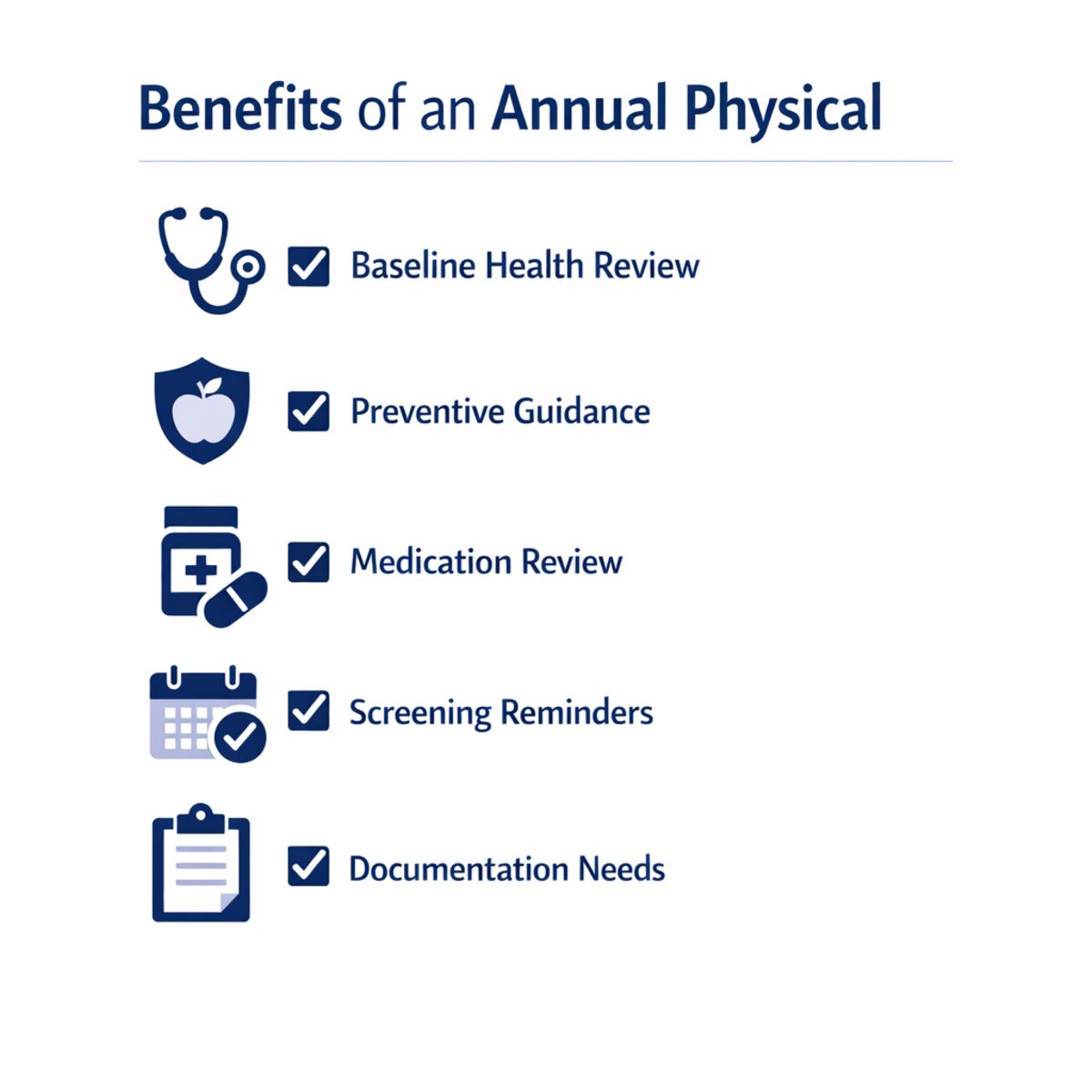
A yearly physical appointment can be a practical way to stay on top of your health without waiting for a problem to interrupt your routine. For many patients, a routine physical exam offers time to review blood pressure, weight changes, medications, and updates to personal or family health history. Looking at these details over time may help create a clearer picture of what is normal for you and what might need follow-up.
Prevention and health tracking
Annual visits can also support preventive care conversations. This may include discussing healthy habits, reviewing screening recommendations, and talking through non-emergency concerns before they become harder to manage. If you are unsure how these visits usually work, you can read more about what to expect during your annual exam. A physical appointment can be a useful time to ask questions about sleep, exercise, nutrition, stress, or other everyday health topics in a supportive setting.
Documentation for school, sports, or work
Another common reason people schedule a routine physical exam is documentation. Depending on the organization, a visit may help with forms for school, sports participation, employment, or general wellness records. Even when paperwork is the main reason for booking, the appointment can still be a convenient opportunity to review your current health and ask questions that matter to you.
What Happens During an Urgent Care Physical Exam
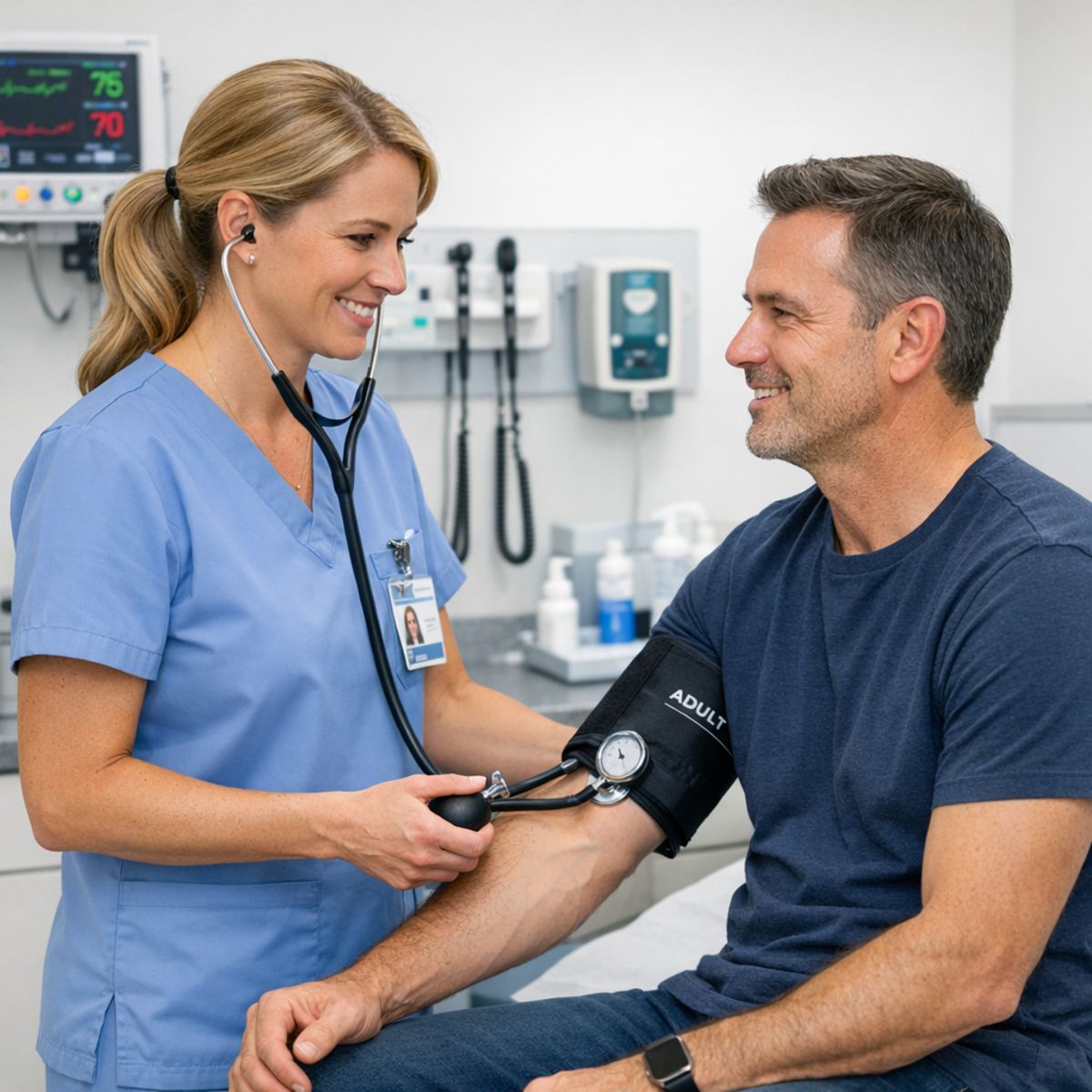
If you are planning a physical at urgent care, it can help to know what the visit usually looks like. In most cases, the process is straightforward and designed to gather the information a clinician needs for a safe, appropriate evaluation. While each urgent care physical exam may vary based on the reason for your visit, most appointments follow a similar flow.
Step 1: Check-in and health history
Your visit typically starts with check-in, where staff may confirm your identification, contact details, and insurance information or discuss self-pay options. Because insurance acceptance can vary, it is a good idea to verify coverage in advance when possible. You may also be asked to complete forms related to your medical history, current medications, allergies, past conditions, and the purpose of the physical. This helps the care team understand any concerns before the exam begins.
Step 2: Vitals and provider evaluation
Next, a team member may record basic vital signs such as blood pressure, pulse, temperature, height, and weight. After that, a clinician may review your medications, ask about symptoms or health concerns, and perform a general physical assessment based on the type of exam you need. Depending on the provider’s evaluation, additional forms, screenings, or tests may be recommended, but these are not automatic for every patient. You can also learn more about the urgent care services available at Prime if you are comparing in-clinic options.
Step 3: Recommendations and follow-up
At the end of the visit, the clinician may complete required forms, share preventive guidance, or recommend follow-up care depending on the findings and the purpose of the exam. Some patients may be referred for additional evaluation if needed. Urgent care is generally walk-in friendly for in-person needs, while telehealth visits by appointment at Prime may be available for appropriate concerns. However, a physical exam itself is generally performed in person.
Annual Physical at Urgent Care vs Primary Care
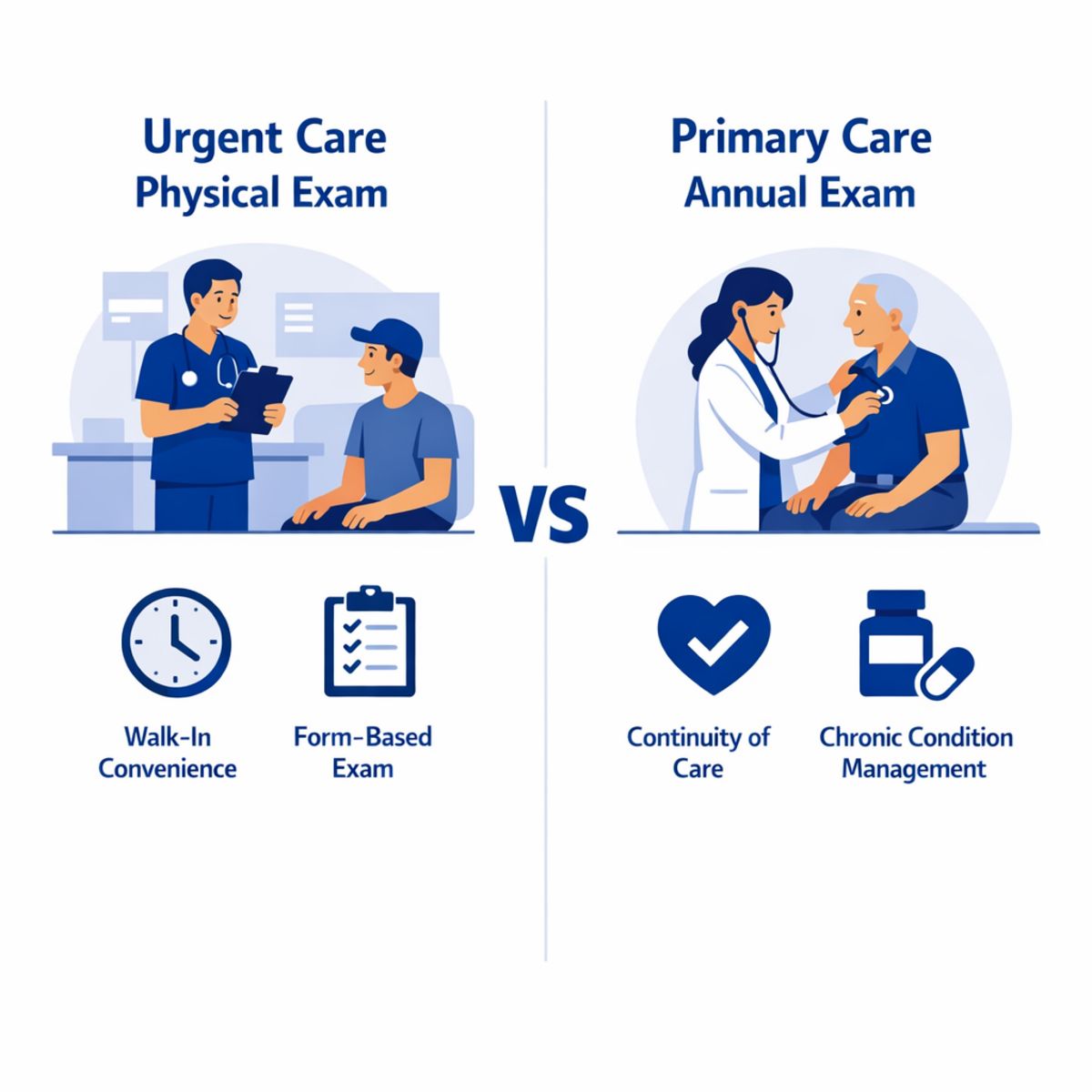
Choosing between urgent care and primary care for an annual physical depends on the type of exam you need, your medical history, and the provider’s evaluation. In some situations, a physical at urgent care may be a practical option, especially when convenience, walk-in access, or a straightforward exam is the priority. In other cases, primary care may offer better continuity and a more complete long-term picture of your health.
When urgent care may fit
Urgent care may be helpful when you need a basic physical exam and want a faster, more flexible visit. This can make sense for certain routine evaluations, form-based physicals, or situations where scheduling with a primary care office would take longer than you prefer. It can also be useful for patients who do not currently have an established primary care provider and want timely assessment. If you want more context on how urgent care fits in ambulatory care, that broader care model can help explain where these visits may belong.
When primary care may be the better choice
Primary care may be better for people with chronic conditions, complex medical histories, ongoing medications, or preventive care needs that benefit from follow-up over time. An established primary care provider can compare trends from prior visits, coordinate referrals, and help build a long-term prevention plan. That continuity may be especially valuable for blood pressure, diabetes, heart risk, or other concerns that need regular monitoring rather than a one-time exam.
The best setting is not one-size-fits-all. A provider can help determine whether urgent care is appropriate for your situation or whether primary care follow-up is the better next step. For sudden severe symptoms, chest pain, trouble breathing, signs of stroke, or other life-threatening emergencies, call 911 or go to the nearest emergency room instead of urgent care.
How to Prepare for Your Annual Physical
A little preparation can make your annual physical smoother and more productive. If you are comparing annual physical options in Los Angeles, use these simple steps before your physical appointment so check-in is easier and you can make the most of your visit.
-
Bring the right documents.
Have your photo ID, insurance information if applicable, a current medication list, previous forms, and any school, sports, or work paperwork ready to go. -
Write down your questions.
Make a short list of symptoms, recent health changes, questions about preventive care, and any family history updates you want to mention. -
Wear comfortable clothing.
Choose clothes that are easy to move in and practical for a routine exam. -
Arrive early enough for check-in.
Giving yourself a little extra time can reduce stress and help you complete any needed paperwork without feeling rushed. -
Verify coverage and visit type in advance.
Confirm insurance acceptance ahead of time if needed, and contact the clinic before your appointment if you are unsure which type of physical you need.
Cost and Insurance Questions to Ask Before Your Visit
If you are planning a physical exam, it is reasonable to ask about cost and insurance before your visit. Pricing can vary depending on the type of physical you need, whether forms must be completed, and whether any additional services are recommended during the appointment. Because of that, it is best to confirm details directly with the clinic instead of assuming the total will be the same for every patient.
Insurance acceptance can also vary, so patients should verify their specific plan before visiting or before scheduling a Telehealth appointment. If you will be paying out of pocket, ask about expected charges in advance and whether there are self-pay options available. Taking a few minutes to confirm these details can help you avoid surprises and feel more prepared.
For broader background on related pricing questions, you can review urgent care cost without insurance explained.
Verify coverage before you go
Before heading in, confirm that your insurance is accepted and ask whether your visit may involve separate charges for forms, lab work, or other add-on services. If you do not plan to use insurance, ask about self-pay expectations so you can make an informed decision.

Frequently Asked Questions About Annual Physicals
Can I get an annual physical at urgent care in Los Angeles?
In some cases, urgent care clinics in Los Angeles may offer certain physical exams, but availability depends on the visit type, clinic policies, and provider evaluation. It is best to confirm ahead of time whether the location provides the specific annual physical you need.
What should I bring to a physical appointment?
Bring a photo ID, insurance information if applicable, a list of current medications, and any forms that need to be completed. It can also help to bring details about your medical history, past conditions, and any health concerns you want to discuss.
How long does a routine physical exam take?
A routine physical exam often takes a short office visit, but total time can vary based on paperwork, clinic volume, and the type of exam requested. Some visits may take longer if additional discussion, forms, or follow-up evaluation is needed.
Are sports or school physicals the same as an annual physical?
Not always. Sports and school physicals may overlap with parts of an annual physical, but the requirements can differ depending on the organization, school, or athletic program. The needed forms and exam components may vary, so it is important to check the specific requirements.
Will my annual physical include lab work?
Lab work may be included in some physicals, but it depends on the type of exam, your health history, and provider evaluation. Not every annual physical includes testing, and any recommended labs can vary based on the clinic and the purpose of the visit.
Schedule a Physical Exam With Prime Urgent Care
If you need physical exams at Prime Urgent Care in Los Angeles, contact our team with questions before you visit. Walk in for in-clinic urgent care needs, and ask whether Telehealth by appointment is appropriate for your concern. Be sure to verify insurance and confirm what type of physical you need.
Final Thoughts on Getting an Annual Physical
An annual physical can play an important role in preventive care and staying aware of your overall health. For some patients in Los Angeles, urgent care may be a convenient option for certain physical exams, depending on the visit and provider evaluation. If you have questions, reaching out to the clinic can help you decide the next best step.