

Understanding Cold Symptoms and Fever: What’s Normal and What’s Not
If you’re wondering when to see a doctor for a cold, you’re not alone. Most colds are mild and improve within 7–10 days, but certain symptoms can signal the need for medical care.
A typical cold may cause a runny nose, congestion, sore throat, cough, mild fatigue, and sometimes a low-grade fever. In healthy adults, symptoms are usually manageable at home with rest, fluids, and over-the-counter remedies. For guidance on symptom relief, see our overview of effective cold medicine options for adults.
However, knowing the difference between expected symptoms and warning signs is key. Understanding the common cold when to see a doctor can help you avoid unnecessary anxiety while still seeking timely care if your condition worsens.
Can You Have a Fever with a Cold?
Yes, you can have a mild fever with a cold, especially in children. A low-grade fever (typically under 101°F) can occur as your immune system fights the virus.
Questions like “can a cold cause a fever” or “do you get a fever with a cold” are common. In adults, high fever (above 102°F), shaking chills, or body aches may point more toward the flu or another infection rather than a simple cold.
Why Knowing When to See a Doctor for a Cold Matters
While most colds resolve on their own, complications can develop. Persistent sinus pressure, worsening cough, chest pain, or symptoms lasting longer than 10 days may signal a sinus infection, bronchitis, or even the flu.
It’s also important to consider higher-risk situations, such as young children, older adults, pregnancy, or chronic conditions like asthma. In these cases, earlier evaluation may be appropriate.
If symptoms are severe, rapidly worsening, or not improving, a professional assessment through Flu & Cold Treatment at Prime Urgent Care can help determine whether testing, prescription medication, or further evaluation is needed.
Quick summary: Most colds are mild and short-lived. Mild fever can occur, especially in children. Seek medical care if symptoms are severe, last more than 10 days, or include high fever, breathing difficulty, or chest pain.
Table of Contents
- Common Cold vs. Flu: Key Differences in Symptoms and Severity
- When to See a Doctor for a Cold: Warning Signs You Should Not Ignore
- Who Should Seek Medical Care Sooner?
- How to Decide If You Should Go to the Doctor for a Cold or Flu
- Frequently Asked Questions About Colds, Fever, and Doctor Visits
- Get Trusted Cold and Flu Care in California
- Final Thoughts: Trust Your Symptoms and Seek Care When Needed
Common Cold vs. Flu: Key Differences in Symptoms and Severity

The common cold is a mild viral upper respiratory infection, while the flu (influenza) is a more severe viral illness that affects the respiratory system and entire body.
Understanding flu vs cold symptoms helps you decide when to see a doctor for a cold and when symptoms may require urgent medical care. Although both spread easily and share signs like cough and congestion, they differ in fever patterns, body aches, and how quickly symptoms appear.
Typical Cold Symptoms
A cold usually develops gradually and stays mild to moderate.
- Runny or stuffy nose
- Sore throat
- Mild cough
- Sneezing and congestion
- Low-grade fever (sometimes)
Many patients ask, can you have a fever with a cold? Yes, but it is typically low-grade (under 101°F) and more common in children. If you’re wondering does a cold cause a fever or do you get a fever with a cold, the answer is sometimes—but high or persistent fever is less typical and may signal something more serious.
For guidance on symptom relief, see our over-the-counter flu medicine guide, which also covers supportive care strategies.
Typical Flu Symptoms
The flu often begins suddenly and feels more intense than a cold.
- High fever (often 101–104°F)
- Significant body aches and muscle pain
- Severe fatigue or weakness
- Headache
- Dry cough and chest discomfort
Patients commonly ask, should I go to the doctor for the flu? In many cases, urgent care is appropriate for testing, antiviral treatment, or monitoring high fever. You can learn more about professional evaluation through our flu and cold treatment services.
If you are unsure when to go to hospital for flu, seek emergency care for trouble breathing, chest pain, confusion, dehydration, or symptoms that rapidly worsen. Otherwise, an urgent care visit is often sufficient for otherwise healthy adults.
Quick summary: Colds are gradual and usually mild, with possible low-grade fever. The flu starts suddenly, causes higher fever and body aches, and is more likely to require medical evaluation—especially in older adults, young children, pregnant patients, or those with chronic conditions.
When to See a Doctor for a Cold: Warning Signs You Should Not Ignore
Most colds improve on their own within 7–10 days. However, knowing when to see a doctor for a cold can help prevent complications and give you peace of mind.
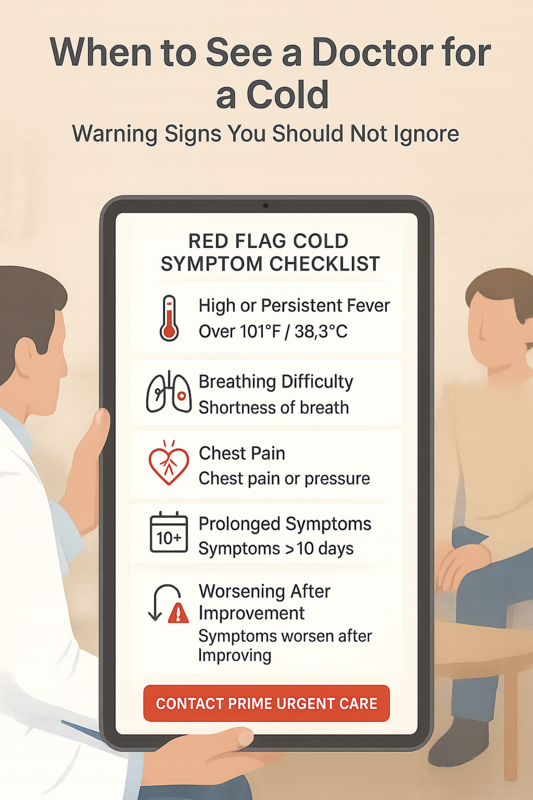
This infographic highlights key warning signs that indicate when to see a doctor for a cold.
Use the checklist below to decide if your symptoms need medical evaluation. If you are unsure and symptoms feel severe or unusual, it is always safer to seek care.
High or Persistent Fever
A mild fever can occur with a cold. Many people ask, can a cold cause a fever? Yes—but it is usually low-grade and short-lived.
- Fever above 101°F (38.3°C) in adults
- Fever lasting more than 3 days
- Fever that returns after you were starting to feel better
If you are wondering, should I go to the doctor for the flu or a cold? High or persistent fever may point to flu, sinus infection, or another condition that needs treatment.
Shortness of Breath or Chest Pain
Breathing problems are not typical with a simple cold. Seek prompt medical care if you notice:
- Shortness of breath at rest or with mild activity
- Chest pain or pressure
- Wheezing or persistent tightness in the chest
These symptoms may signal bronchitis, pneumonia, or another respiratory issue. In these cases, same-day evaluation at urgent care services is recommended. If symptoms are severe or rapidly worsening, go to the nearest emergency room.
Symptoms Lasting More Than 10 Days
A typical cold improves within 7–10 days. If symptoms last longer, you may be asking about common cold when to see a doctor.
- Cough lasting more than 10 days
- Thick yellow or green nasal discharge with facial pain
- Worsening symptoms after initial improvement
Persistent cough or chest congestion may require evaluation for bronchitis. Learn more about expected timelines in this guide on how long a chest cold typically lasts.
Quick summary: See a doctor if you have a fever over 101°F, symptoms lasting more than 10 days, chest pain, shortness of breath, or symptoms that worsen instead of improve. Early evaluation can help rule out complications and guide proper treatment.
Who Should Seek Medical Care Sooner?

When deciding when to see a doctor for a cold, some people should not wait as long as others. Certain age groups and health conditions increase the risk of dehydration, breathing problems, or complications from viral infections like the flu.
If you are wondering, should I go to the doctor for a cold or the flu?—and you or your loved one falls into a higher-risk category—earlier evaluation is usually the safer choice.
Young Children and Fever
Infants and young children can become dehydrated quickly and may not describe their symptoms clearly. While adults often manage mild symptoms at home, children under 5—especially under 3 months—should be assessed sooner for fever or unusual behavior.
Seek prompt medical care if a child has:
- A fever of 100.4°F (38°C) or higher in infants under 3 months
- Fever lasting more than 2–3 days
- Difficulty breathing, fast breathing, or wheezing
- Signs of dehydration (dry mouth, no tears, fewer wet diapers)
- Extreme sleepiness, irritability, or poor feeding
Parents often ask, can you have a fever with a cold? Yes, mild fever can occur—but higher or persistent fevers deserve evaluation to rule out flu, ear infections, or pneumonia.
Adults with Chronic Health Conditions
Adults with asthma, diabetes, heart disease, weakened immune systems, or those over 65 have a higher risk of complications from respiratory infections. What starts as a common cold when to see a doctor question can quickly become more urgent in these groups.
Seek care sooner if you have:
- Worsening shortness of breath or chest tightness
- Blood sugar that is difficult to control during illness
- Chest pain, confusion, or persistent high fever
- Symptoms that are worsening instead of improving after several days
In these cases, timely evaluation and treatment for flu or cold symptoms may help reduce complications and support safer recovery.
Quick safety summary: Young children, older adults, pregnant individuals, and people with chronic medical conditions should consider earlier medical evaluation for fever, breathing issues, or worsening symptoms.
How to Decide If You Should Go to the Doctor for a Cold or Flu
If you’re unsure when to see a doctor for a cold or the flu, this simple step-by-step guide can help. Most colds improve on their own, but certain symptoms and timeframes signal it’s time for medical care.

Review this visual guide to quickly decide when to seek care for cold or flu symptoms.
Follow these steps in order. If you answer “yes” to any urgent warning sign, seek care promptly.
-
Step 1: Check Your Temperature and Duration
A mild cold may cause a low-grade fever, but many adults do not run a fever at all. If you’re wondering, can you have a fever with a cold? — yes, but it is usually under 101°F.
Consider medical care if:
- Your fever is 102°F or higher
- It lasts more than 3 days
- It improves, then returns worse than before
If symptoms are mild and improving, you can often manage them at home with rest, fluids, and appropriate over-the-counter options. Our guide to cold medicine for adults can help you choose safely.
-
Step 2: Evaluate Symptom Severity
Next, assess how severe your symptoms feel. Ask yourself:
- Are you having shortness of breath or trouble breathing?
- Do you feel persistent chest pain or pressure?
- Are you unable to keep fluids down or showing signs of dehydration?
- Do you feel confused, unusually drowsy, or faint?
If you answer yes to any of these, seek care right away. These may signal complications and help determine when to go to hospital for flu rather than waiting it out.
If you’re unsure, you can start with a virtual visit through telehealth services to speak with a provider before coming into the clinic.
-
Step 3: Consider Age and Health Conditions
Some people should seek care sooner, even for moderate symptoms. Higher-risk groups include:
- Adults 65 and older
- Children under 5
- Pregnant individuals
- People with asthma, diabetes, heart disease, or weakened immune systems
If you fall into one of these groups and are asking, should I go to the doctor for a cold or the flu? the safest choice is often to get evaluated early.
Quick summary: Go to the doctor if your fever is high or prolonged, symptoms are severe, or you have high-risk health conditions. Otherwise, monitor symptoms for 3–5 days and seek care if they worsen instead of improve.
If you decide an in-person evaluation is the right next step, our team in California is here to help.
Frequently Asked Questions About Colds, Fever, and Doctor Visits
Can a cold cause a fever in adults?
Yes, a cold can cause a low-grade fever in adults. While many adults do not develop a fever with a mild cold, it is possible—especially in the first few days. Fevers above 101–102°F are less typical and may suggest the flu or another infection.
Do you get a fever with a cold or only with the flu?
You can have a fever with a cold, but it is more common and often higher with the flu. The flu typically causes sudden fever, body aches, and fatigue. Colds usually bring milder symptoms such as congestion, sore throat, and sometimes a low-grade fever.
Should I go to the doctor for a cold with a cough?
Most colds with a mild cough improve within 7–10 days without prescription treatment. You should see a clinician if you have shortness of breath, chest pain, a persistent high fever, or a cough lasting more than 2–3 weeks. These may signal bronchitis, pneumonia, or another complication.
When should I go to hospital for flu symptoms?
Seek emergency care for flu symptoms if you have difficulty breathing, bluish lips, chest pressure, confusion, severe dehydration, or symptoms that suddenly worsen. For high-risk individuals—such as older adults, pregnant patients, or those with chronic illness—early medical evaluation is especially important.
How long should a cold last before seeing a doctor?
A typical cold lasts about 7–10 days. Consider medical care if symptoms persist beyond 10–14 days, worsen after initial improvement, or include a high fever. Understanding when to see a doctor for a cold helps prevent delayed treatment of sinus infections or chest complications.
Should I go to the doctor for the flu if I have body aches?
Body aches are common with the flu and often improve with rest, fluids, and over-the-counter medication. You should see a doctor if aches are severe, accompanied by a high fever lasting more than three days, or if you are at higher risk for flu complications.
Does a cold cause a high fever?
Colds usually do not cause high fevers in adults. If your temperature is above 102°F, or if it persists for several days, another infection such as influenza or a bacterial illness may be present. In these cases, medical evaluation is recommended.
Can you run a fever with a cold for several days?
You can run a low-grade fever with a cold for a few days, particularly early in the illness. However, a fever lasting more than three days or returning after improving may indicate a secondary infection. That is often a sign to consider seeing a healthcare provider.
Get Trusted Cold and Flu Care in California
If you’re unsure when to see a doctor for a cold, you don’t have to decide alone. Ongoing fever, worsening cough, shortness of breath, or symptoms that last longer than expected are all good reasons to get checked.
At Prime Urgent Care, we evaluate both mild and more concerning symptoms to help you feel better sooner. Whether you’re asking, “should I go to the doctor for a cold?” or worried about flu symptoms, our team provides prompt, evidence-based care close to home in California.
Learn more about our flu and cold treatment services or explore our full range of urgent care services for other health concerns.
Why Choose Prime Urgent Care?
Our experienced medical providers carefully assess your symptoms, medical history, and risk factors before recommending treatment. We focus on safe, practical care that supports recovery and helps prevent complications.
With convenient hours and walk-in availability, we make it easier to get evaluated without the long wait of an emergency room. Our approach is centered on listening first, explaining clearly, and guiding you through next steps with confidence.
Prime Urgent Care — Immediate Care, Compassionate Service.
If your symptoms are not improving, feel severe, or you’re concerned about fever or breathing changes, seeking evaluation is a smart next step. Early care can provide reassurance and, when needed, timely treatment.
Final Thoughts: Trust Your Symptoms and Seek Care When Needed
Knowing when to see a doctor for a cold comes down to listening to your body and watching for warning signs. Most colds improve with rest, fluids, and time. But persistent high fever, trouble breathing, chest pain, severe dehydration, or symptoms lasting more than 10 days may signal something more serious.
It’s normal to ask, should I go to the doctor for a cold? or should I go to the doctor for the flu? If your symptoms feel unusually intense, worsen instead of improve, or interfere with daily life, it’s reasonable to seek medical care. Early evaluation can help prevent complications and give you peace of mind.
In short: mild symptoms can often be managed at home, but red flags—such as high or persistent fever, shortness of breath, confusion, or severe weakness—deserve prompt medical attention. Trust your judgment, especially for young children, older adults, or anyone with chronic health conditions.
If you’re unsure about your symptoms, our team in California is here to help.