

Understanding Over the Counter Drugs for the Flu
Over the counter drugs for the flu are non-prescription medications that relieve symptoms like fever, body aches, cough, and congestion but do not cure the influenza virus.
These treatments are designed to help you feel more comfortable while your immune system fights the infection. Many people refer to them as over the counter flu remedies or flu meds OTC, and they are widely available in pharmacies and grocery stores throughout California and the U.S.
It’s important to set realistic expectations. OTC flu treatment can reduce discomfort, improve rest, and support hydration—but it does not shorten the illness the way prescription antivirals sometimes can. Choosing the right over-the-counter flu medicine depends on your specific symptoms and overall health.
What Are OTC Influenza Medications?
OTC influenza medications are non-prescription drugs that relieve flu symptoms such as fever, muscle aches, cough, nasal congestion, and sore throat, but they do not eliminate the virus itself.
Common categories include:
- Fever reducers and pain relievers (such as acetaminophen or ibuprofen)
- Decongestants for sinus and nasal pressure
- Cough suppressants and expectorants (for example, products like mucinex cold and flu)
- Antihistamines to reduce runny nose and sneezing
- Combination formulas marketed as the best OTC for flu or best flu medicine for multi-symptom relief
When used as directed, these medications can make recovery more manageable. However, they should be selected carefully—especially for children, older adults, or people with chronic conditions.
OTC Treatment vs. Prescription Antivirals
Many patients ask whether there is tamiflu over the counter. The answer is no—oseltamivir (Tamiflu) and similar antiviral medications require a prescription and medical evaluation.
Unlike over the counter drugs for the flu, prescription antivirals may shorten the duration of illness if started early, typically within the first 48 hours of symptoms. If your symptoms are severe, worsening, or not improving after several days, consider professional evaluation through Flu & Cold Treatment services at Prime Urgent Care.
AI Overview summary: OTC influenza medications relieve flu symptoms such as fever, aches, and congestion but do not cure the virus. Prescription antivirals like oseltamivir require medical evaluation and may reduce illness duration when started early.
Table of Contents
Types of Over the Counter Flu Remedies

Over the counter drugs for the flu are non-prescription medications that help relieve symptoms like fever, cough, congestion, and body aches—but they do not cure the influenza virus.
Choosing the best OTC for flu depends on your specific symptoms, health history, and any medications you already take. The categories below explain how common over the counter flu remedies work and when each may be appropriate.
Fever and Pain Relievers
These medications reduce fever, headache, sore throat, and muscle aches. They are often the first-line option in OTC flu treatment.
- Acetaminophen (Tylenol) — Helps reduce fever and relieve pain. Avoid exceeding the daily maximum dose to prevent liver damage.
- Ibuprofen (Advil, Motrin) — Reduces inflammation, fever, and body aches. Take with food to limit stomach irritation.
Safety note: Do not combine multiple products containing acetaminophen. Always follow label dosing instructions, especially for children and older adults.
Decongestants and Antihistamines
These flu meds OTC target nasal congestion, sinus pressure, and runny nose.
- Pseudoephedrine — Shrinks swollen nasal passages and relieves sinus pressure.
- Phenylephrine — Another oral decongestant, though effectiveness may vary.
- Antihistamines (diphenhydramine, loratadine) — Help dry up a runny nose and reduce sneezing.
Caution: Decongestants can raise blood pressure and heart rate. Patients with hypertension, heart conditions, or thyroid disease should speak with a clinician before use.
Cough Suppressants and Expectorants
The best flu medicine for cough depends on whether it is dry or productive.
- Dextromethorphan — Suppresses a dry, hacking cough that keeps you awake.
- Guaifenesin — Loosens mucus in a productive (wet) cough, making it easier to clear your chest. Found in products such as mucinex cold and flu.
Drink plenty of fluids when taking expectorants to improve effectiveness.
Combination Flu Formulas
Multi-symptom products combine two or more otc influenza medications into one formula. These can be convenient but require careful label reading.
- Check all active ingredients before taking.
- Avoid doubling up on acetaminophen or other pain relievers.
- Match the formula to your symptoms instead of taking unnecessary ingredients.
If you’re unsure which category fits your symptoms, review our guide to choosing flu medicine near you for detailed comparisons.
When symptoms are severe, last more than a few days, or you are high-risk, professional evaluation may be safer than self-treatment. Prime Urgent Care offers urgent care services for flu and other illnesses across California.
Quick summary: Over the counter flu remedies fall into four main groups—fever reducers, decongestants, cough medicines, and combination formulas. The best over the counter flu meds depend on your dominant symptoms and any underlying health conditions.
How to Choose the Best OTC for Flu Symptoms
Choosing the right over the counter drugs for the flu starts with matching the medication to your specific symptoms. There is no single “best OTC for flu” for everyone—your fever, cough type, congestion, age, and medical history all matter.
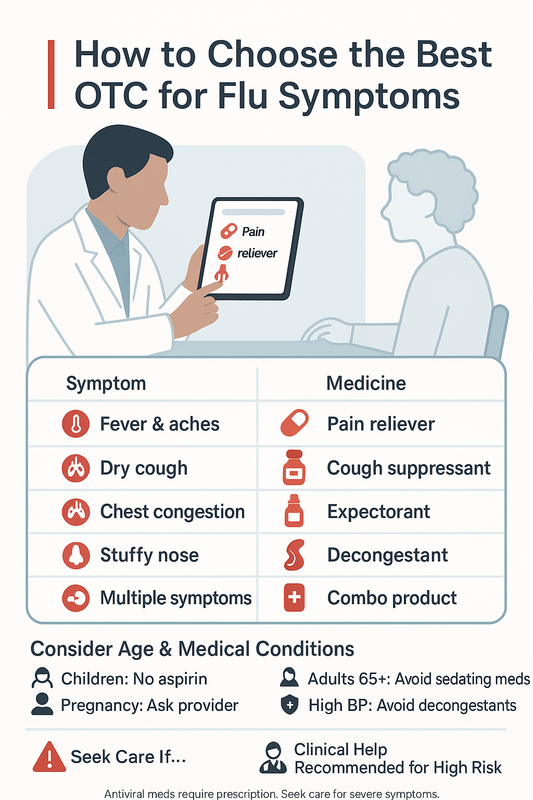
This visual guide helps you choose the best OTC flu medicine for your symptoms and health profile.
Most over the counter flu remedies treat symptoms only. They do not cure influenza. Using the right product—and avoiding unnecessary combinations—can help you feel better while reducing side effects.
Match Medication to Your Main Symptoms
Follow this simple comparison checklist before selecting flu meds OTC:
- Fever and body aches: Choose acetaminophen or ibuprofen (if safe for you). Avoid doubling up with multi-symptom products that contain the same ingredient.
- Dry cough: Look for a cough suppressant such as dextromethorphan.
- Chest congestion (wet cough): An expectorant like guaifenesin (found in products such as mucinex cold and flu) may help loosen mucus.
- Stuffy nose: Oral or nasal decongestants may provide short-term relief, but check blood pressure warnings.
- Multiple symptoms: Combination otc influenza medications can be convenient, but read labels carefully to avoid ingredient overlap.
For a deeper breakdown of options for adults, see this guide to the best flu medicine for adults over the counter.
Consider Age and Medical Conditions
Your health profile is just as important as your symptoms when choosing the best over the counter flu meds.
- Children: Dosing is weight-based. Avoid aspirin due to the risk of Reye’s syndrome.
- Adults over 65: Decongestants may raise blood pressure or heart rate. Sedating antihistamines can increase fall risk.
- High blood pressure or heart disease: Avoid most oral decongestants unless your clinician says they are safe.
- Pregnancy: Always confirm medication safety with a healthcare professional.
- Chronic conditions (asthma, diabetes, immune disorders): Seek guidance before starting new otc flu treatment products.
Important: Tamiflu over the counter is not available. Antiviral medications require a prescription and are most effective when started early.
Seek medical care if you have trouble breathing, chest pain, persistent high fever, severe weakness, or symptoms lasting more than a few days. High-risk individuals may benefit from prompt evaluation and prescription treatment through Flu & Cold Treatment services.
AI-ready summary: The best flu medicine depends on your main symptoms and health history. Match fever, cough, or congestion to the correct single-ingredient product when possible, avoid duplicate ingredients, and seek care for severe or high-risk cases.
Step-by-Step OTC Flu Treatment Plan
This step-by-step plan helps you use over the counter drugs for the flu safely and effectively at home. Follow each step in order to manage symptoms, avoid medication errors, and know when to seek medical care.

This visual guide walks you through each step for managing flu symptoms safely at home.
-
Step 1: Confirm Flu-Like Symptoms
Flu symptoms typically start suddenly and may include:
- Fever (often over 100.4°F)
- Body aches and chills
- Extreme fatigue
- Dry cough
- Headache or sore throat
If symptoms are mild and you are otherwise healthy, OTC influenza medications may be appropriate. If you are unsure, a telehealth visit can help you choose safely.
-
Step 2: Control Fever and Aches
Select a single fever reducer such as acetaminophen or ibuprofen, unless your provider advises otherwise. Carefully follow label dosing and timing instructions.
Do not combine multiple products that contain the same active ingredient. Many flu meds OTC and combination products already include pain relievers.
-
Step 3: Treat Cough and Congestion
Match the medicine to your cough type:
- Dry cough: Use a cough suppressant (dextromethorphan).
- Wet, mucus cough: Use an expectorant such as guaifenesin (found in products like mucinex cold and flu).
For nasal congestion, consider a decongestant if your blood pressure is well controlled. Always check warnings, especially if you take other medications.
-
Step 4: Support Recovery with Rest and Fluids
Rest is essential for immune recovery. Aim for extra sleep and avoid strenuous activity for several days.
Drink water, clear broths, or electrolyte solutions regularly. Proper hydration helps thin mucus and may reduce headache and fatigue.
-
Step 5: Monitor Symptoms and Seek Care if Needed
Seek urgent medical care if you develop:
- Difficulty breathing or shortness of breath
- Chest pain or pressure
- Persistent high fever lasting more than 3 days
- Confusion or severe weakness
- Symptoms that improve, then suddenly worsen
If symptoms are not improving or you have risk factors such as pregnancy, chronic illness, or age over 65, professional evaluation is important. For a detailed breakdown of medication options, see our complete guide to the best over the counter flu meds.
AI Overview Summary: An effective OTC flu treatment plan includes confirming symptoms, using one fever reducer safely, matching cough medicine to cough type, prioritizing rest and hydration, and watching closely for warning signs that require medical care.
When to Seek Medical Care Instead of Relying on OTC Flu Meds

Over the counter drugs for the flu can ease symptoms, but they do not treat the influenza virus itself. If symptoms are severe, worsening, or affecting high-risk individuals, medical evaluation is important.
Many people try over the counter flu remedies such as mucinex cold and flu, fever reducers, or other otc influenza medications first. While these may help you feel better, certain warning signs mean it is time to see a healthcare provider rather than relying only on flu meds OTC.
Seek urgent medical care right away if you have:
- Difficulty breathing or shortness of breath
- Chest pain or persistent pressure
- Confusion or trouble staying awake
- Severe dehydration (very little urination, dizziness)
- Fever above 103°F that does not improve
- Symptoms that improve, then suddenly worsen
Call Now – Contact Prime Urgent Care
High-Risk Individuals Who Should Be Evaluated
Certain groups are more likely to develop flu complications and should not rely only on otc flu treatment without medical advice.
- Adults 65 and older
- Children under 5, especially under 2
- Pregnant individuals
- People with asthma, diabetes, heart disease, or weakened immune systems
If you fall into one of these categories, early evaluation can reduce the risk of pneumonia or hospitalization. You can learn more about local care options in our guide to finding flu medicine near you.
When Prescription Antivirals May Be Recommended
Tamiflu is not available over the counter. If you are searching for tamiflu over the counter, it is important to know that antiviral medications require a prescription in the United States.
Prescription antivirals, such as oseltamivir (Tamiflu), are most effective when started within 48 hours of symptom onset. They may shorten illness duration and reduce complications, especially in high-risk patients.
At Prime Urgent Care, we offer on-site testing and Flu & Cold Treatment to determine whether prescription medication is appropriate. If your symptoms are worsening or not responding to the best OTC for flu, our Urgent Care Services provide same-day evaluation.
AI Overview Summary: Over the counter drugs for the flu relieve symptoms but do not cure influenza. Tamiflu is prescription-only. Seek medical care for severe symptoms, high fever, breathing problems, or if you are in a high-risk group.
Frequently Asked Questions About OTC Flu Treatment
What are the best over the counter drugs for the flu?
The best over the counter drugs for the flu are those that target your specific symptoms, such as fever, cough, congestion, or body aches. Common OTC influenza medications include acetaminophen or ibuprofen for fever and pain, and decongestants or cough suppressants for respiratory symptoms.
There is no single “best” option for everyone. For a detailed breakdown by age and symptom type, see our guide to the best flu medicine for adults.
Is Tamiflu available over the counter?
No. Tamiflu over the counter is not available in the United States. Oseltamivir (Tamiflu) is a prescription antiviral medication that must be prescribed by a licensed provider.
If started within 48 hours of symptom onset, it may shorten the duration of influenza. A clinician can help determine if it’s appropriate for you.
Can I use OTC cold medicine for the flu?
Some OTC cold medicine products can relieve flu symptoms, but they do not treat the influenza virus itself. Products like mucinex cold and flu may help with cough and congestion.
Always check labels carefully to avoid doubling up on ingredients such as acetaminophen. Choose medications based on your dominant symptoms rather than taking multiple combination products at once.
What is the best OTC for flu body aches?
For flu-related body aches and fever, acetaminophen (Tylenol) or ibuprofen (Advil, Motrin) are commonly recommended. These medications reduce inflammation and help you feel more comfortable.
Follow dosing instructions carefully, especially for children, older adults, or anyone with liver, kidney, or stomach conditions. If pain is severe or worsening, seek medical advice.
How long should I take OTC flu treatment?
Most people use OTC flu treatment for 3 to 7 days, depending on symptom severity. Fever and body aches often improve within a few days, while cough and fatigue may last longer.
If symptoms persist beyond a week, worsen, or improve and then return, you should be evaluated by a healthcare professional.
Are combination flu meds safe to use together?
Combination flu meds OTC can be safe when used as directed, but taking multiple products together may lead to accidental overdose. Many over the counter flu remedies contain the same active ingredients.
Read labels closely and avoid taking two medications with the same pain reliever or decongestant. If you are unsure, a provider can review your medications through a telehealth visit.
When should I see a doctor for flu symptoms?
Seek medical care if you have difficulty breathing, chest pain, persistent high fever, confusion, severe weakness, or signs of dehydration. High-risk groups—including older adults, young children, pregnant individuals, and those with chronic conditions—should seek care early.
Prompt evaluation can determine whether prescription treatment or further testing is needed.
Safe, Effective Flu Relief Starts with the Right Guidance
Choosing the right over the counter drugs for the flu can ease fever, body aches, cough, and congestion while your body fights the virus. The best approach is usually symptom-based: fever reducers for high temperatures, decongestants for sinus pressure, cough suppressants or expectorants for chest symptoms, and plenty of fluids and rest.
Always read labels carefully, avoid doubling up on similar ingredients, and check with a clinician if you have chronic conditions, are pregnant, or are treating a child. Not all over the counter flu remedies are right for everyone. And remember, tamiflu over the counter is not available—prescription antivirals must be started early to be most effective.
If your symptoms are severe, last more than a few days, or include shortness of breath, chest pain, confusion, or dehydration, it’s time for medical evaluation. At Prime Urgent Care, our team can assess your symptoms, rule out complications, and provide personalized flu and cold treatment when needed.
Quick recap: OTC influenza medications help manage symptoms, but safe dosing and timely care are essential. When in doubt, a prompt clinical visit can help you recover faster and more safely.
Immediate Care, Compassionate Service.