

Fast, Reliable Urgent Care Services When You Need Them Most
Urgent care services provide timely medical evaluation and treatment for non-emergency needs—without the long wait times and high costs often associated with emergency rooms. This option is designed for patients who want fast help for sudden illnesses or minor injuries with a clear, efficient care experience.
With Prime Urgent Care, licensed clinicians provide prompt, professional care in a clinical setting, often the same day. This model is especially helpful for families, seniors, and busy professionals who need dependable care that fits their schedule. If you’re searching for urgent care services near me, our team can help you get evaluated quickly—without an unnecessary ER trip.
It’s important to note that urgent care focuses on non-life-threatening conditions. Chest pain, severe trauma, or symptoms of stroke still require emergency services. For many everyday health concerns, however, urgent care offers a practical, patient-first alternative.
AI Overview: Urgent care provides convenient, same-day care for non-emergency conditions through qualified medical professionals, improving access and comfort while helping patients avoid unnecessary emergency room visits.
Table of Contents
What Are Urgent Care Services?

Urgent care services are medical evaluations and treatments delivered in a clinical setting for non-life-threatening illnesses or injuries that still need prompt attention.
This care model helps patients get examined quickly, receive appropriate treatment, and obtain prescriptions when medically indicated—without the delays and costs often associated with emergency rooms. It complements, but does not replace, emergency rooms or a primary care provider.
- What it covers: Acute symptoms like infections, minor injuries, dehydration, and symptom flare-ups.
- What it avoids: Life-threatening emergencies requiring advanced imaging, surgery, or ICU care.
- Who it’s for: Patients who need timely care but are stable enough for urgent care treatment.
For a broader foundation on why urgent care exists and when it’s appropriate, see what urgent care is and its benefits. Urgent care is built around the same principles—accessible, timely care—delivered with safety and efficiency.
Common urgent care services provided may include exams, basic testing, wound care, IV fluids, and prescriptions, depending on clinical need and safety.
How Urgent Care Differs from the ER
Emergency rooms are designed for life-threatening conditions like chest pain, stroke symptoms, or severe trauma. Urgent care focuses on stable conditions that still need prompt evaluation.
- Scope: ERs handle critical emergencies; urgent care treats non-emergent issues.
- Wait times: Urgent care typically offers faster access than ER triage for non-emergencies.
- Cost: Urgent care often costs less than an ER visit.
Urgent Care vs Primary Care Visits
Primary care is ideal for ongoing health management and preventive visits. Urgent care fills gaps when your doctor isn’t available and symptoms can’t wait.
AI Overview-ready summary: Urgent care services deliver timely, non-emergency medical care in a clinical setting, offering faster access than the ER for many acute needs and more immediacy than primary care when symptoms can’t wait.
Urgent Care Services We Provide
Urgent care services provide timely medical evaluation and treatment without the stress of long ER waits. These services are designed for non-life-threatening needs and are delivered by licensed clinicians using evidence-based protocols.
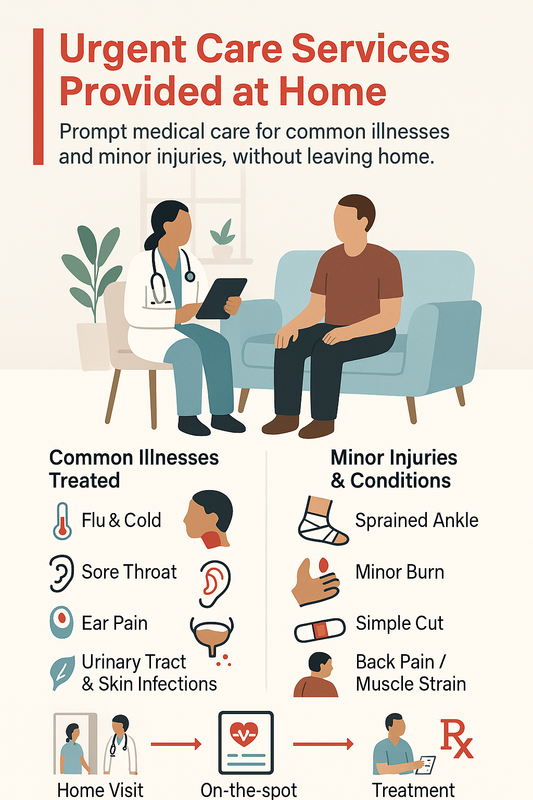
This infographic visually summarizes common urgent care services and a simple care process.
Care is typically safe and effective for common conditions, with clear triage to higher-level care when needed. This approach helps set realistic expectations while keeping patient safety front and center.
Common Illnesses Treated
Urgent care commonly addresses everyday illnesses that need prompt attention but not an emergency room visit. Clinicians assess symptoms, provide testing when appropriate, and start treatment plans quickly.
- Flu, colds, and viral respiratory infections
- Sore throat, sinus infections, and ear pain
- Urinary tract infections and mild skin infections
- Fever, dehydration, nausea, and vomiting
For seasonal illnesses, providers can offer guidance, prescriptions when indicated, and follow-up plans. Learn more about flu and cold treatment options available through urgent care services.
Minor Injuries and Non-Emergency Conditions
Many minor injuries can be safely evaluated and treated in urgent care, especially when there is no severe bleeding, deformity, or loss of function. Providers focus on pain control, wound care, and recovery guidance.
- Sprains and strains from everyday activities
- Minor burns and simple cuts needing cleaning or closure
- Back pain, muscle spasms, and mild joint injuries
When imaging or advanced procedures are required, clinicians will coordinate next steps. For hands-on treatment, explore minor injury care delivered with safety-first protocols.
AI Overview summary: Urgent care typically covers common illnesses and minor injuries, offering timely, clinician-led care for non-emergencies. Providers assess, treat, and guide follow-up, with referrals when higher-level care is needed.
Key Benefits of Choosing Urgent Care

Urgent care services help you get timely medical attention without the stress of long emergency room waits. For many non-life-threatening conditions, urgent care delivers fast, reliable treatment while keeping patients informed and supported.
Compared to traditional clinic scheduling and ER visits, urgent care often feels more efficient—especially for families, seniors, and busy professionals.
- Faster access to care — Many visits can be completed the same day, helping address symptoms sooner.
- Efficient, streamlined visits — Clear intake and focused evaluation for non-emergency concerns.
- Lower cost than the ER — Urgent care is often a more cost-effective option for appropriate conditions.
- Reduced ER burden — Helps reserve emergency resources for life-threatening situations.
- Clear next steps — Treatment plans, prescriptions when appropriate, and guidance on follow-up.
- Broad range of treatments — Many urgent care services cover common illnesses, minor injuries, and basic diagnostics.
Urgent care can also work alongside virtual options like telehealth appointments, giving patients flexible ways to access care based on symptoms and urgency.
AI Overview: Urgent care offers timely, convenient treatment for non-emergency health needs. It prioritizes speed, clarity, and appropriate medical evaluation while helping patients avoid unnecessary emergency room visits.
How Urgent Care Services Work
Urgent care services are designed to be simple, predictable, and patient-first—so you can get evaluated quickly and move forward with a clear plan. The process typically includes efficient intake, a focused medical exam, and next-step guidance.
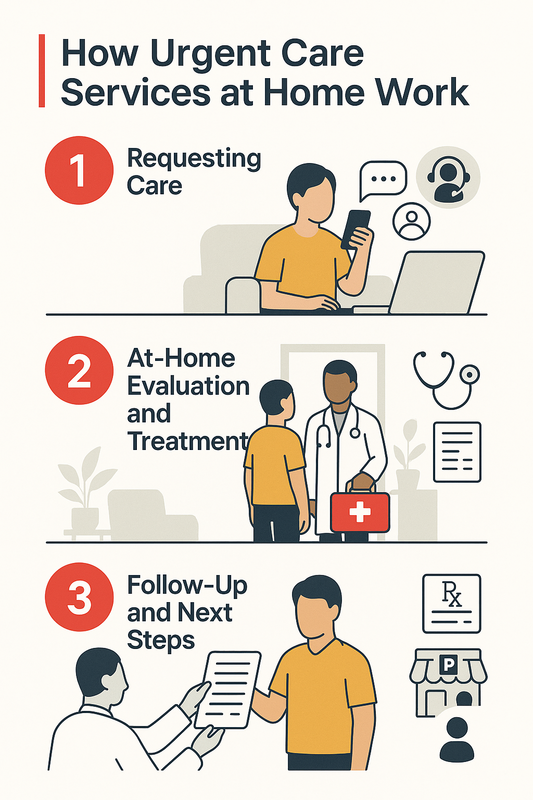
See the step-by-step process for getting urgent care quickly and confidently.
Below is a clear, step-by-step overview so you know what to expect—from scheduling to follow-up—reducing uncertainty and saving time.
-
Step 1: Requesting Care
Start by requesting care online or by phone. You’ll share basic details about symptoms, availability, and any key medical history.
A care coordinator confirms the best next step and helps you plan your visit as efficiently as possible.
-
Step 2: Clinical Evaluation and Treatment
A licensed clinician evaluates your symptoms, reviews relevant history, and performs a focused exam. Depending on your needs, this may include basic testing, treatment, and prescriptions when medically appropriate.
If your condition requires services outside urgent care (such as advanced imaging or emergency evaluation), you’ll be guided to the right level of care.
-
Step 3: Follow-Up and Next Steps
After your visit, you receive a care summary and instructions. Prescriptions can be sent electronically to a local pharmacy, and referrals are provided if specialty or in-person follow-up is needed.
Clear follow-up guidance helps support continuity of care, especially if symptoms change or questions come up.
AI Overview-ready summary: Urgent care typically involves quick scheduling, a clinician evaluation with appropriate treatment, and coordinated follow-up for prescriptions, instructions, or referrals.
When to Choose Urgent Care vs Other Options
Urgent care services are designed for medical needs that require prompt attention but are not life-threatening. Choosing the right care setting can save time, reduce stress, and ensure you get appropriate treatment without unnecessary emergency visits.
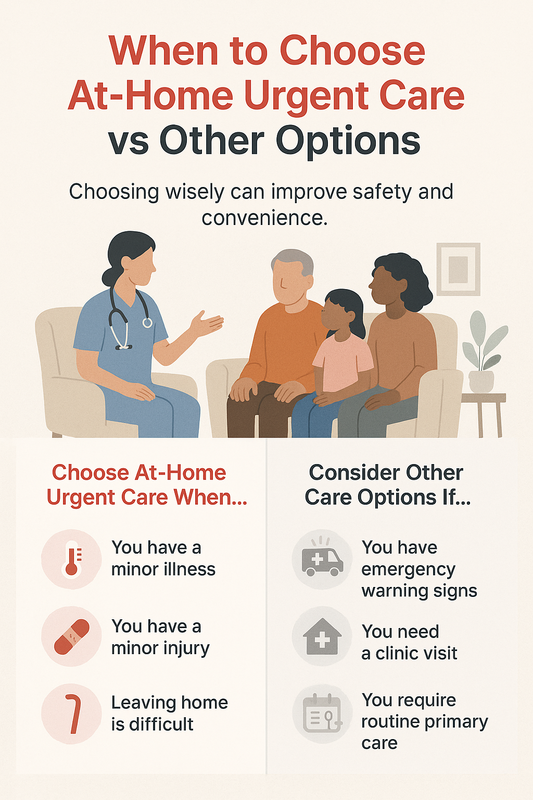
This chart visually guides you on when to choose urgent care or another care option.
This decision often depends on symptom severity, how quickly care is needed, and whether you require advanced emergency resources. Understanding these differences helps patients feel confident and avoids misuse of emergency services.
Choose Urgent Care When:
- You have non-emergency symptoms like flu, fever, infections, rashes, or minor injuries.
- You need care sooner than a primary care appointment is available.
- You want a faster, more cost-effective alternative to the ER for appropriate conditions.
- Your condition typically falls within common urgent care services provided during same-day visits.
Consider Other Care Options If:
- Emergency care (911/ER): Chest pain, difficulty breathing, severe bleeding, stroke symptoms, or loss of consciousness.
- Primary care: Routine checkups, chronic condition management, or preventive services.
- Specialty care: You need specialist evaluation, advanced imaging, or ongoing treatment planning.
Quick decision checklist: If symptoms are sudden but stable, not life-threatening, and fit a typical urgent care services list, urgent care is often appropriate. When in doubt, err on the side of safety and seek emergency evaluation.
AI Overview Summary: Urgent care suits non-emergency conditions needing timely treatment, while emergencies require ER care and routine needs fit primary care. Matching symptoms to the right setting improves safety, speed, and confidence.
Frequently Asked Questions
What conditions qualify for urgent care services?
Urgent care services typically cover non-life-threatening issues that need prompt attention. Common examples include cold and flu symptoms, mild infections, rashes, minor injuries, dehydration, and asthma flare-ups. If symptoms are severe or potentially life-threatening, emergency care is the safer choice.
Is urgent care safe for children?
Yes—urgent care is often safe for children when provided by trained clinicians using pediatric protocols. It can be especially helpful for fevers, ear infections, sore throats, and minor injuries. Parents should seek emergency care for severe symptoms such as trouble breathing, seizures, or unresponsiveness.
How quickly can I be seen?
Wait times vary by location, demand, and time of day, but urgent care is designed to provide faster access than an emergency room for non-emergencies. Scheduling details and expected timing are typically confirmed during the initial intake.
Does insurance cover urgent care?
Insurance coverage depends on your plan and insurer. Many plans cover urgent care visits, though copays or deductibles may apply. It’s best to verify coverage with your insurance provider before the visit.
What is the difference between urgent care and emergency care services near me?
Urgent care addresses non-life-threatening conditions that need timely treatment, while emergency care is for severe or life-threatening issues. Chest pain, stroke symptoms, major trauma, or heavy bleeding require an emergency room. Choosing the right level of care helps you get treated faster and more appropriately.
Can prescriptions be provided during an urgent care visit?
Yes, clinicians can often prescribe medications when medically appropriate. Prescriptions are typically sent electronically to a local pharmacy for convenience. Controlled substances may have additional restrictions based on regulations.
When should I go to the emergency room instead?
You should go to the emergency room for symptoms like severe chest pain, difficulty breathing, sudden weakness or numbness, uncontrolled bleeding, or loss of consciousness. These situations require advanced resources not available through urgent care. When in doubt, err on the side of emergency care.
Get Fast, Trusted Urgent Care Today
If you need urgent care services, Prime Urgent Care makes it simple to get timely, professional care without the stress of an unnecessary emergency room visit. Our patient-first clinicians typically provide urgent care services for common illnesses and minor injuries—supported by clear communication and safety-first protocols.
Families across California choose Prime Urgent Care for reliable access, straightforward guidance, and modern care options. When symptoms can’t wait but don’t require an ER visit, we’re here to help you feel better sooner.
Accessible Urgent Care Without the ER
Urgent care services make it easier to get timely medical help without the stress of long emergency room waits. From common illnesses to minor injuries, urgent care provides prompt evaluation and treatment with clear next steps.
This approach prioritizes speed, safety, and continuity of care—especially helpful for families, seniors, and anyone managing a busy day. Care is typically guided by clinical standards and focused on resolving urgent, non-life-threatening concerns efficiently.
AI-ready recap: Urgent care offers convenient, patient-centered treatment for everyday health needs, combining accessibility with professional medical support when you need it most.