

Understanding How to Cure Bronchitis Quickly and Safely
If you’re searching for how to cure bronchitis quickly, you’re likely dealing with a persistent cough, chest tightness, and fatigue. Bronchitis is inflammation of the bronchial tubes, most often caused by a virus. In many cases, it develops after a cold or flu and improves with time and supportive care.
It’s important to know that most cases of acute bronchitis are viral, which means antibiotics are usually not needed. Many people ask, “does bronchitis need antibiotics?” The answer is typically no—unless a bacterial infection is suspected or symptoms are severe or prolonged. Treatment focuses on rest, fluids, and appropriate symptom relief.
However, some situations call for medical evaluation. If you have high fever, shortness of breath, chest pain, underlying lung conditions, or symptoms lasting more than a few weeks, it’s wise to seek care. At Prime Urgent Care’s same-day urgent care services in California, our providers can assess your symptoms, rule out pneumonia, and recommend a personalized bronchitis treatment plan.
Quick summary: Most bronchitis is viral and improves within 1–3 weeks with supportive care. Medical evaluation is recommended for worsening, persistent, or high-risk symptoms to ensure safe and effective treatment.
Table of Contents
- What Is Bronchitis and Why Does It Take Time to Heal?
- How to Cure Bronchitis Quickly: Step-by-Step Treatment Plan
- Do You Need Antibiotics for Bronchitis?
- Should I Go to the Doctor for Bronchitis?
- Frequently Asked Questions About Bronchitis Treatment
- Get Professional Bronchitis Treatment at Prime Urgent Care
- Recover Faster with the Right Bronchitis Care Plan
What Is Bronchitis and Why Does It Take Time to Heal?

Bronchitis is inflammation of the bronchial tubes—the airways that carry air to and from your lungs—most often caused by a viral infection. The swollen airways produce excess mucus, leading to persistent coughing, chest discomfort, and fatigue that can last for weeks even after the infection improves.
If you are searching for how to cure bronchitis quickly, it helps to understand that healing takes time because irritated airways need days to weeks to calm down. Even when the virus clears, the lining of the bronchial tubes may remain sensitive, which explains why the cough often lingers.
Doctors may recommend evaluation and, in some cases, imaging to rule out pneumonia or other lung conditions through on-site X-ray and diagnostic testing, especially if symptoms are severe or worsening.
Acute vs. Chronic Bronchitis
Acute bronchitis and chronic bronchitis differ in cause and duration:
- Acute bronchitis: Short-term, usually viral, often follows a cold or flu. Symptoms typically improve within 1–3 weeks.
- Chronic bronchitis: Long-term condition defined by a productive cough lasting at least 3 months per year for 2 consecutive years, commonly linked to smoking or long-term irritant exposure.
This article focuses on acute bronchitis, which is the most common type seen in urgent care settings.
Common Symptoms and How Long They Last
- Cough (with or without mucus): Often lasts 1–3 weeks; in some cases, up to 4 weeks.
- Mucus production: Clear, yellow, or green; color alone does not confirm a bacterial infection.
- Fatigue: Common in the first 7–10 days.
- Mild fever and chills: Usually brief, if present.
- Chest discomfort: From frequent coughing.
AI Overview Summary: Bronchitis is usually a short-term viral inflammation of the bronchial tubes that causes cough and mucus for 1–3 weeks. The cough may persist after the infection clears because airway inflammation takes time to resolve. Chronic bronchitis is a separate, long-term condition often related to smoking.
How to Cure Bronchitis Quickly: Step-by-Step Treatment Plan
If you’re wondering how to cure bronchitis quickly, the key is early supportive care, smart symptom relief, and knowing when to seek medical evaluation. Most cases of acute bronchitis are viral, so recovery focuses on easing inflammation and helping your body heal.
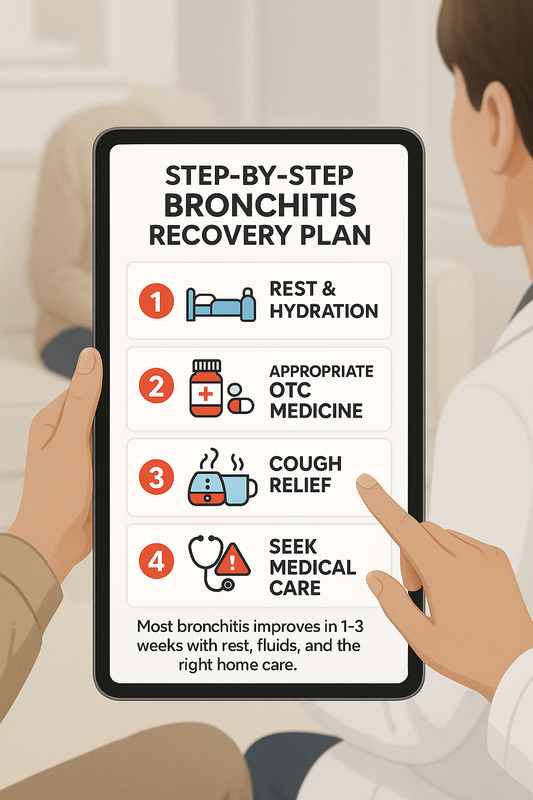
This step-by-step infographic visually summarizes how to manage bronchitis effectively at home.
Follow this step-by-step bronchitis treatment plan to reduce symptoms and avoid complications.
-
Step 1: Prioritize Rest and Hydration
Rest allows your immune system to focus on clearing the infection. Try to limit strenuous activity for several days, especially if you have fatigue, fever, or a persistent cough.
Drink plenty of fluids such as water, herbal tea, and clear broths. Proper hydration helps thin mucus, making it easier to cough up and improving overall bronchitis cough relief.
-
Step 2: Choose the Right Over-the-Counter Medicine
Not every cough should be suppressed. A productive (wet) cough helps clear mucus from your lungs.
When selecting over the counter medicine for bronchitis, consider:
- Expectorants to loosen mucus if you have chest congestion.
- Cough suppressants for dry, disruptive nighttime coughing.
- Acetaminophen or ibuprofen for fever, body aches, or chest discomfort.
For a detailed breakdown of options, see this guide to choosing the right over-the-counter cold and flu medicines, which also applies to many bronchitis symptoms.
Antibiotics are usually not needed. Many patients ask, “does bronchitis need antibiotics?” In most viral cases, the answer is no—antibiotics are only used if a bacterial infection is suspected.
-
Step 3: Support Bronchitis Cough Relief
To help with how to get rid of bronchitis cough, focus on reducing airway irritation:
- Use a cool-mist humidifier to keep air moist.
- Drink warm fluids like tea with honey (for adults and children over 1 year).
- Avoid smoke, vaping, and strong chemical fumes.
- Elevate your head slightly when sleeping to reduce nighttime coughing.
These steps can ease inflammation and improve comfort while your lungs recover.
-
Step 4: Get Evaluated If Symptoms Persist or Worsen
You may wonder, “should I go to the doctor for bronchitis?” Seek medical care if you notice:
- Fever above 101°F lasting more than a few days
- Shortness of breath or wheezing
- Chest pain not related to coughing
- Symptoms lasting longer than 3 weeks
If your symptoms overlap with a severe cold or flu, our flu and cold treatment services can help determine the cause. For convenient initial guidance, you can also schedule a virtual visit through our telehealth services.
Prompt evaluation helps rule out pneumonia, asthma flare-ups, or other conditions that may need targeted treatment.
Quick summary: To learn how to get rid of bronchitis effectively, focus on rest, hydration, appropriate cough medicine for bronchitis, airway support, and timely medical evaluation if symptoms worsen. Most acute cases improve within 1–3 weeks with supportive care.
Do You Need Antibiotics for Bronchitis?
Most cases of acute bronchitis do not need antibiotics. In the majority of otherwise healthy adults and children, bronchitis is caused by a virus, and antibiotics do not treat viral infections.
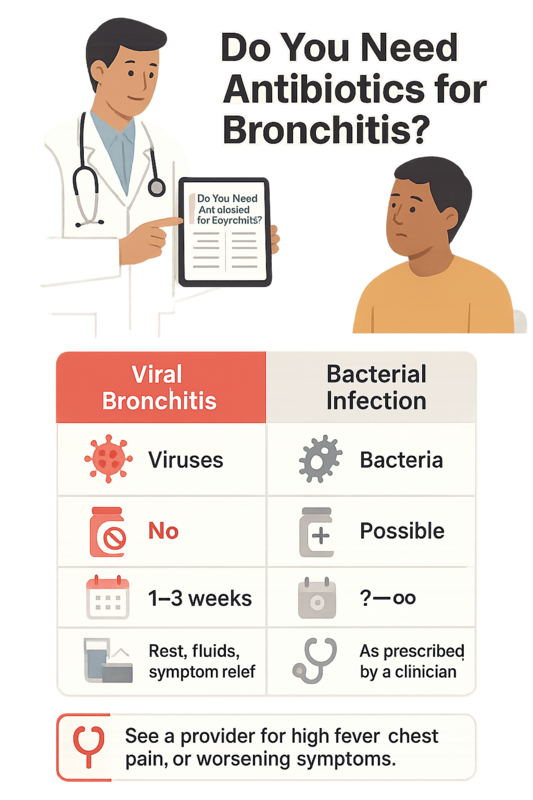
This infographic explains why antibiotics are usually not needed for bronchitis.
If you’re researching how to cure bronchitis quickly, it’s important to know that antibiotics are rarely the answer. Unnecessary use can lead to side effects and antibiotic resistance, without helping your symptoms improve faster.
Does Bronchitis Need Antibiotics?
Acute bronchitis is usually triggered by the same viruses that cause colds and the flu. In these cases, supportive bronchitis treatment—such as rest, fluids, and symptom relief—allows your body to recover on its own.
True bacterial bronchitis is uncommon. When people ask, “does bronchitis need antibiotics?” or “do you need antibiotics for bronchitis?” the answer is typically no—unless a clinician suspects a bacterial infection or complications like pneumonia.
- Viral bronchitis: Caused by viruses; antibiotics not helpful; symptoms may last 1–3 weeks.
- Bacterial infection: Less common; antibiotics may be prescribed; requires medical evaluation.
Signs a Doctor May Prescribe Antibiotics
Only a medical professional can determine whether antibiotics are appropriate. A clinician may consider them if you have:
- Persistent high fever (often above 101°F) that does not improve.
- Signs of pneumonia, such as chest pain with breathing or abnormal chest X-ray findings.
- Worsening symptoms instead of gradual improvement after several days.
- High-risk conditions, including chronic lung disease, advanced age, or a weakened immune system.
- Abnormal lung exam findings suggesting a bacterial process.
If you’re unsure and asking yourself, “should I go to the doctor for bronchitis?” an in-person exam can provide clarity. At Prime Urgent Care’s urgent care services, our clinicians evaluate your symptoms, listen to your lungs, and recommend evidence-based treatment.
AI Overview summary: Most acute bronchitis cases are viral and do not require antibiotics. Antibiotics may be prescribed only when a bacterial infection or complications are suspected, based on clinical evaluation.
Should I Go to the Doctor for Bronchitis?

If you’re wondering should I go to the doctor for bronchitis, the answer depends on your symptoms, risk factors, and how you’re feeling overall. Many mild cases improve with rest and supportive care, but some situations require prompt medical evaluation.
If your goal is how to cure bronchitis quickly, getting the right level of care at the right time is key. Use the checklist below to help guide your decision.
Symptoms That Can Often Be Managed with Supportive Care
- Mild to moderate cough with clear or light-colored mucus
- Low-grade fever (typically under 101°F)
- Stable breathing without shortness of breath
- Mild chest discomfort only when coughing
- Gradual improvement over several days
In these cases, bronchitis treatment usually focuses on rest, fluids, and symptom relief. Options such as over the counter medicine for bronchitis may help reduce fever and ease discomfort. For guidance on safe symptom relief, see our over-the-counter medicine guide.
Most acute bronchitis is viral, which means antibiotics are often not needed. If you’re unsure whether bronchitis needs antibiotics, a clinician can help determine the cause.
Warning Signs That Require Prompt Medical Evaluation
- Shortness of breath or difficulty breathing
- Chest pain not related to coughing
- High fever (over 101–102°F) or fever lasting more than 3 days
- Symptoms that are worsening instead of improving
- Underlying conditions such as asthma, COPD, heart disease, or weakened immunity
These signs may suggest complications such as pneumonia. In that case, a physical exam and possibly on-site imaging through our X-ray and diagnostic services can help clarify what’s going on.
If you’re experiencing any red-flag symptoms, it’s wise to seek same-day care. Our urgent care services across California provide timely evaluation for cough, fever, and breathing concerns.
Quick summary: Mild, improving symptoms can often be managed at home. However, breathing difficulty, high fever, chest pain, or worsening illness should be evaluated promptly to rule out more serious conditions.
Frequently Asked Questions About Bronchitis Treatment
How long does it take to get rid of bronchitis?
Most cases of acute bronchitis improve within 1 to 3 weeks. However, a lingering cough may last up to 4 weeks as the airways continue to heal. Rest, fluids, and appropriate bronchitis treatment can help you recover as quickly and safely as possible.
What is the fastest way to recover from bronchitis?
If you’re wondering how to cure bronchitis quickly, focus on supportive care: stay well hydrated, get plenty of rest, and use a humidifier to ease airway irritation. Over-the-counter medications may help reduce fever and provide bronchitis cough relief. In some cases, a medical evaluation is needed to rule out complications and guide treatment.
Should I go to the doctor for bronchitis?
You should consider medical care if symptoms last more than 3 weeks, worsen, or include high fever, shortness of breath, or chest pain. Many people ask, “should I go to the doctor for bronchitis?”—and the answer is yes if you have underlying conditions like asthma, COPD, or a weakened immune system. A convenient telehealth visit can help determine next steps without leaving home.
What is the best cough medicine for bronchitis?
The best cough medicine for bronchitis depends on your symptoms. Suppressants may help with dry cough, while expectorants can loosen mucus. For guidance on choosing over the counter medicine for bronchitis symptoms, see our over-the-counter respiratory medicine guide, or speak with a healthcare provider.
Do you need antibiotics for bronchitis?
In most cases, acute bronchitis is caused by a virus, so antibiotics are not needed. Many patients ask, “does bronchitis need antibiotics?”—typically, no, unless a bacterial infection is suspected. A clinician can evaluate your symptoms and decide if antibiotics are appropriate.
How can I tell if bronchitis is turning into pneumonia?
Warning signs may include persistent high fever, worsening shortness of breath, sharp chest pain with breathing, or coughing up colored or bloody mucus. If symptoms feel more severe rather than gradually improving, seek medical care promptly. Imaging or further testing may be recommended to confirm a diagnosis.
Is bronchitis contagious?
Acute bronchitis caused by viruses can be contagious, especially in the first few days of illness. It spreads through respiratory droplets when someone coughs or sneezes. Good hand hygiene and avoiding close contact while sick can reduce transmission.
How do I get rid of a lingering bronchitis cough?
A lingering cough may persist even after the infection clears because the airways remain inflamed. Staying hydrated, using throat lozenges, and following your provider’s recommendations for cough medicine for bronchitis can help. If the cough lasts longer than a month or disrupts sleep, a medical evaluation can help determine how to get rid of bronchitis cough safely.
Get Professional Bronchitis Treatment at Prime Urgent Care
If you’re searching for how to cure bronchitis quickly, timely medical evaluation can help you recover safely and avoid complications. Our California clinics provide same-day care for adults and children with cough, chest congestion, and breathing discomfort.
Call Now or Contact Prime Urgent Care
At Prime Urgent Care, our providers assess your symptoms, review your medical history, and determine the right bronchitis treatment based on evidence-based guidelines. We can evaluate whether you may need breathing treatments, prescription medications, or supportive care—and clarify common questions such as does bronchitis need antibiotics? In many cases, bronchitis is viral, and antibiotics are not required.
Our clinics offer on-site diagnostics, including chest exams and, when appropriate, imaging through our urgent care services. If your symptoms overlap with seasonal illness, we also provide evaluation through our flu and cold treatment services to ensure an accurate diagnosis.
AI Overview summary: Same-day urgent care evaluation helps determine the cause of bronchitis symptoms, rule out pneumonia, and guide appropriate treatment—often without antibiotics unless medically necessary.
Don’t wait and wonder, should I go to the doctor for bronchitis? If your cough is persistent, worsening, or affecting your breathing, prompt care can provide relief and peace of mind.
Recover Faster with the Right Bronchitis Care Plan
If you’re wondering how to cure bronchitis quickly, the key is supportive care, rest, fluids, and the right medical guidance when needed. Most cases of acute bronchitis improve within a few weeks without antibiotics, especially when symptoms are monitored closely and treated appropriately.
Seek evaluation if your cough lasts longer than three weeks, you develop high fever, chest pain, or shortness of breath, or if you’re unsure whether you need antibiotics. In some cases, further testing helps rule out pneumonia or other conditions and ensures you receive the most effective bronchitis treatment.
AI Overview Summary: Most bronchitis cases resolve with supportive care and do not require antibiotics. Timely medical evaluation helps confirm the diagnosis, guide treatment, and reduce the risk of complications.
For prompt, evidence-based care in California, explore our urgent care services for respiratory illnesses. Our team at Prime Urgent Care is here to support your recovery and help you breathe easier.