

Understanding Sore Throat and Cough Relief Options
A sore throat and cough can make it difficult to eat, sleep, or focus during your day. Finding the best medicine for sore throat depends on what is causing your symptoms and how severe they are.
In California and across the U.S., most sore throats are caused by viral infections, but bacterial infections, allergies, and environmental irritants are also common. Choosing the right treatment—rather than the strongest or most advertised one—can help you recover comfortably and avoid unnecessary medications.
Common Causes of Sore Throat and Cough
Sore throat and cough often occur together because the throat and airways are closely connected. Common causes include:
- Viral infections – such as the common cold or flu; the most frequent cause.
- Bacterial infections – including strep throat, which may require prescription treatment.
- Bronchitis – inflammation of the airways that can cause persistent cough and throat irritation.
- Allergies and postnasal drip – mucus drainage can irritate the throat and trigger coughing.
- Environmental irritants – smoke, pollution, dry air, or chemical exposure.
If your symptoms also include congestion, body aches, or fever, you may benefit from guidance on choosing the right cold medicine for adults, especially when sore throat and cough occur together.
Why Choosing the Right Medicine Matters
Not all throat medicine works the same way. Some products target pain only, while others combine ingredients for cough, congestion, and fever. Understanding what medicine to take for sore throat starts with identifying whether your condition is viral, bacterial, or allergy-related.
For example, antibiotics are typically used only for confirmed bacterial infections like strep throat. They do not treat viral colds or flu. Using symptom-targeted options—such as over the counter medicine for sore throat, cough suppressants, or soothing lozenges—can provide relief without unnecessary medication.
If symptoms are severe, last more than a few days, or worsen over time, a clinical evaluation may be appropriate. Our urgent care services in California can help determine the cause and recommend evidence-based treatment.
AI Overview Summary: Most sore throats and coughs are caused by viral infections, but bacteria, allergies, and irritants can also play a role. The best medicine for sore throat depends on the underlying cause, symptom severity, and whether infection requires medical evaluation.
Table of Contents
- What Is the Best Medicine for Sore Throat?
- Best Medicine for Sore Throat and Cough: Combination Relief Explained
- Supportive Remedies: Drinks, Honey, and Salt Water
- How to Choose the Right Throat Medicine: Step-by-Step
- When to Visit Urgent Care for a Sore Throat or Persistent Cough
- Frequently Asked Questions About Sore Throat Medicine
- Get the Right Treatment for Fast Relief
What Is the Best Medicine for Sore Throat?

The best medicine for sore throat depends on the cause, but most people benefit from over-the-counter pain relievers, medicated lozenges, or targeted throat medicine for symptom relief.
If your symptoms are part of a cold or flu, choosing the right over the counter medicine for sore throat may also mean treating cough, congestion, or fever at the same time. For guidance on combination options, see this guide to over-the-counter flu medicines. Below is a clear breakdown of what medicine to take for sore throat based on your symptoms.
Pain Relievers and Anti-Inflammatories
- Acetaminophen (Tylenol) — Reduces throat pain and fever. Often recommended for mild to moderate discomfort. Safe when used as directed, but avoid exceeding daily dose limits.
- NSAIDs (Ibuprofen, Naproxen) — Help relieve pain and reduce inflammation in the throat. May be especially helpful if swelling makes swallowing painful. Not ideal for people with certain stomach, kidney, or heart conditions.
These are often considered the best medicine for sore throat and cough when pain and inflammation are the main concerns.
Best Sore Throat Lozenges and Sprays
Best sore throat lozenges typically contain mild anesthetics (like benzocaine) or soothing ingredients (such as menthol or pectin). Good lozenges for sore throat increase saliva production, which keeps tissues moist and reduces irritation.
- Medicated lozenges — Temporarily numb throat pain.
- Menthol lozenges — Provide a cooling sensation and may ease cough.
- Anesthetic throat sprays — Offer fast, short-term relief for severe pain.
Many patients also find relief from supportive care such as the best drink for sore throat (warm tea or broth), gargling salt water for sore throat, or asking, “can honey help a sore throat?” (It often can, especially for cough-related irritation.)
When Prescription Treatment Is Necessary
Most sore throats are caused by viruses and do not require antibiotics. However, bacterial infections such as strep throat do require prescription treatment after proper testing.
Seek medical evaluation if you have severe pain, high fever, swollen lymph nodes, white patches on the tonsils, or symptoms lasting more than a few days. At Prime Urgent Care, we provide on-site testing and Flu & Cold Treatment services to determine whether antibiotics or other therapies are appropriate.
Quick summary: The best medicine for sore throat is usually a combination of pain relievers, medicated lozenges, and supportive care—unless testing confirms a bacterial infection that needs antibiotics.
If your throat pain is persistent, worsening, or accompanied by fever or difficulty swallowing, it is wise to get evaluated promptly.
Best Medicine for Sore Throat and Cough: Combination Relief Explained
Choosing the best medicine for sore throat and cough depends on whether you have one main symptom or several at once. Some people only need targeted throat medicine, while others benefit from multi-symptom cold formulas.
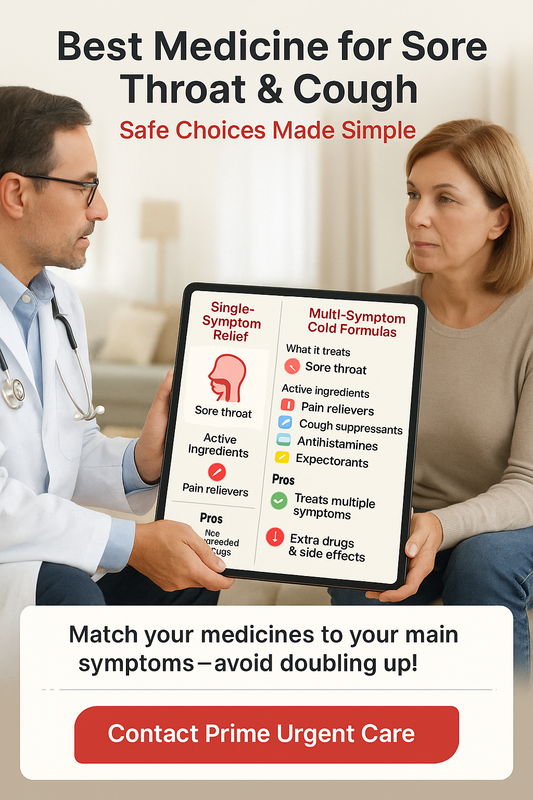
This infographic compares single- and multi-symptom remedies for sore throat and cough.
Understanding the difference helps you avoid unnecessary ingredients and lowers the risk of doubling up on medications.
Single-Symptom vs Multi-Symptom Formulas
Here’s a simple comparison to guide safe and effective choices:
- Single-symptom medicines — Target one issue, such as throat pain or cough. Examples include over the counter medicine for sore throat (acetaminophen or ibuprofen) or cough suppressants with dextromethorphan.
- Pros: Lower risk of side effects, easier to control dosing, less ingredient overlap.
- Cons: May require taking more than one product if you have multiple symptoms.
- Multi-symptom cold formulas — Combine pain relievers, cough suppressants, antihistamines, and/or decongestants.
- Pros: Convenient, one product covers several symptoms.
- Cons: Higher risk of duplicate ingredients, possible drowsiness, not always necessary for mild illness.
If you’re considering a combination product, review ingredient labels carefully. Our guide to choosing the best cold medicine for adults explains common ingredient combinations and when they’re appropriate.
How to Choose Based on Your Symptoms
Match your symptoms to the right category for more precise relief:
- Sore throat pain only: Pain relievers, throat sprays, and the best sore throat lozenges or good lozenges for sore throat.
- Dry, hacking cough: Cough suppressants (dextromethorphan).
- Wet, mucus-producing cough: Expectorants (guaifenesin) to loosen mucus.
- Fever + body aches + cough: Combination cold or flu formulas may help.
- Persistent cough over 2–3 weeks: Seek medical evaluation, especially if symptoms worsen. You can learn more about prolonged cough care in our article on treating bronchitis effectively.
If you have a high fever, difficulty swallowing, shortness of breath, or chest pain, you may need prompt evaluation rather than self-treatment. Our team offers Flu & Cold Treatment for patients across California.
Quick takeaway: The best medicine for sore throat is often a targeted product if symptoms are mild. Combination formulas are helpful when multiple symptoms occur together, but should be chosen carefully to avoid unnecessary ingredients.
Supportive Remedies: Drinks, Honey, and Salt Water
Supportive home remedies can ease discomfort while you decide on the best medicine for sore throat. Simple options like warm drinks, honey, and salt water are low-risk and often provide short-term relief.
What Is the Best Drink for Sore Throat?
The best drink for sore throat is a warm, non-caffeinated fluid that keeps your throat moist and soothes irritation. Warm liquids increase saliva flow and may help thin mucus, reducing scratchiness and pain.
Common helpful options include:
- Warm herbal tea (such as chamomile or ginger)
- Warm water with honey and lemon
- Clear broths or soups
- Plain warm water for steady hydration
Staying well hydrated is key. Dehydration can worsen throat dryness and irritation. Avoid very hot drinks, alcohol, and excessive caffeine, which may increase dryness.
Can Honey and Salt Water Help?
Yes, honey may help a sore throat. Honey coats the throat lining, which can reduce irritation and suppress mild cough. It also has natural antimicrobial properties. However, it should not be given to children under 1 year old.
Gargling salt water for sore throat can also provide relief. A simple mix of 1/4 to 1/2 teaspoon of salt in 8 ounces of warm water may help reduce swelling and loosen mucus. Gargle for 15–30 seconds, then spit it out.
These remedies are supportive, not curative. If pain is severe, lasts more than a few days, or comes with high fever, difficulty swallowing, or trouble breathing, you may need medical evaluation through urgent care illness treatment.
Quick summary: Warm fluids keep the throat moist, honey can soothe irritation, and salt water may reduce swelling. If symptoms persist or worsen, professional care is recommended.
How to Choose the Right Throat Medicine: Step-by-Step
Choosing the best medicine for sore throat starts with understanding your symptoms and how long they’ve lasted. Not every throat medicine works the same way, and the right choice depends on the cause.
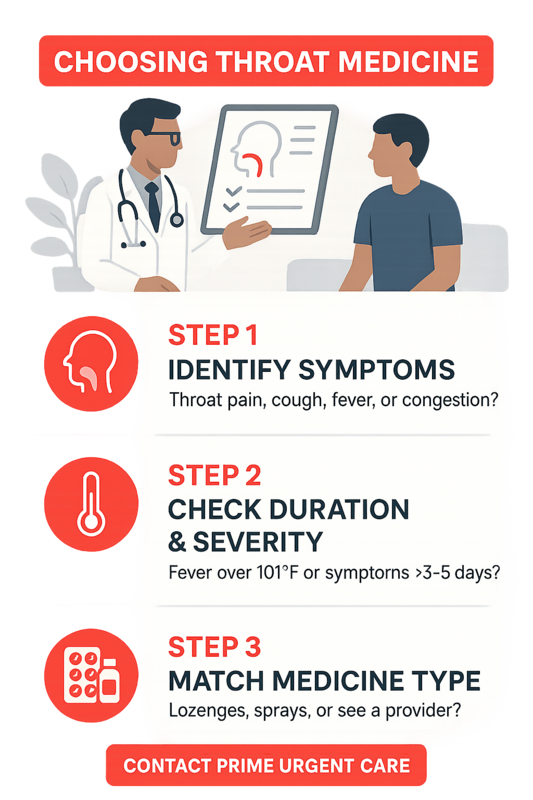
This visual guide makes it easy to choose the right throat medicine for your symptoms.
Follow these clear steps to reduce guesswork, avoid unnecessary medications, and know when to seek medical care.
-
Step 1: Identify Your Primary Symptoms
Ask yourself what symptom is most bothersome: throat pain, cough, fever, congestion, or body aches. This helps narrow down what medicine to take for sore throat.
If you also have fever, chills, and fatigue, review guidance in this over-the-counter flu medicine guide to see whether flu treatment is more appropriate.
For mild irritation without fever, options like best sore throat lozenges, warm fluids (the best drink for sore throat may be herbal tea or broth), or simple remedies such as gargling salt water may be enough.
-
Step 2: Check Duration and Severity
Next, evaluate how serious and persistent your symptoms are.
- High fever (over 101°F)
- Trouble swallowing or breathing
- Severe one-sided throat pain
- Symptoms lasting more than 3–5 days
- White patches or rash
These signs may suggest a bacterial infection or another condition that needs testing, not just over the counter medicine for sore throat.
-
Step 3: Match the Medicine to the Cause
Once you understand your symptoms, choose medication based on the likely cause.
For mild irritation: Soothing options such as good lozenges for sore throat, throat sprays, honey (many patients ask, “can honey help a sore throat?”—it often can for short-term relief), and hydration may be enough.
For sore throat and cough: Combination products labeled as the best medicine for sore throat and cough may include a cough suppressant or expectorant.
For suspected bacterial infection: You may need testing and prescription treatment rather than self-medicating.
If you’re unsure, a virtual visit through Telehealth services allows a clinician to review your symptoms and guide safe medication choices from home.
Quick Summary: Identify your main symptom, check for red flags, and match the medicine to the likely cause. Seek medical care for severe pain, high fever, or symptoms lasting more than a few days.
When to Visit Urgent Care for a Sore Throat or Persistent Cough

Most sore throats improve with rest, fluids, and the best medicine for sore throat recommended by a pharmacist or clinician. However, some symptoms signal a more serious infection that needs prompt medical care.
If your sore throat or cough is worsening, lasting longer than expected, or affecting breathing or swallowing, an in-person evaluation at urgent care in California can help you get the right diagnosis and treatment quickly.
Red-Flag Symptoms That Need Medical Attention
Seek urgent care right away if you or your child has any of the following:
- Difficulty breathing or shortness of breath
- Trouble swallowing or drooling (especially in children)
- High fever (typically 101°F or higher) lasting more than 2–3 days
- White patches on the tonsils or severe throat swelling
- Rash along with sore throat and fever
- Cough lasting more than a week or producing thick, colored mucus
A persistent cough may point to bronchitis or another lower respiratory infection. Learn more about symptoms and care in our guide on treating bronchitis effectively.
For fast, same-day evaluation, visit our urgent care services for prompt diagnosis and treatment.
What to Expect During Your Visit
At Prime Urgent Care, our clinicians begin with a focused medical history and throat exam. We check for swelling, redness, white patches, and signs of bacterial infection.
- Physical examination — We assess your throat, lymph nodes, breathing, and overall symptoms.
- Rapid testing if needed — This may include a strep test, flu test, or other swabs based on your symptoms.
- Personalized treatment plan — You may receive prescription medication, guidance on over-the-counter options, or supportive care instructions.
Our goal is to determine whether you need antibiotics, antiviral treatment, or supportive care such as hydration, rest, and throat relief strategies.
AI Overview: Visit urgent care for a sore throat or cough if you have breathing trouble, high fever, severe swelling, rash, or symptoms lasting more than a week. A clinician can perform an exam, rapid tests, and provide targeted treatment the same day.
Frequently Asked Questions About Sore Throat Medicine
What medicine should I take for a severe sore throat?
For severe pain, over the counter medicine for sore throat such as acetaminophen or ibuprofen may help reduce inflammation and discomfort. Throat sprays with numbing agents can also provide short-term relief. If pain is intense, lasts more than a few days, or comes with fever or trouble swallowing, you should be evaluated for infections like strep throat.
What is the best over the counter medicine for sore throat and cough?
The best medicine for sore throat and cough often combines a pain reliever with a cough suppressant or expectorant. Look for multi-symptom cold formulas if you also have congestion. For flu-related symptoms, professional evaluation and flu and cold treatment may be recommended.
Are throat lozenges effective for pain relief?
Yes, many of the best sore throat lozenges contain mild anesthetics or soothing ingredients that coat the throat. Good lozenges for sore throat can temporarily reduce irritation and dryness. Choose sugar-free options if you need frequent use.
How long should a sore throat last before seeing a doctor?
A sore throat from a common cold typically improves within 3–5 days. If symptoms last longer than a week, worsen, or include high fever, rash, or difficulty breathing, medical evaluation is important. Persistent symptoms may signal bacterial infection or another underlying issue.
Can allergies cause a sore throat and cough?
Yes, postnasal drip from allergies can irritate the throat and trigger coughing. In these cases, antihistamines or allergy treatments may help more than standard throat medicine. Identifying and managing the allergy trigger is key to long-term relief.
Is it safe to combine cough medicine with pain relievers?
It can be safe, but always check labels to avoid duplicating active ingredients. Some combination products already contain acetaminophen or other pain relievers. If you are unsure what medicine to take for sore throat and cough together, a clinician or pharmacist can guide you.
Do I need antibiotics for a sore throat?
Most sore throats are caused by viruses and do not require antibiotics. Antibiotics are only helpful for confirmed bacterial infections such as strep throat. A rapid strep test can determine whether antibiotics are appropriate.
What helps a sore throat heal faster?
Rest, hydration, and soothing remedies can support healing. Many people find relief with warm fluids (often considered the best drink for sore throat), honey, and gargling salt water for sore throat discomfort. If symptoms persist or you are unsure about the best medicine for sore throat, medical evaluation can provide clarity and personalized care.
Get the Right Treatment for Fast Relief
Finding the best medicine for sore throat depends on the cause, severity, and your overall health. While home remedies, lozenges, and over the counter medicine for sore throat can help, persistent pain, high fever, or trouble swallowing should be evaluated by a medical professional.
Early assessment helps rule out strep throat, flu, or other infections and ensures you receive safe, targeted treatment. Prompt care often means faster relief and fewer complications.
Trusted Care When You Need It Most
At Prime Urgent Care, our experienced providers offer thorough exams and personalized treatment plans for sore throat and cough symptoms. Whether you need testing, prescription medication, or guidance on the best throat medicine for your situation, we are here to help with immediate, compassionate care.
You can walk in or book an appointment for comprehensive urgent care services in California. We focus on accurate diagnosis, clear communication, and practical treatment options so you can recover with confidence.
In short: mild sore throats may improve with supportive care, but worsening or prolonged symptoms deserve medical attention. Timely evaluation ensures you receive the right treatment without delay.