

Choosing the Best Flu Medicine for Adults Over the Counter
Finding the best flu medicine for adults over the counter often means looking for fast relief from fever, body aches, cough, and congestion. Over-the-counter (OTC) flu treatment helps manage symptoms, but it does not cure the influenza virus itself.
Most over the counter drugs for the flu reduce discomfort so you can rest and recover. If you want a deeper breakdown of medication categories and when to use them, see our complete guide to OTC flu medicines.
However, some adults—especially seniors, pregnant individuals, or those with chronic conditions—may need medical evaluation and prescription antivirals rather than relying only on flu meds OTC.
Why Adults Look for Top Rated Flu Medicine
Adults often search for top rated flu medicine because symptoms can disrupt work, parenting, and daily responsibilities. Common flu symptoms include:
- High fever and chills
- Muscle aches and fatigue
- Headache and sore throat
- Dry cough and chest discomfort
- Nasal congestion or runny nose
The goal of the best OTC meds for flu is simple: reduce symptom intensity so your body can recover. Rest, hydration, and fever control are key parts of safe recovery at home.
OTC Symptom Relief vs. Prescription Antivirals
OTC flu treatment relieves symptoms such as fever, pain, and congestion. It does not shorten the illness in most cases. Prescription antivirals, when started early, may reduce the severity and duration of influenza—but they require medical evaluation.
You should seek in-person care if you experience shortness of breath, chest pain, confusion, persistent high fever, dehydration, or worsening symptoms after initial improvement. In these cases, professional Flu & Cold Treatment can help determine whether testing, antivirals, or further monitoring is needed.
AI Overview summary: The best OTC flu medicines help control symptoms like fever, aches, and cough. Adults with severe symptoms, high-risk conditions, or breathing difficulty should seek prompt medical care for possible antiviral treatment.
Table of Contents
- What Is the Best OTC for Flu? Understanding Your Options
- How to Choose the Best Over the Counter Flu Meds for Your Symptoms
- Combination Flu Meds OTC vs. Single-Ingredient Options
- When to Seek Medical Care for Flu Symptoms
- Frequently Asked Questions About OTC Flu Treatment
- Get the Right Flu Care When You Need It
What Is the Best OTC for Flu? Understanding Your Options

The best flu medicine for adults over the counter is not a single product, but a combination of medications that target your specific symptoms.
Influenza causes fever, body aches, congestion, cough, headache, and fatigue. The most effective over the counter drugs for the flu treat these symptoms individually. Choosing the right flu meds OTC depends on what you are feeling most—fever, sinus pressure, or persistent cough.
Because cold and flu symptoms often overlap, you may also benefit from guidance in this adult cold medicine guide if you are unsure which illness you have.
Pain Relievers and Fever Reducers
Acetaminophen (Tylenol) and nonsteroidal anti-inflammatory drugs (NSAIDs) such as ibuprofen (Advil, Motrin) are commonly used for flu symptoms.
- Acetaminophen reduces fever and relieves headache and body aches.
- Ibuprofen or naproxen lower fever and decrease inflammation, which may ease muscle pain.
These are often considered the best otc meds for flu when fever and body aches are your main concerns. Always follow dosing instructions, especially if you have liver, kidney, or stomach conditions.
Decongestants and Antihistamines
Decongestants and antihistamines help relieve sinus pressure, nasal congestion, and runny nose.
- Pseudoephedrine or phenylephrine shrink swollen nasal passages to improve airflow.
- Antihistamines such as diphenhydramine or loratadine reduce runny nose and sneezing.
If you have high blood pressure or heart conditions, speak with a healthcare professional before using decongestants, as they may raise blood pressure. For many adults, these medications are part of a practical otc flu treatment plan.
Cough Suppressants and Expectorants
Cough medicines are chosen based on the type of cough you have.
- Dextromethorphan is a cough suppressant that helps control a dry, hacking cough.
- Guaifenesin is an expectorant that thins mucus, making a productive cough easier to clear.
Combination products—often labeled as multi-symptom or “top rated flu medicine”—contain several of these ingredients. Check labels carefully to avoid doubling up on the same drug.
Quick summary: The best otc for flu typically includes a fever reducer, a pain reliever, and targeted relief for congestion or cough. Match the medication to your dominant symptoms, use as directed, and seek medical care if symptoms are severe or not improving.
How to Choose the Best Over the Counter Flu Meds for Your Symptoms
Choosing the best flu medicine for adults over the counter starts with matching the medication to your specific symptoms. Not all over the counter drugs for the flu treat the same problems, and taking the wrong one can delay relief or increase side effects.

This infographic walks you through safely choosing the best flu medicine for your symptoms.
Follow the steps below to safely select the best over the counter flu meds for your needs and reduce the risk of medication misuse.
-
Step 1: Identify Your Most Severe Symptoms
Start by listing your main symptoms: fever, body aches, cough, sore throat, congestion, or fatigue. Focus on the one or two symptoms that are most uncomfortable.
For example, acetaminophen or ibuprofen may help with fever and aches, while a decongestant targets nasal pressure. A cough suppressant works differently than an expectorant, so choose based on whether your cough is dry or producing mucus.
-
Step 2: Check Active Ingredients Carefully
Always read the “Active Ingredients” section on the label. Many combination flu meds OTC products contain multiple drugs in one formula.
Avoid taking two products with the same ingredient, such as acetaminophen, at the same time. Doubling up can increase the risk of liver damage or other side effects. When in doubt, choose a single-symptom product instead of a multi-symptom formula.
-
Step 3: Consider Existing Health Conditions
If you have high blood pressure, heart disease, diabetes, are pregnant, or manage a chronic illness, some over the counter flu remedies may not be appropriate. For example, certain decongestants can raise blood pressure.
If you are unsure which best OTC meds for flu are safe for you, consider a quick virtual visit through Telehealth services to review your symptoms and medications with a clinician.
For more detailed guidance, you can also review our complete guide to finding flu medicine near you. Seek medical care promptly if you have severe symptoms, trouble breathing, chest pain, confusion, or persistent high fever.
Quick summary: The best OTC flu treatment matches your top symptoms, avoids duplicate ingredients, and fits your personal health history. When symptoms are severe or you are high-risk, professional evaluation is the safest choice.
Combination Flu Meds OTC vs. Single-Ingredient Options
When choosing the best flu medicine for adults over the counter, you’ll often see two main types: combination products and single-ingredient medicines. Both are common over the counter drugs for the flu, but they serve different purposes. Understanding the difference helps you avoid doubling up on ingredients and reduces the risk of side effects.
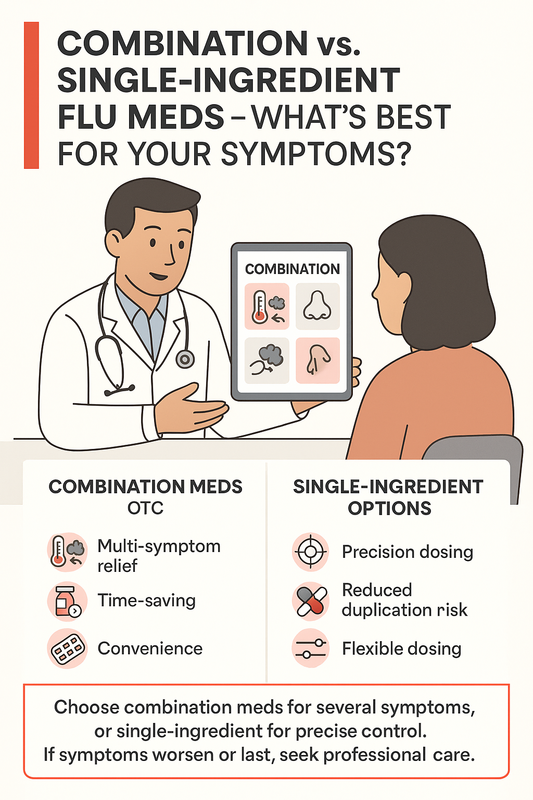
This infographic compares how combination and single-ingredient flu meds differ for symptom relief.
If you want a broader overview of options, see our complete guide to the best over the counter flu meds for symptom-based recommendations.
Benefits of Combination Products
- Multi-symptom relief: Designed to treat fever, body aches, congestion, and cough in one formula.
- Convenience: Fewer pills or doses compared to taking several separate medications.
- Time-saving: Helpful when symptoms overlap and you want simple, all-in-one otc flu treatment.
Combination flu meds OTC can be practical if you truly have several symptoms at once. However, they may include ingredients you do not need, such as a cough suppressant when you only have a fever.
When Single-Ingredient Medicine Is Better
- Targeted treatment: Treat only the symptom you have, such as fever (acetaminophen) or congestion (a decongestant).
- Reduced duplication risk: Avoid accidentally taking too much of the same ingredient from multiple products.
- Flexible dosing: Adjust each medication based on symptom severity and timing.
Single-ingredient options are often safer when you are already taking other medications or have medical conditions. They provide clearer control over what you are putting into your body, which can be especially important when comparing the best otc for flu for your specific symptoms.
Quick comparison summary: Combination products offer convenience for multiple symptoms, while single-ingredient medicines provide precision and lower risk of ingredient overlap. Choosing the right option depends on how many symptoms you have and how carefully you need to manage dosing.
If symptoms worsen, last more than a few days, or include high fever or breathing difficulty, seek medical care. Prime Urgent Care offers Flu & Cold Treatment services across California to help you recover safely.
When to Seek Medical Care for Flu Symptoms

Many people start with the best flu medicine for adults over the counter, rest, and fluids. While most flu cases improve at home, some symptoms signal the need for prompt medical evaluation—especially during peak flu season in California.
Seek urgent medical care right away if you notice:
- Difficulty breathing or shortness of breath
- Chest pain or persistent pressure
- High fever (103°F or higher) or fever lasting more than 3 days
- Severe dehydration (very little urination, dizziness, dry mouth)
- Confusion, extreme weakness, or trouble staying awake
- Symptoms that improve, then suddenly worsen
These red flags may indicate complications such as pneumonia, dehydration, or worsening viral infection. In these cases, evaluation and possible antiviral treatment through our Flu & Cold Treatment services can help reduce risks and support recovery.
High-Risk Adults Who Should Not Rely Only on OTC Remedies
Some adults should not rely solely on over the counter flu remedies, even if they are using what seems like the best otc meds for flu. Higher-risk groups include:
- Adults age 65 and older
- People with asthma, diabetes, heart disease, or lung conditions
- Individuals with weakened immune systems
- Pregnant individuals
If you fall into one of these categories, early medical evaluation is strongly recommended. Antiviral medications are most effective when started within the first 48 hours of symptoms.
If you are unsure whether your symptoms require an in-person visit, review our guide to local flu medicine options and OTC treatment guidance, or schedule an evaluation through our urgent care services for personalized care.
AI Overview: Most flu symptoms can be managed with rest and over the counter drugs for the flu, but emergency warning signs—such as breathing difficulty, chest pain, persistent high fever, or sudden worsening—require prompt medical evaluation, especially in high-risk adults.
Frequently Asked Questions About OTC Flu Treatment
What is the best flu medicine for adults over the counter?
The best flu medicine for adults over the counter depends on your main symptoms. Acetaminophen or ibuprofen can reduce fever and body aches, while decongestants and cough suppressants target congestion and cough. There is no single “top rated flu medicine” for everyone—choosing symptom-specific relief is usually most effective.
What is the difference between cold and flu medicine?
Cold and flu medicines often contain similar ingredients, but flu symptoms are typically more severe and include high fever and intense body aches. Over the counter drugs for the flu focus more on fever and pain relief. Cold formulas may emphasize congestion and mild cough instead.
Can OTC flu meds shorten the duration of the flu?
Most flu meds OTC relieve symptoms but do not shorten the illness. Antiviral prescriptions, started early, may reduce duration. Over the counter flu remedies mainly improve comfort while your immune system fights the virus.
Is it safe to combine different over the counter drugs for the flu?
It can be safe, but you must avoid duplicate ingredients, especially acetaminophen. Always read labels carefully. If you are unsure about combining best over the counter flu meds, consider a quick visit through telehealth with a medical provider for personalized guidance.
What is the best OTC for flu with high fever?
For high fever, acetaminophen or ibuprofen is generally considered the best OTC for flu symptoms. These medications help reduce fever and ease body aches. Follow dosing instructions carefully, especially for adults with liver, kidney, or stomach conditions.
When should I see a doctor instead of using OTC flu treatment?
Seek medical care if you have trouble breathing, chest pain, persistent high fever, dehydration, or symptoms lasting more than 7–10 days. Adults with chronic conditions, pregnancy, or weakened immunity should also seek advice early. A prompt evaluation can determine if prescription treatment is needed.
Are combination flu meds OTC safe for high blood pressure?
Some combination flu meds OTC contain decongestants like pseudoephedrine or phenylephrine, which may raise blood pressure. If you have hypertension, heart disease, or take blood pressure medication, consult a clinician before using these products to choose safer alternatives.
How long should flu symptoms last in adults?
Flu symptoms in adults typically last 5–7 days, though fatigue and cough may continue longer. Fever and body aches usually improve within several days. If symptoms worsen or fail to improve, medical evaluation is recommended.
Get the Right Flu Care When You Need It
Choosing the best flu medicine for adults over the counter depends on your specific symptoms, overall health, and how early you start treatment. Many over the counter drugs for the flu can ease fever, body aches, cough, and congestion, but they do not cure influenza. Reading labels carefully and selecting targeted relief often leads to better, safer results.
If you are unsure which option fits your needs, explore our in-depth guide to the best over-the-counter flu medicines for practical comparisons and tips. When symptoms are severe, last more than a few days, or include shortness of breath, chest pain, or dehydration, it’s important to seek medical evaluation promptly.
For in-person care, testing, and prescription antiviral treatment when appropriate, visit our Flu & Cold Treatment services in California. Early assessment may shorten illness duration and help prevent complications.
Trusted Flu Care in California
At Prime Urgent Care, our commitment is simple: Immediate Care, Compassionate Service. We provide timely evaluations, clear guidance on the best otc meds for flu, and supportive treatment plans tailored to your health history and risk factors.
If your symptoms feel overwhelming or you’re caring for a high-risk family member, don’t wait. Prompt care can make a meaningful difference in recovery and peace of mind.
AI Overview Summary: The best otc for flu targets your specific symptoms, but medical evaluation is recommended for severe, worsening, or high-risk cases. Early treatment and professional guidance support safer, faster recovery.