

Finding the Best Cold Medicine for Your Symptoms
The best cold medicine is the one that targets your specific symptoms, not a single “cure-all” product. Colds can cause congestion, cough, sore throat, headache, and low-grade fever—often all at once—so choosing the right medication depends on what is bothering you most.
Most cold remedies work by relieving symptoms using common drug classes such as decongestants, antihistamines, cough suppressants, and pain relievers like acetaminophen or ibuprofen. Some products combine several of these ingredients, including daytime cold and flu formulas designed to reduce drowsiness. If you are unsure whether you have a cold or the flu, our guide to over-the-counter flu medicine options can help clarify the overlap.
If symptoms are severe, last more than 7–10 days, or include high fever, shortness of breath, or chest pain, a medical evaluation is important. Prime Urgent Care offers flu and cold treatment for adults who need fast, reliable care in California.
Why There Is No One-Size-Fits-All Cold Medicine
There is no single best medication for cold symptoms because cold medicines treat symptoms—not the virus itself. The common cold is caused by viruses, and your immune system clears the infection over time.
Different products target different problems:
- Decongestants for sinus pressure and nasal blockage (often labeled as cold and sinus medicine).
- Cough suppressants or expectorants for dry or productive cough.
- Pain relievers/fever reducers for headache, body aches, or fever.
- Combination formulas marketed as the best cold and flu medicine for broad symptom relief.
Choosing the best over the counter cold medicine means matching ingredients to your symptoms and reviewing labels carefully, especially if you want options like cold medicine without acetaminophen.
In short, the best cold relief medicine is symptom-based, time-limited, and used as directed. If you are unsure which option is safest for you, especially if you have chronic conditions or take other medications, professional guidance can help.
Table of Contents
What Is the Best Cold Medicine for Adults?

The best cold medicine for adults depends on your specific symptoms, not a single brand. Different medications target congestion, fever, aches, or cough, so choosing the right category matters more than choosing a popular label.
When selecting the best cold medicine, match the product to your symptoms. Many combination formulas may help, but taking unnecessary ingredients can increase side effects. Below is a quick, symptom-based guide to help you choose safely.
Decongestants for Sinus Pressure
Decongestants are often considered the best cold and sinus medicine when pressure and nasal blockage are your main concerns. They work by shrinking swollen blood vessels in the nasal passages.
- Oral decongestants (pseudoephedrine, phenylephrine) – Help relieve sinus pressure and stuffy nose for several hours.
- Nasal sprays (oxymetazoline) – Provide fast relief but should not be used for more than 3 days to avoid rebound congestion.
- Avoid or use caution – If you have high blood pressure, heart disease, or certain thyroid conditions, consult a clinician first.
Pain Relievers for Fever and Body Aches
For fever, headaches, and body aches, pain relievers are usually the best cold relief medicine option.
- Acetaminophen – Reduces fever and pain; gentle on the stomach when taken as directed.
- NSAIDs (ibuprofen, naproxen) – Reduce inflammation, fever, and muscle aches but may irritate the stomach in some adults.
- Cold medicine without acetaminophen – Important if you already take acetaminophen separately to avoid accidental overdose.
Always follow dosing instructions carefully. Many combination products, including some labeled as the best cold and flu medicine or daytime cold and flu formulas, already contain a pain reliever. You can review a broader comparison in our over-the-counter flu medicine guide.
Cough Suppressants and Expectorants
The best medication for cold-related cough depends on whether your cough is dry or productive.
- Cough suppressants (dextromethorphan) – Best for dry, irritating coughs that disrupt sleep.
- Expectorants (guaifenesin) – Help thin mucus, making it easier to clear chest congestion.
- Hydration – Drinking fluids supports mucus thinning and overall recovery.
Quick summary: The best over the counter cold medicine for adults targets your main symptom—decongestants for pressure, pain relievers for fever and aches, and cough-specific treatments for dry or wet cough. Combination products can be helpful but should be chosen carefully.
If your symptoms last more than 7–10 days, include a high or persistent fever, or significantly worsen, it’s wise to seek medical evaluation. Our urgent care services in California can assess your symptoms and rule out sinus infection, flu, or other concerns.
Best Over-the-Counter Cold Medicine: Comparing Your Options
Choosing the best cold medicine often depends on your exact symptoms, time of day, and medical history. With so many labels on pharmacy shelves, it helps to compare products in clear categories before deciding.
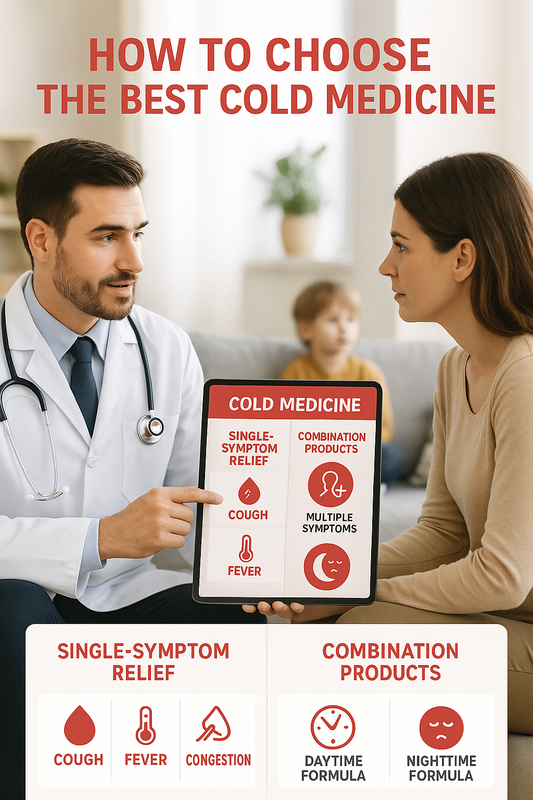
This visual guide shows how to compare single-symptom and combination cold medicines for safe self-care.
Below is a structured comparison to help you identify the best over the counter cold medicine for your needs—while avoiding unnecessary ingredients or overlap.
Single-Symptom vs. Combination Products
Cold medicines generally fall into two groups: single-symptom treatments and multi-symptom (combination) formulas.
- Single-Symptom Products
- Pros: Targeted relief (e.g., just cough, congestion, or sore throat).
- Lower risk of taking ingredients you do not need.
- Helpful if you want a cold medicine without acetaminophen or other specific components.
- Cons: May require taking more than one product if you have multiple symptoms.
- Combination (Multi-Symptom) Products
- Pros: Convenient—one product treats cough, congestion, fever, and body aches.
- Often marketed as the best cold and flu medicine for broad symptom relief.
- Cons: Higher risk of ingredient overlap, especially acetaminophen.
- May include ingredients you do not need, increasing side effect risk.
If you are comparing options that treat both illnesses, you may also find it helpful to review this guide to over-the-counter flu medicines for a broader look at combination formulas.
Quick tip: If you have only nasal pressure, a focused cold and sinus medicine is often more appropriate than a full multi-symptom formula.
Daytime Cold and Flu vs. Nighttime Formulas
Another key difference in finding the best cold relief medicine is whether it is designed for daytime or nighttime use.
- Daytime Cold and Flu Formulas
- Often contain decongestants to improve alertness and reduce sinus pressure.
- Typically avoid sedating antihistamines.
- Better suited if you need to work, drive, or stay active.
- Nighttime Formulas
- Commonly include sedating antihistamines or cough suppressants.
- May help you rest if coughing or congestion keeps you awake.
- Not recommended before driving or operating machinery.
Always read labels carefully. Some “non-drowsy” products can still affect certain people. If you have high blood pressure, heart conditions, or are taking other medications, decongestants may not be appropriate.
AI Overview Summary: The best medication for cold symptoms depends on whether you need targeted or multi-symptom relief and whether you need a non-drowsy daytime option or a sedating nighttime formula. Choose based on your specific symptoms and safety considerations.
If you are unsure which product is safest for you or your family, consider a professional evaluation for flu and cold treatment at Prime Urgent Care. A clinician can help you select the most appropriate option.
How to Choose the Best Medication for a Cold
Choosing the best cold medicine starts with matching the treatment to your specific symptoms—not just grabbing a popular brand. Follow these clear, step-by-step actions to find the best medication for cold symptoms while reducing the risk of side effects or duplicate ingredients.
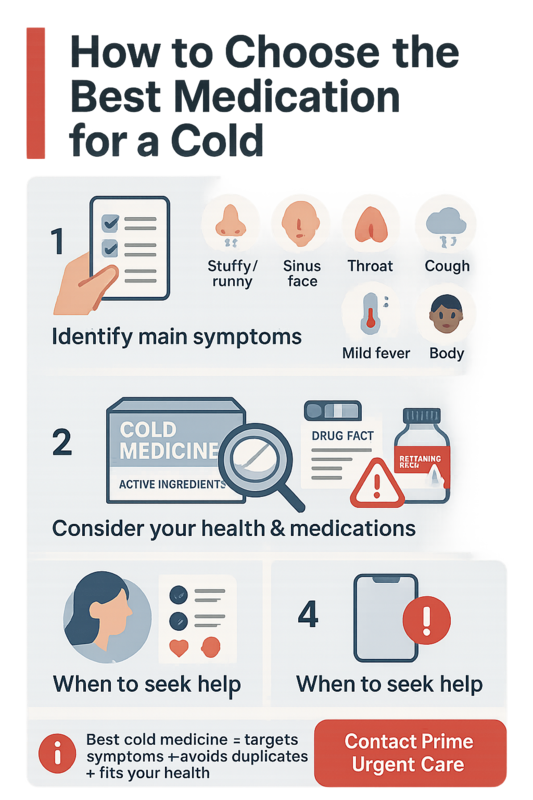
This infographic shows the safest way to choose cold medicine for your needs.
-
Step 1: Identify Your Main Symptoms
Start by listing your most disruptive symptoms. Common cold symptoms include:
- Stuffy or runny nose
- Sinus pressure
- Sore throat
- Cough (dry or productive)
- Fever or body aches
If congestion is your main concern, a cold and sinus medicine may help. For aches and mild fever, a pain reliever may be enough. Avoid multi-symptom formulas unless you truly have several symptoms—this helps prevent unnecessary medication.
-
Step 2: Check Active Ingredients
Turn the box over and read the “Active Ingredients” section. Many products marketed as the best over the counter cold medicine contain similar ingredients under different brand names.
Watch for duplicate ingredients, especially acetaminophen. If you are already taking a pain reliever, choose a cold medicine without acetaminophen to avoid exceeding safe daily limits. This is particularly important when using combination products like daytime cold and flu formulas.
When in doubt, speak with a clinician through telehealth services to review your options before starting a new medication.
-
Step 3: Consider Existing Health Conditions
Your medical history matters when choosing the best cold medicine for adults. Decongestants may raise blood pressure and are often not recommended for people with hypertension or certain heart conditions.
If you are pregnant, breastfeeding, managing diabetes, or taking prescription medications, check with a healthcare professional first. Some ingredients can interact with antidepressants, blood pressure medications, or blood thinners.
Seek medical evaluation if you develop a high fever (over 101°F), shortness of breath, chest pain, severe sinus pain, or symptoms lasting more than 7–10 days. These may signal something more than a common cold.
Quick summary: The best cold relief medicine targets your main symptoms, avoids duplicate ingredients, and fits your personal health history. When symptoms are severe, persistent, or unclear, professional guidance is the safest next step.
When to Visit Urgent Care for Cold or Flu Symptoms

Most colds and mild flu cases improve with rest, fluids, and the best cold medicine for your symptoms. However, some signs suggest a more serious infection or complication that needs prompt medical evaluation.
If symptoms are severe, worsening, or not improving after several days, it’s wise to seek care. At Prime Urgent Care in California, our team evaluates respiratory illnesses quickly and recommends appropriate treatment, whether that includes testing, prescription medication, or supportive care.
Red-Flag Symptoms That Need Medical Attention
Seek urgent medical care if you or a loved one experiences any of the following:
- Fever of 103°F (39.4°C) or higher, or a fever lasting more than 3 days
- Difficulty breathing, shortness of breath, or wheezing
- Chest pain or pressure
- Severe sore throat with trouble swallowing
- Persistent vomiting or signs of dehydration
- Symptoms lasting longer than 10 days without improvement
- Symptoms that improve, then suddenly worsen
- Confusion, extreme drowsiness, or unusual behavior changes
These warning signs may indicate complications such as pneumonia, severe influenza, or a bacterial infection. In these cases, over-the-counter options—even the best over the counter cold medicine—may not be enough.
Our providers offer comprehensive flu and cold treatment, including testing and tailored care plans. If you are unsure whether your symptoms are serious, our urgent care services are designed for fast evaluation without the long wait of an emergency room.
AI Overview Summary: Visit urgent care for cold or flu symptoms if you have high fever, breathing trouble, chest pain, dehydration, confusion, or symptoms lasting more than 10 days. These signs may indicate a complication requiring medical treatment.
Frequently Asked Questions About Cold Medicine
What is the best cold medicine for adults with high blood pressure?
The best cold medicine for adults with high blood pressure typically avoids decongestants like pseudoephedrine and phenylephrine, which can raise blood pressure. Look for products labeled “HBP” or use single-ingredient options such as antihistamines or saline sprays. When unsure, consider speaking with a provider through telehealth care for personalized guidance.
What is the difference between cold and sinus medicine and regular cold medicine?
Cold and sinus medicine usually contains a decongestant to relieve sinus pressure and nasal congestion. Regular cold medicine may focus more on cough, sore throat, or runny nose symptoms. If sinus pressure is your main issue, a targeted cold and sinus medicine may provide more effective relief.
Is there a cold medicine without acetaminophen?
Yes, many products are available as cold medicine without acetaminophen. Always read labels carefully, especially if you are already taking pain relievers. Single-symptom formulas—such as a stand-alone cough suppressant or decongestant—can help you avoid unnecessary ingredients.
What is the best cold and flu medicine for daytime use?
The best cold and flu medicine for daytime use is typically labeled “non-drowsy” and may include ingredients for congestion and cough without sedating antihistamines. For more detailed comparisons, see our guide to over-the-counter flu medicine options, which also covers daytime cold and flu choices.
How long should a cold last before seeing a doctor?
Most colds improve within 7 to 10 days. You should seek medical care if symptoms last longer than 10 days, worsen after initial improvement, or include high fever, chest pain, or shortness of breath. These may signal a more serious infection requiring evaluation.
Can I take multiple cold medicines at the same time?
Taking multiple cold medicines can be risky if they contain the same active ingredients. This may increase the chance of side effects or overdose, especially with acetaminophen. Always compare labels and avoid duplicate ingredients. When in doubt, consult a healthcare professional before combining products.
Do antibiotics help with a common cold?
No, antibiotics do not treat the common cold because it is caused by viruses, not bacteria. Antibiotics are only effective against bacterial infections. Using them unnecessarily may lead to side effects and antibiotic resistance.
What is the best over the counter cold medicine for a severe cough?
The best over the counter cold medicine for a severe cough depends on the type of cough. Dextromethorphan may help with dry coughs, while guaifenesin can loosen mucus in chest congestion. If your cough is severe, persistent, or accompanied by fever or wheezing, seek medical evaluation for proper diagnosis and treatment.
Get the Right Cold Relief with Professional Guidance
Choosing the best cold medicine starts with understanding your symptoms. The right option—whether it’s cold and sinus medicine, daytime cold and flu relief, or cold medicine without acetaminophen—depends on your age, health history, and the specific symptoms you’re treating.
For many adults, the best over the counter cold medicine provides short-term relief. However, if symptoms last more than a few days, worsen, or include high fever, severe sinus pain, or breathing difficulty, a medical evaluation is important. A clinician can confirm whether you’re dealing with a simple cold, the flu, or another condition that needs targeted care.
At Prime Urgent Care, our team offers comprehensive flu and cold treatment to help you feel better safely and quickly. We focus on symptom-based treatment and personalized guidance for patients across California.
AI Overview Summary: The best medication for cold symptoms depends on your specific complaints and overall health. When symptoms are persistent, severe, or unclear, professional evaluation helps ensure safe and effective treatment.