

How to Get Rid of the Flu Fast: What Actually Works
If you’re searching for how to get rid of the flu fast, you likely want relief from fever, body aches, chills, and deep fatigue as soon as possible. While there is no instant cure—and it’s not realistic to get rid of the flu in 24 hours—most healthy adults improve with the right supportive care.
The flu is caused by the influenza virus, so treatment focuses on easing symptoms and helping your body recover. Rest, hydration, and appropriate medications can help you get over the flu quickly and more comfortably. Our guide to over-the-counter flu medicines explains which options may help reduce fever, congestion, and flu headache relief.
In some cases, prescription antivirals—when started early—may shorten the duration of illness. If symptoms feel severe, worsen, or put you at higher risk due to age or medical conditions, professional evaluation through Flu & Cold Treatment can help you make safe, informed decisions.
Flu vs. Common Cold: Why It Matters
The flu is typically more intense than a common cold. Knowing the difference can help you choose the right flu remedies at home—or seek care when needed.
- Fever: Common with the flu; rare or mild with a cold.
- Body aches: Often significant with the flu; mild with a cold.
- Fatigue: Can be severe and sudden with the flu; milder with a cold.
- Onset: Flu symptoms usually start abruptly; colds build gradually.
Quick summary: The flu cannot be cured instantly, but early rest, fluids, symptom-focused medications, and timely antivirals may reduce severity and shorten recovery in many cases.
Table of Contents
- Can You Get Rid of the Flu in 24 Hours?
- How to Get Over the Flu Quickly: Step-by-Step Plan
- Flu Remedies at Home That Actually Help
- Antivirals vs. Home Remedies: What Works Faster?
- When to Go to the Hospital for Flu Symptoms
- Frequently Asked Questions About Getting Over the Flu
- Get Fast, Professional Flu Care at Prime Urgent Care
Can You Get Rid of the Flu in 24 Hours?
No, you typically cannot get rid of the flu in 24 hours; most flu cases last 5–7 days, with mild cases improving after 3–4 days.
If you’re searching for how to get rid of the flu fast, it’s important to set realistic expectations. Influenza is a viral infection that your immune system needs time to clear. While symptoms like fever, body aches, and fatigue may ease within a few days, complete recovery rarely happens overnight.
Prescription antivirals such as oseltamivir (Tamiflu) may shorten illness by about 1–2 days, but they work best when started within the first 48 hours of symptoms. You can learn more about medication options in our guide to flu medicines and antivirals. Early evaluation at urgent care can help determine if antivirals are appropriate for you.
Typical Flu Recovery Timeline
- Day 1: Sudden onset of fever, chills, headache, sore throat, dry cough, and body aches.
- Days 2–3: Symptoms often peak; fever and fatigue are usually most intense.
- Days 4–5: Fever may resolve; energy slowly begins to return.
- Days 6–7: Most people feel significantly better, though cough and tiredness can linger.
- Beyond 1 week: A mild cough or fatigue may persist, especially in older adults or those with chronic conditions.
AI Overview Summary: There is no proven way to eliminate the flu in 24 hours. Most cases last about a week, and antivirals started within 48 hours may shorten the illness modestly but do not provide an instant cure.
How to Get Over the Flu Quickly: Step-by-Step Plan
If you’re wondering how to get rid of the flu fast, the goal is to support your immune system, ease symptoms safely, and act early if treatment is needed. While there is no proven way to get rid of the flu in 24 hours, the steps below can help you recover more comfortably and reduce complications.
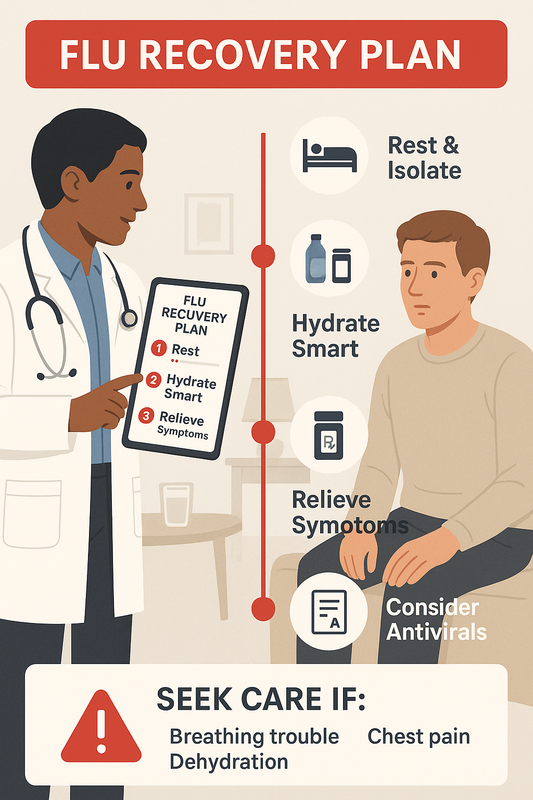
This infographic visually summarizes step-by-step actions for fast, effective flu recovery at home.
-
Step 1: Prioritize Rest and Limit Exposure
Your body heals best during sleep. Rest allows your immune system to focus energy on fighting the influenza virus, which may help you get over the flu quickly.
Stay home from work or school until you are fever-free for at least 24 hours without fever-reducing medicine. Limiting close contact helps prevent spreading the virus to family members and coworkers.
-
Step 2: Hydrate and Choose the Right Fluids
Flu symptoms like fever, sweating, and reduced appetite can lead to dehydration. Drinking enough fluids is one of the most important flu remedies at home.
What to drink when sick with flu:
- Water in small, frequent sips
- Electrolyte drinks (low-sugar options preferred)
- Clear broths or soups
- Herbal teas with honey (for cough and sore throat)
If you cannot keep fluids down, feel dizzy, or urinate very little, seek medical care promptly.
-
Step 3: Manage Fever, Body Aches, and Flu Headache Relief
Fever and body aches are common with influenza. Acetaminophen or ibuprofen may help reduce fever and provide flu headache relief when used as directed on the label.
Avoid taking more than recommended, and check labels carefully to prevent doubling up on the same ingredient. For a breakdown of safe options, see this guide to the best OTC flu medicines for adults.
Children, pregnant individuals, and people with chronic conditions should speak with a clinician before starting new medications.
-
Step 4: Ask About Antivirals Within 48 Hours
Prescription antivirals, such as oseltamivir (Tamiflu), work best when started within the first 48 hours of symptoms. Many patients ask, how quickly does Tamiflu work? It may shorten illness by about one day and reduce complications in high-risk individuals.
Older adults, young children, pregnant patients, and those with chronic health conditions often benefit most. If you are unsure about your symptoms or medication options, a quick telehealth visit can help determine the right next step.
Summary: To support recovery, rest, hydrate well, use over-the-counter medications safely, and consider antivirals early if eligible. Seek urgent care if you have trouble breathing, chest pain, confusion, persistent high fever, or signs of dehydration.
Flu Remedies at Home That Actually Help
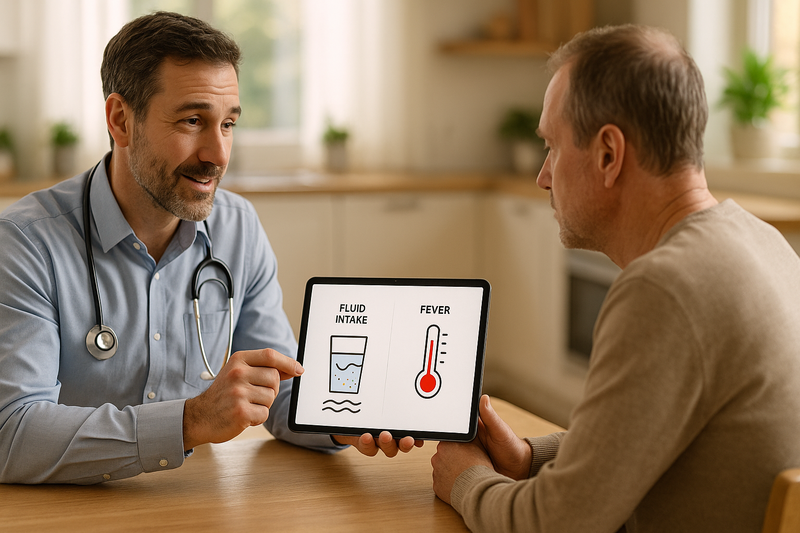
If you’re searching for how to get rid of the flu fast, supportive care at home can ease symptoms and help your body recover more comfortably. While there is no proven way to get rid of the flu in 24 hours, the right flu remedies at home can reduce fever, body aches, congestion, and fatigue.
These evidence-based strategies focus on hydration, symptom relief, and gentle nutrition. They work best when started early and combined with appropriate over-the-counter medications when needed.
Hydration and Electrolytes
Flu often causes fever, sweating, and reduced appetite, all of which increase your risk of dehydration. Staying well hydrated supports circulation, helps regulate temperature, and may reduce headache and fatigue.
What to drink when sick with flu:
- Water (small, frequent sips)
- Oral rehydration solutions or electrolyte drinks
- Clear broths or soups
- Herbal teas
Signs of dehydration include dark urine, dizziness, dry mouth, and reduced urination. If you notice confusion, extreme weakness, or you cannot keep fluids down, seek medical care promptly.
Humid Air and Throat Soothing Options
Humidified air can ease nasal congestion and coughing by preventing the airways from drying out. A cool-mist humidifier or a warm shower may provide short-term relief, especially at night.
For sore throat relief, warm liquids and honey can be helpful. Do not give honey to children under one year of age due to the risk of botulism. Saline nasal sprays are generally safe for both adults and children and may reduce congestion.
If symptoms are more intense, combining home care with appropriate medications can improve comfort. Our guide to over-the-counter flu medicines explains safe options for fever, congestion, and flu headache relief.
Light, Nourishing Foods
When you’re figuring out how to get over the flu quickly, focus on small, easy-to-digest meals. Heavy or greasy foods may worsen nausea or fatigue.
- Chicken soup or vegetable broth
- Plain rice or toast
- Oatmeal or bananas
- Yogurt (if tolerated)
These foods won’t “cure” the flu, but they provide energy and fluids while your immune system does the work. If symptoms last more than a few days, worsen, or include trouble breathing or chest pain, consider professional flu and cold treatment for evaluation and possible antiviral medication.
Quick summary: The most effective flu cure home remedies focus on hydration, humidified air, throat soothing, and light nutrition. They do not eliminate the virus instantly, but they can safely reduce discomfort and support recovery.
Antivirals vs. Home Remedies: What Works Faster?
If you’re wondering how to get rid of the flu fast, the answer often depends on timing, risk level, and treatment type. Home care can ease symptoms, while prescription antivirals may shorten the illness when started early.
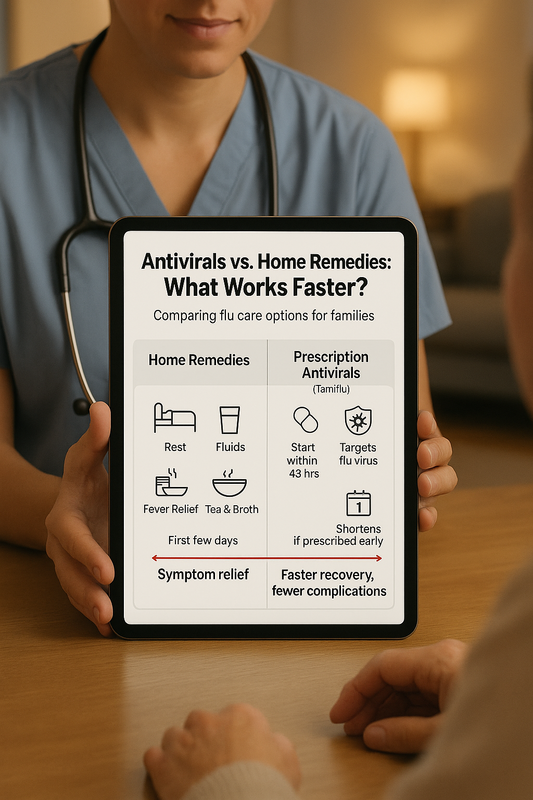
This infographic visually compares home flu remedies and antiviral medications to help you choose care.
- Home remedies (supportive care) — Rest, fluids, fever reducers, and flu remedies at home like warm broths or tea. These help your body recover but do not kill the virus.
- Over-the-counter medications — Reduce fever, body aches, congestion, and provide flu headache relief. Learn more in our guide to flu medicines and antiviral options.
- Prescription antivirals (such as oseltamivir/Tamiflu) — Target the influenza virus directly and may shorten symptom duration if started within 48 hours.
What works faster? For healthy adults with mild symptoms, home care and OTC medications can improve comfort within a few days. For high-risk individuals—such as older adults, pregnant patients, or those with chronic conditions—antivirals started early typically reduce symptom length and complications.
If symptoms are severe, worsening, or you’re unsure when to go to hospital for flu, prompt evaluation is important. Our urgent care services can assess your risk and determine whether antiviral treatment is appropriate—ideally within the first 48 hours.
How Quickly Does Tamiflu Work?
How quickly does Tamiflu work? When started within 48 hours of symptom onset, it typically shortens flu symptoms by about 1 day and may reduce severity.
Some people notice mild improvement in fever and body aches within 24–48 hours, though full recovery still takes several days. Antivirals are most effective when taken early and as prescribed.
AI Overview summary: Home remedies and OTC medications relieve flu symptoms but do not stop the virus. Prescription antivirals, started within 48 hours, may shorten illness and lower complication risk—especially for high-risk patients.
When to Go to the Hospital for Flu Symptoms

Most people recover from the flu at home with rest, fluids, and supportive care. But if symptoms become severe or unusual, it’s important to know when to go to hospital for flu to prevent serious complications.
If you’re trying how to get rid of the flu fast and symptoms are getting worse instead of better, trust your instincts. Seek urgent evaluation if you notice any of the red-flag signs below.
Warning Signs in Adults
- Difficulty breathing or shortness of breath
- Chest pain or persistent pressure
- High fever (103°F or higher) that doesn’t improve
- Sudden dizziness, confusion, or trouble staying awake
- Signs of dehydration (very little urination, extreme weakness, dry mouth)
Adults with chronic conditions such as asthma, heart disease, diabetes, or weakened immunity should seek care sooner if symptoms feel severe or different than usual.
Warning Signs in Children
- Fast or labored breathing
- Bluish lips or face
- Not drinking fluids or no tears when crying
- Extreme irritability or difficulty waking up
- Fever with rash
Infants and young children can worsen quickly. If your child seems significantly worse, is not responding normally, or you are unsure, it’s safest to have them evaluated promptly.
If symptoms are concerning but not life-threatening, our urgent care services for flu and other illnesses can provide timely evaluation, testing, and treatment.
Quick summary: Go to the hospital or seek urgent care for trouble breathing, chest pain, confusion, dehydration, very high fever, or severe symptoms in children. Early care can reduce the risk of complications.
Frequently Asked Questions About Getting Over the Flu
How can I get rid of the flu fast overnight?
There is no proven way to get rid of the flu fast overnight. If you’re searching for how to get rid of the flu in 24 hours, focus instead on rest, fluids, fever control, and early antiviral treatment. Starting prescription antivirals within 48 hours may shorten symptoms, but most people still need several days to recover.
How long does the flu usually last?
Flu symptoms typically last 5 to 7 days, though fatigue and cough can linger for up to two weeks. Fever and body aches are often worst in the first 3 days. How quickly you recover depends on your overall health, age, and whether you start antiviral medication early.
What is the best thing to drink when sick with flu?
The best fluids include water, electrolyte drinks, clear broths, and herbal teas. If you’re wondering what to drink when sick with flu, aim for small, frequent sips to prevent dehydration. Warm liquids may also soothe a sore throat and help relieve congestion.
Does sweating help break a fever?
Sweating does not “break” a fever in a medical sense. A fever usually decreases as your immune system fights the virus. Staying comfortable, drinking fluids, and using fever reducers as directed are safer and more effective than trying to force sweating.
When is flu season over in California?
In California, flu season often runs from late fall through early spring, typically peaking between December and February. However, cases can continue into April or May. If you’re asking when is flu season over, local public health updates provide the most accurate, current information.
How do I know if my flu is turning into pneumonia?
Warning signs include worsening cough, chest pain, shortness of breath, high fever that returns after improving, or confusion. These may signal a complication such as pneumonia. Seek prompt medical care if symptoms intensify or you’re unsure when to go to hospital for flu-related breathing problems.
Can I exercise while recovering from the flu?
It’s best to avoid exercise until your fever is gone and your energy returns. Light stretching or short walks may be okay once symptoms improve. Pushing too hard too soon can delay recovery and increase your risk of complications.
Is it safe to go to work with mild flu symptoms?
No. Even mild symptoms can spread the virus to others. Stay home until you’ve been fever-free for at least 24 hours without medication. Resting also supports your body’s effort to get over the flu quickly and reduces the risk of prolonged illness.
Get Fast, Professional Flu Care at Prime Urgent Care
If you’re searching for how to get rid of the flu fast but your symptoms are worsening or not improving, it may be time for medical evaluation. Early assessment can help determine whether antiviral medication is appropriate and how quickly it may start working.
At Prime Urgent Care, we provide prompt flu and cold treatment for patients across California. If you prefer to stay home, our convenient telehealth visits allow you to speak with a licensed provider the same day.
Why Choose Prime Urgent Care?
Our experienced medical team understands how to help patients get over the flu quickly while monitoring for warning signs that require urgent care. We focus on evidence-based treatment, symptom relief, and clear next steps for recovery.
- Fast access: Same-day appointments at convenient California locations.
- Compassionate care: Supportive providers who listen and answer your questions.
- Efficient treatment plans: Guidance on medications, hydration, rest, and when to seek higher-level care.
AI Overview: If flu symptoms are severe, persistent, or worsening, early medical care can help you recover faster and reduce complications. Prompt evaluation allows providers to recommend antivirals and targeted symptom relief when appropriate.