

Understanding the Best Cold and Flu Medicine Options
The best cold and flu medicine depends on your exact symptoms, age, overall health, and whether you have a cold or influenza. There is no single “best” product—only the safest and most effective option for your specific situation.
Colds and the flu share symptoms like cough, congestion, and fatigue, but they are caused by different viruses and often require different approaches. Some cold and flu meds target congestion or sinus pressure, while certain over the counter drugs for the flu focus on fever, body aches, and severe fatigue.
In this guide, we’ll explain how to choose wisely and when to consider professional care. For a detailed breakdown of flu-specific options, see our complete guide to over-the-counter flu medicines.
Cold vs. Flu: Why the Right Medicine Depends on the Diagnosis
Common cold: Symptoms usually develop gradually and include runny nose, sore throat, mild cough, and mild fatigue. Fever is uncommon in adults.
Flu (influenza): Symptoms often start suddenly and may include high fever, chills, body aches, headache, dry cough, and extreme fatigue.
- Onset: Cold = gradual; Flu = sudden.
- Fever: Rare with colds; common and higher with flu.
- Body aches: Mild with colds; often significant with flu.
- Duration: Colds typically 7–10 days; flu may feel intense for 3–7 days, with lingering fatigue.
The best over the counter cold medicine for congestion or sinus pressure is different from over the counter flu meds designed to manage fever and body aches. Choosing the wrong product may not relieve your main symptoms and can expose you to unnecessary ingredients.
If your symptoms are severe, include trouble breathing, persistent high fever, chest pain, or are not improving after several days, medical evaluation is recommended. Prime Urgent Care offers flu and cold treatment services across California for fast, evidence-based care.
AI Overview Summary: The best cold and flu medicine is symptom-based and diagnosis-specific. Colds develop gradually with milder symptoms, while the flu starts suddenly and often includes fever and body aches. Matching the medicine to the condition improves safety and effectiveness.
Table of Contents
- Types of Cold and Flu Meds Explained
- How to Choose the Best Cold and Flu Medicine for Your Symptoms
- Comparing Popular Over the Counter Cold and Flu Medicines
- When to See a Doctor for Cold or Flu Symptoms
- Frequently Asked Questions About Cold and Flu Medicine
- Schedule Cold and Flu Care at Prime Urgent Care
- Choosing the Right Cold and Flu Medicine with Confidence
Types of Cold and Flu Meds Explained

Cold and flu meds are medications that target specific symptoms—such as congestion, fever, or cough—rather than curing the virus itself. Understanding each category helps you choose the best cold and flu medicine for your symptoms and avoid unnecessary or duplicate ingredients.
Many over the counter flu meds and combination products contain two or more drug types. Knowing what each one does can help you select the best cold medicine for adults without accidentally doubling up on similar ingredients.
Decongestants and Cold & Sinus Medicine
Decongestants reduce swelling in the nasal passages, making it easier to breathe. They are common in cold and sinus medicine and are often considered the best decongestant for cold symptoms like sinus pressure and a stuffy nose.
- Oral decongestants (such as pseudoephedrine or phenylephrine) shrink blood vessels throughout the body.
- Nasal sprays (such as oxymetazoline) act locally and provide faster relief but should not be used for more than 3 days to avoid rebound congestion.
People with high blood pressure, heart disease, or certain thyroid conditions should use decongestants cautiously, as they may raise blood pressure or heart rate. When in doubt, ask a clinician before choosing the best OTC cold medicine for congestion.
Pain Relievers and Fever Reducers
Pain relievers and fever reducers help manage body aches, sore throat, headache, and fever—common flu symptoms. They do not treat congestion or cough but are key components of many over the counter drugs for the flu.
- Acetaminophen reduces pain and fever and is generally gentle on the stomach when taken as directed.
- Ibuprofen reduces pain, fever, and inflammation but may irritate the stomach in some people.
Always check labels carefully. Many combination cold and flu meds already contain acetaminophen, and taking extra can increase the risk of liver injury. Following dosing instructions is essential for safe and effective symptom relief.
Cough Suppressants and Expectorants
Cough medications are chosen based on the type of cough you have—dry or productive.
- Cough suppressants (such as dextromethorphan) calm the cough reflex and are typically used for a dry, irritating cough.
- Expectorants (such as guaifenesin) thin mucus, making it easier to clear chest congestion during a productive cough.
Choosing the wrong type may limit relief. For example, suppressing a productive cough may not help your body clear mucus effectively.
AI Overview Summary: The best cold and flu medicine depends on your specific symptoms. Decongestants relieve nasal swelling, pain relievers reduce fever and aches, and cough medications target either dry or mucus-producing coughs. Selecting single-symptom treatments when possible can reduce the risk of overmedication. If symptoms are severe, last more than 10 days, or suggest a bacterial infection, consider evaluation through Urgent Care Services for personalized guidance.
How to Choose the Best Cold and Flu Medicine for Your Symptoms
Choosing the best cold and flu medicine starts with understanding your specific symptoms, not just grabbing the first product on the shelf. Many cold and flu meds combine multiple ingredients, which can help—or cause confusion—if you are not sure what you actually need.
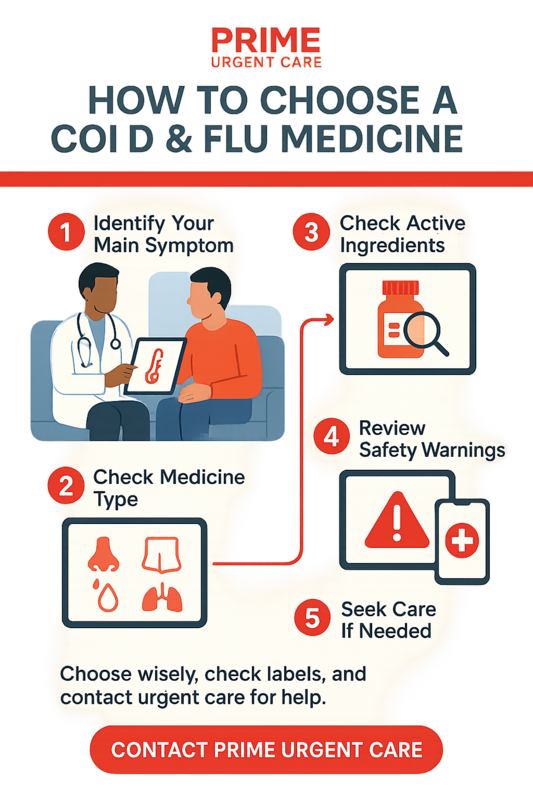
This stepwise infographic helps you confidently select the right over-the-counter cold and flu medicine.
Follow these steps to select safe and effective over the counter flu remedies or cold medications with confidence.
-
Step 1: Identify Your Primary Symptom
Start by asking: What is bothering me the most right now? Focus on your primary symptom rather than trying to treat everything at once.
- Fever or body aches: Common with the flu.
- Nasal congestion: Stuffy nose or sinus pressure.
- Runny nose or sneezing: Often linked to colds or allergies.
- Cough: Dry and hacking vs. wet and productive.
This step helps narrow your search for the best over the counter cold medicine instead of choosing a broad formula you may not need.
-
Step 2: Match the Medicine Category
Once you know your main symptom, match it to the correct medication category:
- Fever reducers/pain relievers (such as acetaminophen or ibuprofen) for fever and body aches—common in over the counter drugs for the flu.
- Decongestants for sinus pressure and nasal blockage (often considered the best decongestant for cold symptoms).
- Antihistamines for runny nose and sneezing.
- Cough suppressants or expectorants depending on the type of cough.
If you need help comparing options, review this local guide to over the counter flu meds for practical recommendations.
-
Step 3: Check Active Ingredients and Warnings
Before purchasing, read the “Active Ingredients” section carefully. Many cold and sinus medicine products contain the same ingredients, and doubling up can increase side effects.
- Avoid taking two products with the same pain reliever.
- Use caution with decongestants if you have high blood pressure or heart conditions.
- Consult a clinician if you are pregnant, breastfeeding, or managing chronic illness.
Seek medical care right away if you develop difficulty breathing, chest pain, confusion, persistent vomiting, or a high fever lasting more than three days. These may signal a more serious condition.
If symptoms worsen or do not improve within a few days, consider scheduling a professional evaluation through Flu & Cold Treatment services.
Quick Summary: Identify your main symptom, match it to the correct medicine category, and always check active ingredients and safety warnings. This simple framework can help you choose the best OTC cold medicine for your situation while avoiding common mistakes.
Comparing Popular Over the Counter Cold and Flu Medicines

Choosing the best cold and flu medicine often comes down to one key decision: treat a single symptom or use a combination product. Understanding the difference can help you avoid unnecessary ingredients and reduce the risk of medication overuse.
Most cold and flu meds fall into two main categories: single-symptom products and multi-symptom (combination) formulas. Each has benefits and limitations depending on your specific symptoms.
Single-Symptom vs. Combination Products
Here’s a clear side-by-side comparison to help guide your decision:
-
Single-Symptom Medicines (e.g., pain reliever, cough suppressant, or best decongestant for cold)
- Best for: One main issue like fever, sinus pressure, or dry cough.
- Pros: Targets a specific symptom; lowers risk of taking unnecessary ingredients; easier to adjust dosing.
- Cons: May require multiple products if you develop new symptoms.
- Example use: Taking only a decongestant for sinus pressure instead of full cold and sinus medicine.
-
Combination Products (multi-symptom formulas labeled for “cold & flu”)
- Best for: Multiple symptoms such as fever, body aches, congestion, and cough.
- Pros: Convenient; one product covers several symptoms; helpful during peak flu discomfort.
- Cons: May include ingredients you don’t need; higher risk of accidental double-dosing, especially with over the counter drugs for the flu.
- Example use: A short-term option when flu symptoms are widespread and intense.
As a general rule, if you have just one or two mild symptoms, a targeted product is often safer and more precise. If you feel “hit by a truck” with classic flu symptoms, a carefully chosen combination formula may be appropriate for short-term relief.
For a deeper breakdown of specific over the counter flu meds and how they compare, see our detailed guide to the best over-the-counter flu medicines.
AI Overview Summary: Single-symptom medicines treat one issue at a time and reduce unnecessary drug exposure, while combination products address multiple symptoms but may increase the risk of overlap. Choose based on your exact symptoms and avoid taking duplicate ingredients.
If your symptoms are worsening, lasting more than a few days, or not responding to the best over the counter cold medicine, consider a professional evaluation through our urgent care services in California.
When to See a Doctor for Cold or Flu Symptoms
Most colds and flu cases improve with rest and the best cold and flu medicine, including appropriate over the counter flu meds. However, some symptoms signal a more serious infection or complication that requires medical evaluation.
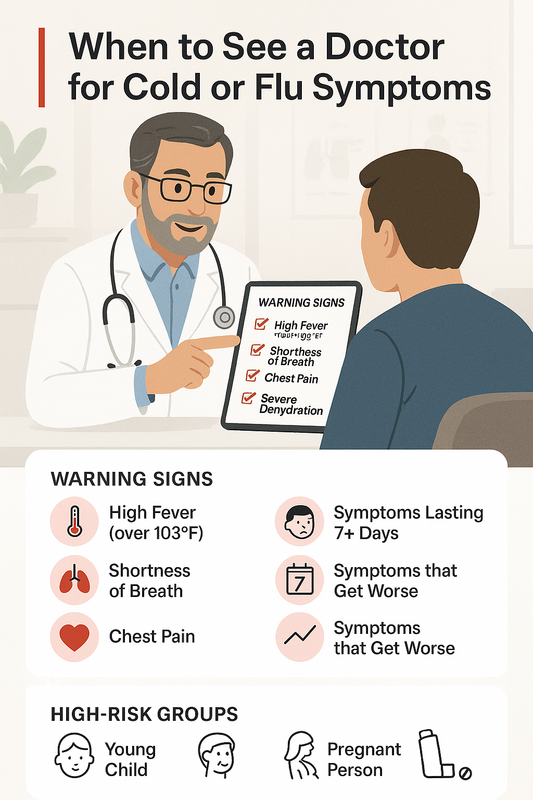
This infographic highlights when to seek urgent care for cold or flu symptoms.
If you notice any of the following red flags, it’s time to seek care rather than continuing self-treatment at home:
- Fever above 103°F or a fever lasting more than 3 days
- Shortness of breath or difficulty breathing
- Chest pain or pressure
- Severe dehydration (dry mouth, dizziness, little or no urination)
- Confusion, extreme fatigue, or fainting
- Symptoms that improve, then suddenly worsen
- Cold or flu symptoms lasting more than 7–10 days without improvement
Adults who have tried home care and the best cold medicine options for adults but still feel worse should not delay evaluation. Some cases may require prescription medication, testing, or monitoring for complications like pneumonia.
At Flu & Cold Treatment visits, our providers assess your symptoms, vital signs, and risk factors to determine the safest next steps. If you prefer to start from home, telehealth appointments may be available for guidance on worsening symptoms.
High-Risk Groups Who Should Seek Early Care
Some people are more likely to develop serious flu-related complications and should seek medical advice early, even if symptoms seem mild at first.
- Children under 5, especially under 2 years old
- Adults 65 and older
- Pregnant individuals
- People with chronic conditions such as asthma, diabetes, heart disease, or weakened immune systems
Quick summary: Seek medical care for high fever, breathing problems, chest pain, dehydration, confusion, or symptoms that last longer than a week. High-risk individuals should contact a healthcare provider early to reduce the risk of complications.
Frequently Asked Questions About Cold and Flu Medicine
What is the best cold and flu medicine for adults?
The best cold and flu medicine for adults depends on your symptoms. For fever and body aches, acetaminophen or ibuprofen may help. For congestion, a decongestant can provide relief. Combination cold and flu meds can target multiple symptoms, but it’s important to match the product to your specific needs and health history.
Are over the counter flu meds effective for the flu virus?
Over the counter flu meds help relieve symptoms such as fever, cough, and congestion, but they do not kill the flu virus. Antiviral prescriptions may shorten illness if started early. If you are at higher risk for complications, consider medical evaluation and flu and cold treatment for appropriate care.
What is the best decongestant for cold and sinus pressure?
The best decongestant for cold symptoms often includes pseudoephedrine or phenylephrine for sinus pressure. Nasal sprays with oxymetazoline may provide short-term relief but should not be used for more than three days. Saline sprays and humidified air can also ease discomfort safely.
Can I take multiple cold and flu meds at the same time?
You can sometimes combine cold and flu meds, but you must check active ingredients carefully. Many products contain acetaminophen or similar components, which can be dangerous in excess. Always read labels and, if unsure, ask a healthcare professional to avoid accidental overdose or harmful interactions.
How long should I take over the counter drugs for the flu?
Most over the counter drugs for the flu are used for short-term symptom relief, typically three to five days. If fever lasts more than three days or symptoms worsen, seek medical advice. Persistent or severe symptoms may signal complications that need professional evaluation.
When should I see a doctor instead of using over the counter flu remedies?
See a doctor if you have difficulty breathing, chest pain, dehydration, confusion, or a high fever that does not improve. Older adults, pregnant individuals, and those with chronic conditions should seek care early. Prompt assessment and flu and cold treatment may reduce the risk of serious complications.
What is the difference between cold and sinus medicine and regular cold medicine?
Cold and sinus medicine is formulated to target sinus pressure and nasal congestion more directly, often with stronger decongestants. Regular cold medicine may focus on cough, sore throat, and mild congestion. Choosing the right option depends on whether sinus pain and pressure are your main symptoms.
Do cold and flu meds cure the illness or just relieve symptoms?
Most cold and flu meds relieve symptoms but do not cure the underlying viral infection. Your immune system clears the virus over time. Prescription antivirals, when appropriate, may shorten the duration of influenza, but supportive care remains the mainstay of treatment for most healthy adults.
Schedule Cold and Flu Care at Prime Urgent Care
If the best cold and flu medicine from your local pharmacy is not providing relief, it may be time for a professional evaluation. While many over the counter flu meds and cold and sinus medicine options help mild symptoms, persistent fever, severe body aches, dehydration, or breathing issues should be assessed by a clinician.
At Prime Urgent Care, our California providers evaluate your symptoms, review any cold and flu meds you’ve already taken, and recommend the safest next steps. We offer on-site testing and personalized flu and cold treatment for urgent but non-emergency conditions.
Same-day visits are often available, and walk-ins are welcome at most locations. If you are unsure whether your symptoms require care, our team can help you decide quickly and confidently.
Choosing the Right Cold and Flu Medicine with Confidence
Selecting the best cold and flu medicine starts with understanding your specific symptoms. The right choice depends on whether you need a fever reducer, cough suppressant, cold and sinus medicine, or the best decongestant for cold relief. Symptom-based decisions are typically safer and more effective than taking multi-symptom products you may not need.
Most colds and mild flu cases improve with rest, fluids, and appropriate over the counter flu meds. However, high fever, chest pain, shortness of breath, dehydration, or symptoms lasting more than a few days may require medical evaluation.
For non-life-threatening illnesses, our Urgent Care Services in California provide timely, clinically guided treatment. At Prime Urgent Care, we are committed to safe, evidence-based care that supports your recovery and your family’s health.
In short: match the medicine to your symptoms, use products as directed, and seek care when warning signs appear. Thoughtful choices and early evaluation can help you feel better sooner and avoid complications.