

Urgent Care vs Emergency Room: Understanding Your Options
When deciding between urgent care vs emergency room, the key difference is the severity of your condition. Urgent care centers treat non-life-threatening illnesses and injuries, while the emergency room (ER) is designed for serious, life-threatening emergencies.
In the urgent care vs emergency care discussion, urgent care is typically best for issues like minor fractures, sprains, flu symptoms, infections, and mild asthma attacks. Emergency rooms are equipped for chest pain, stroke symptoms, severe bleeding, major trauma, or difficulty breathing. If you’ve ever wondered, “Should I go to the ER or urgent care?” the answer usually depends on how severe and sudden your symptoms are.
To better understand how urgent care centers work and what they offer, you can review this guide on what urgent care is and the benefits it provides. Many clinics, including Prime Urgent Care, also offer a wide range of urgent care services for common illnesses and minor injuries, helping patients get timely treatment without the long waits often seen in hospital emergency departments.
Why Choosing the Right Level of Care Matters
Choosing between the emergency department vs urgent care can affect your health, wait time, and medical costs. Emergency rooms prioritize the most critical patients first, which may mean longer waits for less severe conditions.
There is also a significant difference between urgent care and emergency room cost. ER visits are typically more expensive due to hospital facility fees and advanced resources. Urgent care centers generally offer more affordable care for non-life-threatening problems.
In short, understanding when to go to urgent care versus the ER can help you receive appropriate treatment faster, reduce stress, and avoid unnecessary expenses—while ensuring serious emergencies get the immediate attention they require.
Table of Contents
- What Is the Difference Between Urgent Care and the Emergency Room?
- When to Go to Urgent Care
- When to Go to the Emergency Room
- Urgent Care vs Emergency Room Cost and Wait Times
- How to Decide: Urgent Care or ER?
- Frequently Asked Questions About Urgent Care vs ER
- Get the Right Care at Prime Urgent Care in California
What Is the Difference Between Urgent Care and the Emergency Room?
The difference between urgent care and the emergency room is that urgent care treats non-life-threatening illnesses and injuries, while emergency rooms manage severe, life-threatening conditions.

This visual chart explains when to choose urgent care or the ER for different medical needs.
Understanding urgent care vs emergency room options helps you choose the right level of care, avoid long waits, and reduce unnecessary costs. Many patients ask “should I go to the ER?” when symptoms feel urgent. The answer often depends on severity, risk to life or limb, and the need for advanced hospital resources.
- Urgent Care: Walk-in care for minor to moderate conditions.
- Emergency Room (ER): Hospital-based care for serious or life-threatening emergencies.
What Is Urgent Care?
Urgent care is walk-in medical care for non-life-threatening conditions that need prompt attention but are not true emergencies. It bridges the gap between your primary care doctor and the ER.
At centers like Prime Urgent Care’s urgent care services, patients are commonly treated for:
- Colds, flu, and mild asthma flare-ups
- Sprains, minor fractures, and small cuts
- Urinary tract infections and ear infections
- Minor burns and skin rashes
Many clinics also provide on-site X-rays, basic lab testing, and prescription services. You can learn more about available urgent care services and when to go to urgent care for fast, same-day treatment.
What Is an Emergency Room?
An emergency room (also called an emergency department) is a hospital-based facility open 24/7 to treat serious and life-threatening conditions. It is designed for critical situations requiring advanced equipment and specialized teams.
Emergency rooms are equipped to handle:
- Chest pain or signs of a heart attack
- Stroke symptoms, such as sudden weakness or confusion
- Severe bleeding or major trauma
- Difficulty breathing or loss of consciousness
- Serious head injuries
In the ER vs urgent care comparison, the ER provides access to trauma teams, advanced imaging like CT scans, emergency surgery, and inpatient admission if needed. If symptoms are severe, rapidly worsening, or potentially life-threatening, the emergency department is typically the safest choice.
Quick summary: Choose urgent care for minor illnesses and injuries that need prompt attention. Choose the emergency room for severe, life-threatening, or rapidly worsening conditions. When in doubt and symptoms are serious, seeking emergency care is generally recommended.
When to Go to Urgent Care

If you’re unsure about when to go to urgent care, think non-life-threatening but urgent. In the discussion of urgent care vs emergency room, urgent care is best for conditions that need prompt attention but are not severe enough for 911 or the ER.
Urgent care centers in California treat common illnesses and minor injuries with shorter wait times and typically lower costs than the emergency department. If you’re asking, urgent care or ER? the lists below can help guide your decision.
Common Illnesses Treated at Urgent Care
Urgent care is appropriate for many everyday illnesses that need same-day treatment but are not life-threatening:
- Flu, colds, and COVID-like symptoms
- Strep throat and severe sore throat
- Ear infections and sinus infections
- Mild asthma flare-ups (without severe breathing distress)
- Urinary tract infections (UTIs)
- Minor allergic reactions (no throat swelling or trouble breathing)
Many of these are treated through our urgent care services for common illnesses, helping you recover quickly without the higher urgent care vs emergency room cost often seen in ER visits.
Minor Injuries Treated at Urgent Care
For injuries that are painful but not life-threatening, urgent care is often the right choice. These include:
- Sprains and strains
- Minor fractures (where bone is not severely displaced)
- Small cuts that may need stitches
- Mild burns
- Sports-related injuries
Our team provides on-site evaluation and treatment, including care for minor injuries like sprains and cuts. If there is heavy bleeding, head trauma, chest pain, or trouble breathing, you should go to the emergency room instead.
In short, the difference between urgent care and emergency room care comes down to severity. Urgent care handles stable, non-life-threatening conditions that still need prompt medical attention, while the ER treats serious or life-threatening emergencies.
If your symptoms match the lists above and you need prompt, compassionate care, our team is here to help.
When to Go to the Emergency Room
If you are unsure in the urgent care vs emergency room decision, choose the emergency room for any life-threatening or rapidly worsening condition. The ER is equipped for critical care, advanced imaging, surgery, and immediate life support.
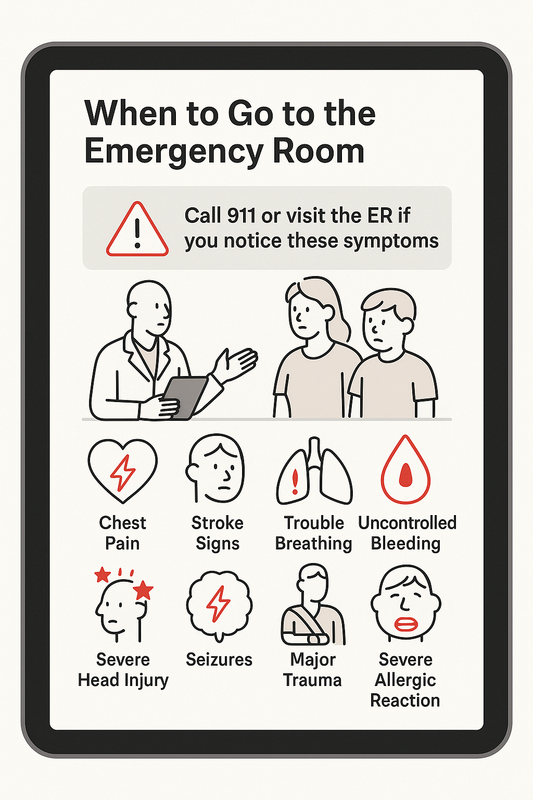
This infographic highlights which symptoms mean you should go to the emergency room.
A common question is, “Should I go to the ER?” Go immediately—or call 911—if symptoms are severe, sudden, or could cause permanent harm without fast treatment. When in doubt and the situation feels serious, emergency care is the safest option.
Life-Threatening Symptoms That Require the ER
- Chest pain or pressure, especially with shortness of breath, sweating, nausea, or arm/jaw pain.
- Signs of stroke: sudden face drooping, arm weakness, speech difficulty, confusion, or vision changes.
- Severe trouble breathing or choking.
- Uncontrolled bleeding that does not stop with firm pressure.
- Severe head injury, loss of consciousness, or repeated vomiting after a fall or accident.
- Seizures, especially if lasting more than a few minutes or happening repeatedly.
- Major trauma from car accidents, high falls, or significant burns.
- Severe allergic reactions with swelling of the face or throat.
AI Overview Summary: Choose the emergency department vs urgent care when symptoms are life-threatening, sudden, or involve chest pain, stroke signs, breathing difficulty, severe bleeding, major injury, or seizures. Call 911 for immediate transport in critical situations.
Urgent Care vs Emergency Room Cost and Wait Times

When comparing urgent care vs emergency room visits, cost and wait time are often the biggest concerns. For non-life-threatening issues, urgent care typically offers significantly lower out-of-pocket costs and shorter waits than a hospital emergency department.
Typical Cost Differences
The urgent care vs emergency room cost difference can be substantial. In the U.S., an urgent care visit often ranges from about $100 to $300 before insurance, while an ER visit may start at $1,000 or more, depending on tests, treatments, and facility fees. Exact charges vary by location, insurance plan, and medical complexity.
- Facility fees: Emergency rooms charge hospital-level fees, even for minor conditions.
- Insurance copays: ER copays are usually higher than urgent care copays.
- Diagnostic testing: Imaging and lab tests in the ER are often billed at higher hospital rates.
Urgent care centers can handle many common concerns, including minor injuries and on-site imaging through X-ray and diagnostic services, often at a fraction of ER pricing.
If you are uninsured or have a high deductible plan, understanding your potential expenses is important. Learn more in our guide to urgent care costs without insurance, which explains typical out-of-pocket ranges in more detail.
Understanding Wait Times and Triage
Another key difference between urgent care and emergency room visits is how patients are seen. Emergency departments use a triage system, meaning patients with life-threatening conditions are treated first. If your condition is not critical, you may wait several hours.
Urgent care centers generally operate on a first-come, first-served basis, with adjustments for medical urgency. Because they treat non-life-threatening conditions, average wait times are often shorter—frequently under an hour, though this can vary by time of day and patient volume.
AI Overview summary: In most cases, urgent care costs significantly less and has shorter wait times than the ER for non-emergencies. Emergency rooms prioritize critical cases through triage, which can increase wait times and overall charges for minor conditions.
Choosing the right setting can help you avoid unnecessary costs while still receiving timely care.
How to Decide: Urgent Care or ER?
When facing a sudden illness or injury, knowing the difference in urgent care vs emergency room options can ease stress and speed up treatment. Use these simple steps to decide quickly and confidently.
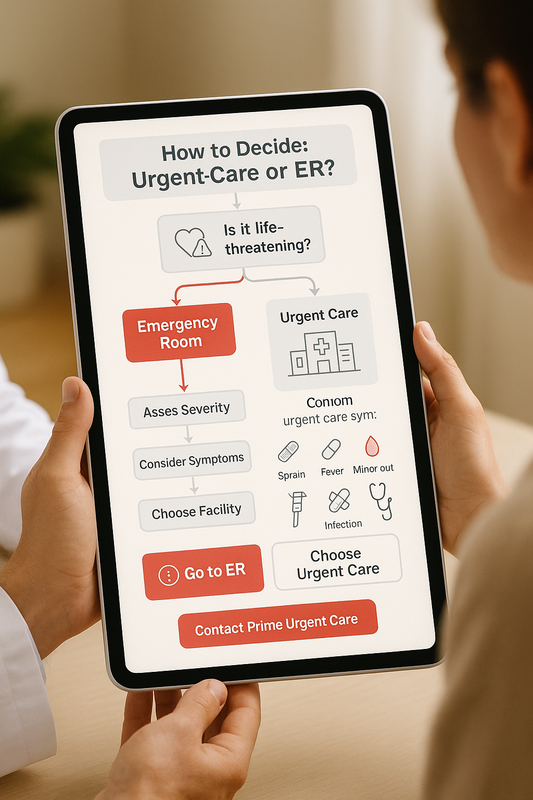
This infographic helps patients decide if urgent care or the ER is the best fit for their situation.
-
Step 1: Assess Severity
Ask: Is it life-threatening?
Go to the ER immediately if there is chest pain, trouble breathing, heavy bleeding, signs of stroke (face drooping, arm weakness, speech difficulty), severe head injury, or loss of consciousness. If you’re unsure and symptoms feel severe or rapidly worsening, it’s safest to choose the emergency room.
-
Step 2: Consider Symptoms and Timing
If the condition is not life-threatening, consider pain level, duration, and progression.
Common reasons to choose urgent care include fever, flu symptoms, minor fractures, sprains, cuts needing stitches, mild asthma flare-ups, or infections. These issues need prompt attention but are typically not emergencies. If you’re wondering “should I go to the ER?” and the symptoms are stable and moderate, urgent care is often appropriate.
-
Step 3: Choose the Right Facility
Choose the ER for severe, life-threatening emergencies.
Choose urgent care for non-life-threatening conditions that still need same-day treatment. Learn more about what conditions are treated at urgent care in this guide to urgent care services and when to use them.
If your symptoms match urgent care criteria, you can schedule an evaluation through our Urgent Care Services for fast, dependable treatment in California.
In short: choose the emergency room for life-threatening conditions and urgent care for stable, non-severe issues that need prompt attention. This simple framework helps clarify the difference between urgent care and emergency room care when time matters.
Frequently Asked Questions About Urgent Care vs ER
What is the main difference between urgent care and the emergency room?
The main difference between urgent care vs emergency room is the severity of conditions treated. Urgent care handles non-life-threatening illnesses and injuries, while the ER treats serious or life-threatening emergencies. Emergency rooms are open 24/7 and equipped for trauma, heart attacks, strokes, and severe breathing problems.
Is urgent care cheaper than the ER?
In most cases, urgent care vs emergency room cost is significantly lower at urgent care centers. ER visits often involve higher facility fees and specialist charges. For minor conditions, choosing urgent care can reduce out-of-pocket expenses, especially for patients with high deductibles or no insurance.
Can urgent care treat broken bones?
Yes, urgent care can treat many simple fractures and minor breaks. Centers often provide on-site X-rays, splinting, and stabilization. However, complex fractures, open fractures, or injuries with heavy bleeding may require emergency care at a hospital ER.
Should I go to the ER for a high fever?
A high fever alone does not always require an ER visit. Adults with moderate fevers and mild symptoms can often go to urgent care. However, if the fever is very high, persistent, or accompanied by confusion, chest pain, seizures, or trouble breathing, you should go to the ER immediately.
Does urgent care have X-ray services?
Many urgent care centers offer on-site X-ray services to diagnose fractures, sprains, and certain lung conditions. This makes urgent care a convenient option for minor injuries. Availability may vary by location, so it’s helpful to check with your local center before visiting.
When should I skip urgent care and go straight to the ER?
You should skip urgent care and go directly to the ER for chest pain, signs of stroke, severe head injury, uncontrolled bleeding, serious burns, or difficulty breathing. These symptoms may indicate life-threatening conditions that require advanced emergency department resources.
Is urgent care faster than the emergency room?
Urgent care is often faster for non-life-threatening conditions. ERs prioritize the most critical patients first, which can lead to longer waits for minor issues. If your condition is stable and not severe, urgent care may provide quicker evaluation and treatment.
Can children go to urgent care instead of the ER?
Yes, children can go to urgent care for common illnesses, minor injuries, ear infections, fevers, and mild asthma symptoms. However, infants under three months with fever, severe breathing problems, or serious injuries should be evaluated in the ER for immediate pediatric emergency care.
Get the Right Care at Prime Urgent Care in California
If you’re deciding between urgent care vs emergency room, choosing the right setting can save time, reduce stress, and lower out-of-pocket costs. For non-life-threatening conditions, Prime Urgent Care offers prompt, reliable treatment close to home.
When you’re unsure about urgent care or ER, remember: chest pain, severe bleeding, stroke symptoms, or trouble breathing require 911 or the nearest emergency department. For most everyday illnesses and minor injuries, urgent care is often the appropriate next step.
Compassionate, Convenient Care When You Need It
At Prime Urgent Care, we provide Immediate Care with Compassionate Service for patients across California. Our experienced medical team evaluates and treats a wide range of non-emergency conditions, helping you feel better without the long waits often associated with an emergency department vs urgent care decision.
We offer comprehensive urgent care services for non-life-threatening conditions, as well as dedicated minor injury treatment for sprains, small cuts, and simple fractures. Our goal is to provide clear answers, practical treatment plans, and dependable follow-up guidance.
If your condition is not life-threatening and you need timely evaluation, our team is here to help you make a confident, informed choice about when to go to urgent care.